This oped takes on American street design and blames it for causing countless road injuries and deaths.


Examples in other countries like Sweden show that simple infrastructural devices can greatly reduce accidents, according to Mark Rosenberg, a former assistant attorney general.
"They showed that this could be done cheaply. When Mylar - a strong polyester film - is supported by closely spaced plastic poles, it can keep cars from crossing the median. When the Swedes used this type of center barrier to separate the traffic going in opposite directions, they effectively prevented head-on collisions and the death rate on these roads fell by 70 percent to 80 percent."
Thanks to Reconnecting America
Read the full story: Roads that are designed to kill

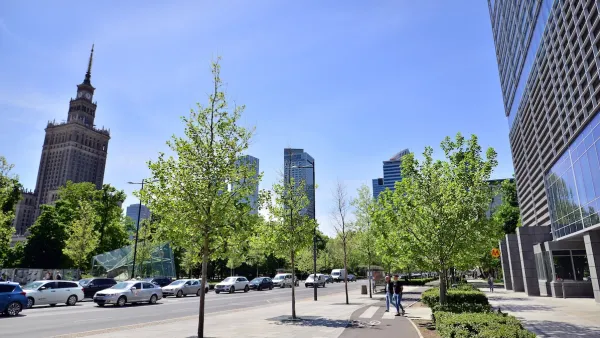
Milwaukee Road Safety Efforts Paying Off
The city is seeing fewer speeding violations after installing traffic calming measures and boosting enforcement to limit reckless driving.

Kansas City Adding Speed Bumps for Traffic Safety
The city is adding the traffic calming measures at 50 high-risk intersections.
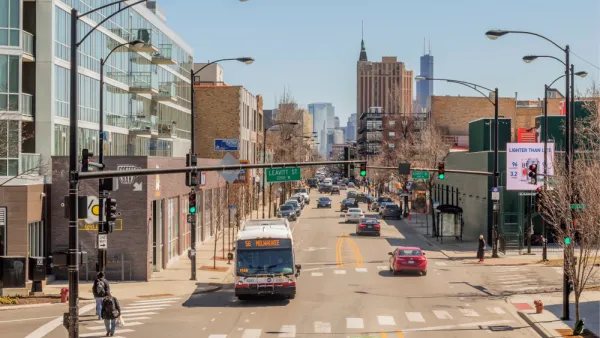
The Role of Segregation in Traffic Deaths
Research from Chicago suggests that the city’s traffic calming infrastructure is concentrated in the most affluent neighborhoods, contributing to higher rates of road deaths in lower-income neighborhoods.

Planetizen Federal Action Tracker
A weekly monitor of how Trump’s orders and actions are impacting planners and planning in America.

Amtrak, CN end decades-long dispute with eight-year agreement
The new operating agreement establishes an updated framework for the companies to work together, including processes to resolve disputes.

Northwest rail fans eager for Sept. 30 debut of Amtrak’s Airo fleet
Get ready for that new train smell and more seats. But they won’t go faster or run more frequently on the Cascades route in Washington and Oregon.

NYC to turn city-owned property into thousands of homes
The city has scheduled a public hearing regarding the development for October.

Buses travel at 5mph along this route in NYC. The Bronx's first-ever busway looks to change that
Prior to the busway, buses on the Bx36 route traveled as slowly as 5 miles per hour.

Pittsburg launches 'EZ permits,' aims for one-day turnaround for low-risk permits
The pilot ‘fast lane’ for permits is part of a bundle of modernization efforts for Pittsburg’s permitting process.

FREE Course: Walkable City 1: Why Walkability?
After describing his path towards focusing on walkability as the essence of good planning, Jeff Speck marches through his five principal reasons for making more walkable places.
Reinventing Malls: Planning Alchemy—Turning Gray Fields Into Gold
The course focuses on the opportunities and imperatives that shape reinvention of mall sites.

City of Thousand Oaks
City of Wisconsin Rapids
Harvard University Graduate School of Design
The Architects Foundation
University of Cincinnati Online
The Pocatello Development Authority
The Urban Renewal Agency of the City of Pocatello