It's every Shoupista's favorite day of the year.


Streetsblog has announced the winner of its 2017 Parking Madness tournament, with the championship going to Denver.
Here, Angie Schmitt explains the origins of the contest, and the reasons why Denver came out ahead:
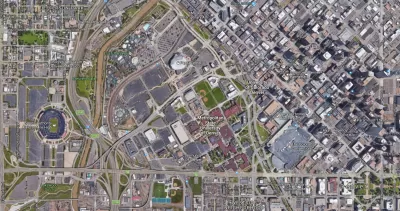
For the tournament this year we focused on parking craters near transit stations to highlight how American cities are failing to support their transit infrastructure with walkable development. And Denver’s monster parking crater is a classic of wasted urban potential: a huge swathe of land close to downtown, served by three light rail stations, and overwhelmed by massive parking lots for sports stadiums that barely get used much of the year.
The parking crater in question surrounds the Pepsi Center, home to the Denver Nuggets of the National Basketball Association, the Colorado Avalanche of the National Hockey League. Schmitt cites the expertise of Ken Schroeppel, a planning professor at University of Colorado Denver and blogger at Denver Urbanism, who estimates that there are 50 acres of parking surrounding the Pepsi Center and another 15 acres nearby.
Schroeppel is an active advocate for infill development on the parking lots, and Denver Planning Department spokesperson Andrea Burns also voices support for redevelopment in the area, as reflected in the city's 2007 Downtown Area Plan.
Read the full story: Denver Is Your 2017 Parking Madness Champ!

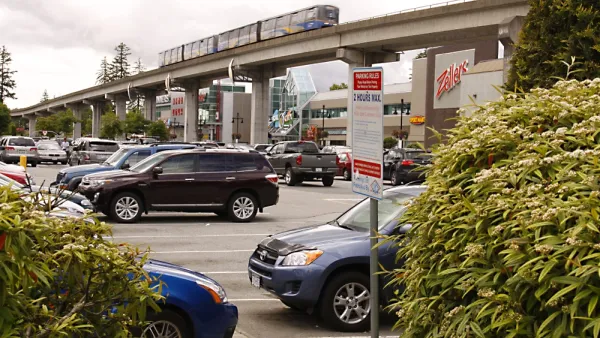
Parking Madness 2017: Vote for the Worst 'Parking Craters' in the U.S.
Streetsblog is at it again with its annual "Parking Madness" tournament.
Streetsblog 'Golden Crater' Goes to Camden, New Jersey for Waterfront Parking Abyss
Angie Schmitt announces the results of the 2015 "Parking Madness" tournament, which pits the country's worst examples of parking.
Good News From America's Surface Parking Capital
Just two months ago, Tulsa was given the ignominious title of having the country's most parking-scarred downtown by Streetsblog readers. Apparently the recognition has jolted the city into action, as a ban on new surface lots was recently extended.

Planetizen Federal Action Tracker
A weekly monitor of how Trump’s orders and actions are impacting planners and planning in America.

Amtrak, CN end decades-long dispute with eight-year agreement
The new operating agreement establishes an updated framework for the companies to work together, including processes to resolve disputes.

Northwest rail fans eager for Sept. 30 debut of Amtrak’s Airo fleet
Get ready for that new train smell and more seats. But they won’t go faster or run more frequently on the Cascades route in Washington and Oregon.

Brightline Florida files for bankruptcy
The transit company is over $5 billion in debt.

St. Louis Metro to test if single-car trains can reduce operating costs, maintain rider satisfaction
The pilot program will run from October to spring 2027, and begin with one single-car train operating on Metrolink’s Red and Blue lines.

Pennsylvania is building data centers in abandoned mines
Housing data centers in mines provides an alternative to destroying local forests and may spare residents from data centers’ noise and air pollution.

FREE Course: Walkable City 1: Why Walkability?
After describing his path towards focusing on walkability as the essence of good planning, Jeff Speck marches through his five principal reasons for making more walkable places.
Reinventing Malls: Planning Alchemy—Turning Gray Fields Into Gold
The course focuses on the opportunities and imperatives that shape reinvention of mall sites.

City of Thousand Oaks
City of Wisconsin Rapids
Harvard University Graduate School of Design
The Architects Foundation
University of Cincinnati Online
The Pocatello Development Authority
The Urban Renewal Agency of the City of Pocatello