Streetsblog is at it again with its annual "Parking Madness" tournament.


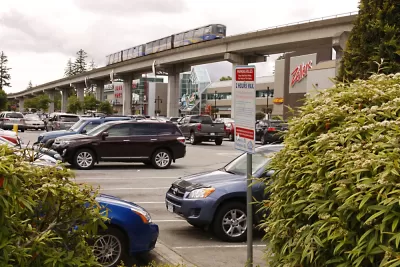
Angie Schmitt kicked off the annual "Parking Madness" tournament on March 17, announcing that this year's highly-anticipated tournament will have a special focus: "transit stations engulfed by car storage."
Here Schmitt makes that case for why transit parking craters have a special place in the taxonomy of parking disasters:
Transit works best when people can walk to stations — more people will ride and fewer will drive. A moat of parking defeats the purpose and repels people on foot, but that is exactly what you’ll find at a shocking number of American transit stops.
The first matchup features the Richmond Heights Metrolink Station in St. Louis, paired up against the parking lots in downtown Sacramento with proximity to the State Capitol and two light rail stations. Only time will tell whether either of these examples persists through what promises to be a very tough field of competitors.
Read the full story: Parking Madness 2017 Tip-Off: St. Louis vs. Sacramento
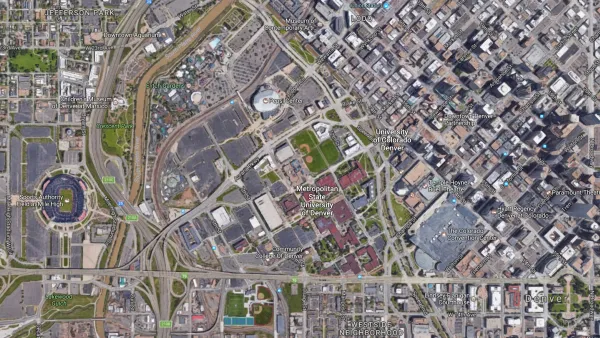
Winner of the 2017 Parking Madness Tournament Announced
It's every Shoupista's favorite day of the year.
Streetsblog 'Golden Crater' Goes to Camden, New Jersey for Waterfront Parking Abyss
Angie Schmitt announces the results of the 2015 "Parking Madness" tournament, which pits the country's worst examples of parking.
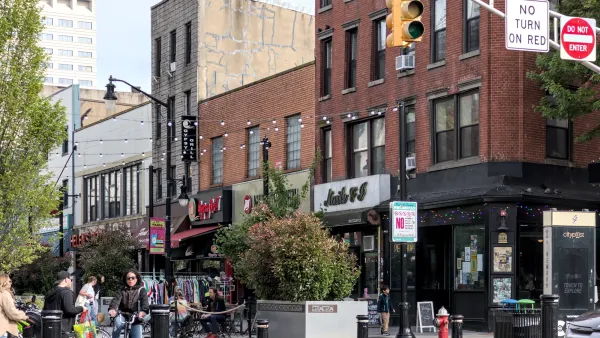
Jersey City could build 700 homes on city-owned parking lots
If approved, a redevelopment proposal would build hundreds of new homes on a pair of city parking lots.

Planetizen Federal Action Tracker
A weekly monitor of how Trump’s orders and actions are impacting planners and planning in America.

California plans to bury El Niño’s downpour
If the state plays its cards right, it may be able to store a billion acre-feet of El Niño’s water in aquifers.

Desperate measures: Advocates weigh draining Lake Powell to fill Colorado River
Draining the reservoir could reduce evaporation losses by a couple hundred thousand acre-feet.

Mamdani’s pied-à-terre tax survives legal challenge
A panel of judges found that the plaintiffs failed to demonstrate injury as a result of New York City's implementation of the tax.

Eastern Nebraska is running out of electricity
Data centers and electrification are straining eastern Nebraska’s grid, throttling economic development.

Seattle passes record-breaking transit services expansion
Proposition 1 will double the city’s transit tax to add 95,000 more bus trips and preserve 180,000 bus trips annually.

FREE Course: Walkable City 1: Why Walkability?
After describing his path towards focusing on walkability as the essence of good planning, Jeff Speck marches through his five principal reasons for making more walkable places.
Reinventing Malls: Planning Alchemy—Turning Gray Fields Into Gold
The course focuses on the opportunities and imperatives that shape reinvention of mall sites.

City of Rosemead
Rutgers University, Edward J. Bloustein School of Planning and Public Policy
One Hundred Miles
University of Michigan School for Environment and Sustainability (SEAS)
Hunter College, City University of New York (CUNY)
The Architects Foundation
City of Cambridge
Montrose County
The Pocatello Development Authority