Just two months ago, Tulsa was given the ignominious title of having the country's most parking-scarred downtown by Streetsblog readers. Apparently the recognition has jolted the city into action, as a ban on new surface lots was recently extended.


"Tulsa World reported Friday that our Parking Madness competition winner is moving forward with a ban on new surface parking lots," writes Streetsblog's Angie Schmitt. "The Tulsa City Council has extended a temporary moratorium on new surface parking through September. Between now and then, Tulsa will be working to prepare permanent changes to the city’s zoning code that will help contain the tide of surface parking lots and, hopefully, set the stage for some redevelopment."
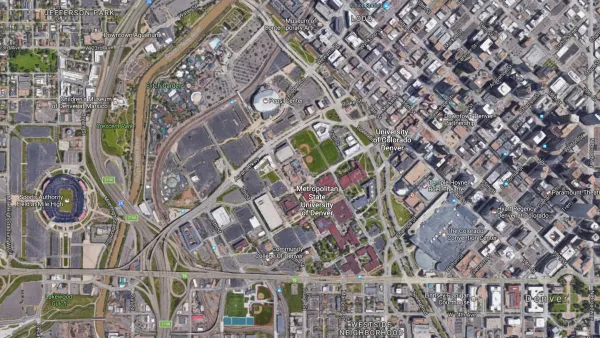
"Tulsa is in the early stages of the same program the city of Denver took on to repair its woeful surface parking lot problem two decades ago," she continues. To learn more about the steps Denver took to dramatically change the character of its downtown, see this article, also by Schmitt.
Read the full story: Parking Madness Champion Tulsa Moves to Limit Surface Parking Downtown

Designers Envision a Better Future for a Notorious Tulsa 'Parking Crater'
Sometimes a public shaming can be good for less-than-desirable land uses. Case in point: designers mobilizing to remodel a notorious parking crater in Tulsa, Oklahoma.
Congrats Tulsa! Your Downtown is Filled With Parking Blight
The votes are in and Tulsa has defeated Milwaukee in Streetsblog's inaugural tournament to recognize the worst parking crater in America. Fear not, though, Tulsans, some solutions have already been proposed to help address your dubious distinction.
Winner of the 2017 Parking Madness Tournament Announced
It's every Shoupista's favorite day of the year.

Planetizen Federal Action Tracker
A weekly monitor of how Trump’s orders and actions are impacting planners and planning in America.

Amtrak, CN end decades-long dispute with eight-year agreement
The new operating agreement establishes an updated framework for the companies to work together, including processes to resolve disputes.

Northwest rail fans eager for Sept. 30 debut of Amtrak’s Airo fleet
Get ready for that new train smell and more seats. But they won’t go faster or run more frequently on the Cascades route in Washington and Oregon.

Brightline Florida files for bankruptcy
The transit company is over $5 billion in debt.

St. Louis Metro to test if single-car trains can reduce operating costs, maintain rider satisfaction
The pilot program will run from October to spring 2027, and begin with one single-car train operating on Metrolink’s Red and Blue lines.

Pennsylvania is building data centers in abandoned mines
Housing data centers in mines provides an alternative to destroying local forests and may spare residents from data centers’ noise and air pollution.

FREE Course: Walkable City 1: Why Walkability?
After describing his path towards focusing on walkability as the essence of good planning, Jeff Speck marches through his five principal reasons for making more walkable places.
Reinventing Malls: Planning Alchemy—Turning Gray Fields Into Gold
The course focuses on the opportunities and imperatives that shape reinvention of mall sites.

City of Thousand Oaks
City of Wisconsin Rapids
Harvard University Graduate School of Design
The Architects Foundation
University of Cincinnati Online
The Pocatello Development Authority
The Urban Renewal Agency of the City of Pocatello