The city of Seattle is hard at work planning a significant expansion to RapidRide bus service.


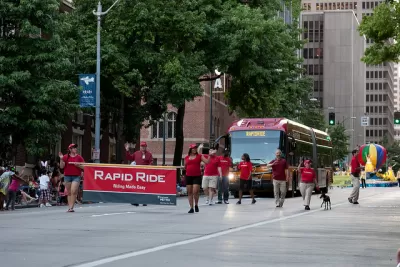
"Seattle is moving full steam ahead on its RapidRide network planning program, a bold initiative to provide high-quality frequent bus service across the city," reports Stephen Fesler.
The Seattle Department of Transportation (SDOT) published a 41-page progress report in February, "detailing the process, timing, scope, cost, and types of improvements that would come with RapidRide network expansion."
In all, the report proposes seven new RapidRide corridors, focusing on high ridership areas around the city and supplementing Central Link and East Link. The report includes profiles of each of the seven corridors, offering "useful information about the anticipated alignment, opening year of service, corridor length, evaluation metrics, and a detailed project timeline," explains Fesler.
Expect work to begin on the RapidRide expansion in 2019 and continue through 2024.
Read the full story: Plan Shapes Up For Seattle RapidRide Expansion
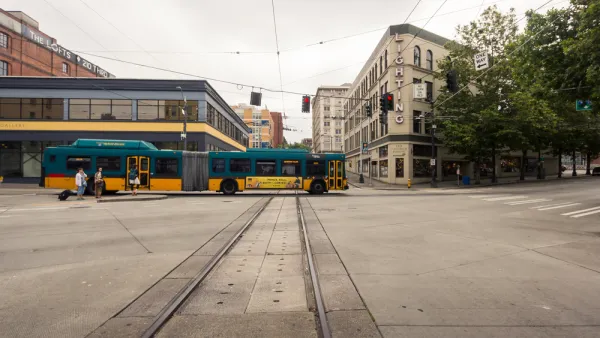
Bus Transit Service Increased in Seattle (Again)
The city of Seattle is improving transit service as the city grows.
New Frequent Buses Will Arrive More Frequently in Seattle
A few weeks after a major restructure of bus service, King County Metro Transit in Seattle is adding additional bus trips to a few particularly crowded lines.
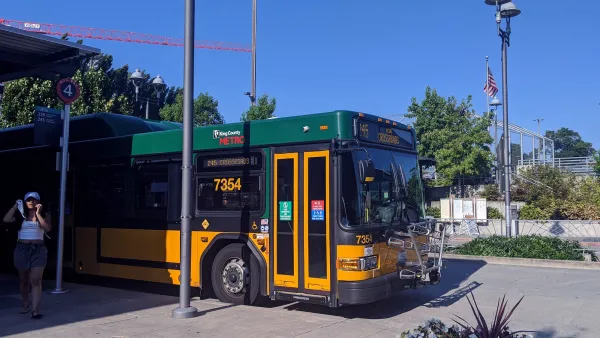
King County Metro adds 3,000 weekly bus trips, more connections to rail
King County Metro and Sound Transit are both making major adjustments to their bus networks to improve light rail connectivity across the region.

Planetizen Federal Action Tracker
A weekly monitor of how Trump’s orders and actions are impacting planners and planning in America.

California plans to bury El Niño’s downpour
If the state plays its cards right, it may be able to store a billion acre-feet of El Niño’s water in aquifers.

Desperate measures: Advocates weigh draining Lake Powell to fill Colorado River
Draining the reservoir could reduce evaporation losses by a couple hundred thousand acre-feet.

Mamdani’s pied-à-terre tax survives legal challenge
A panel of judges found that the plaintiffs failed to demonstrate injury as a result of New York City's implementation of the tax.

Eastern Nebraska is running out of electricity
Data centers and electrification are straining eastern Nebraska’s grid, throttling economic development.

Seattle passes record-breaking transit services expansion
Proposition 1 will double the city’s transit tax to add 95,000 more bus trips and preserve 180,000 bus trips annually.

FREE Course: Walkable City 1: Why Walkability?
After describing his path towards focusing on walkability as the essence of good planning, Jeff Speck marches through his five principal reasons for making more walkable places.
Reinventing Malls: Planning Alchemy—Turning Gray Fields Into Gold
The course focuses on the opportunities and imperatives that shape reinvention of mall sites.

City of Rosemead
Rutgers University, Edward J. Bloustein School of Planning and Public Policy
One Hundred Miles
University of Michigan School for Environment and Sustainability (SEAS)
Hunter College, City University of New York (CUNY)
The Architects Foundation
City of Cambridge
Montrose County
The Pocatello Development Authority