Competition from online retailers forced many physical stores to close their doors, that trend could be headed for grocery stores next.


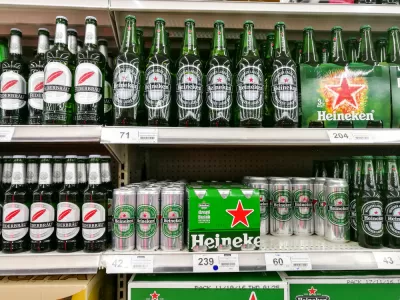
There are two to three times as many grocery stores as the country "needs," Jim Hertel, vice president of retailing consulting firm Willard Bishop, tells Ashley Gurbal Kritzer of the Atlanta Business Chronicle. Hertel's firm is predicting a contraction in stores and square feet for the industry. "From office supplies to clothing and accessories, retailers across the spectrum have shuttered physical storefronts in recent years to concentrate on their best-performing locations and online sales," Grubal Kritzer writes.
The thinking goes that, as online retailers like Amazon gain steam in the grocery category and big box stores like Target move in, long-time grocers like Publix and Kroger may look to close their lower performing stores. Another reason for closings among some traditional grocery retailers, says Grubal Kritzer, is the expansion of smaller discount chains like Aldi and Lidl.
Read the full story: If we have too many grocery stores, what does the future look like for Publix and Kroger?

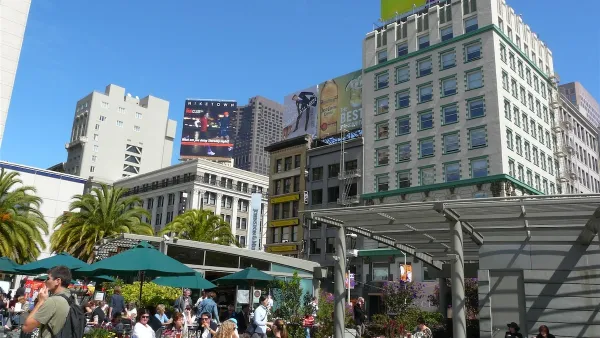
Traditional Retail is Hanging by a Thread. What Now for Cities?
After Kaid Benfield paints a rather grim retail outlook — where even retail bastions like San Diego are going dark — he suggests a series of actions for city leaders and planners.
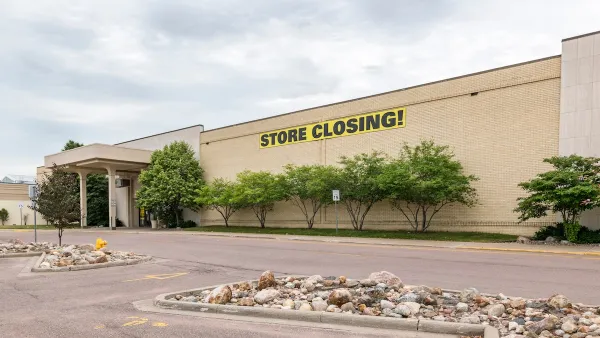
Shifts in Shopping: Transforming Malls Into Parks
Maybe zombie malls still have a second life — one with a little greenery.
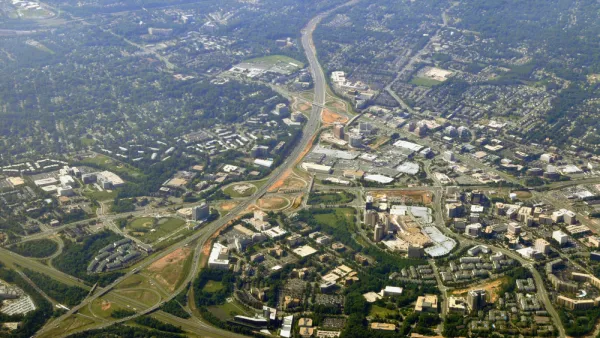
Rethinking Retail Space in the Wake of COVID-19
As e-commerce boomed and people sought outdoor shopping and dining options, the pandemic accelerated the decline of massive, merchandise-oriented retail spaces and indoor malls.

Planetizen Federal Action Tracker
A weekly monitor of how Trump’s orders and actions are impacting planners and planning in America.

Amtrak, CN end decades-long dispute with eight-year agreement
The new operating agreement establishes an updated framework for the companies to work together, including processes to resolve disputes.

Northwest rail fans eager for Sept. 30 debut of Amtrak’s Airo fleet
Get ready for that new train smell and more seats. But they won’t go faster or run more frequently on the Cascades route in Washington and Oregon.

Brightline Florida files for bankruptcy
The transit company is over $5 billion in debt.

St. Louis Metro to test if single-car trains can reduce operating costs, maintain rider satisfaction
The pilot program will run from October to spring 2027, and begin with one single-car train operating on Metrolink’s Red and Blue lines.

Pennsylvania is building data centers in abandoned mines
Housing data centers in mines provides an alternative to destroying local forests and may spare residents from data centers’ noise and air pollution.

FREE Course: Walkable City 1: Why Walkability?
After describing his path towards focusing on walkability as the essence of good planning, Jeff Speck marches through his five principal reasons for making more walkable places.
Reinventing Malls: Planning Alchemy—Turning Gray Fields Into Gold
The course focuses on the opportunities and imperatives that shape reinvention of mall sites.

City of Thousand Oaks
City of Wisconsin Rapids
Harvard University Graduate School of Design
The Architects Foundation
University of Cincinnati Online
The Pocatello Development Authority
The Urban Renewal Agency of the City of Pocatello