How does one talk about density without frightening people? One term that's floating around is "gentle density," referring to the missing middle between mid-rise and detached homes.


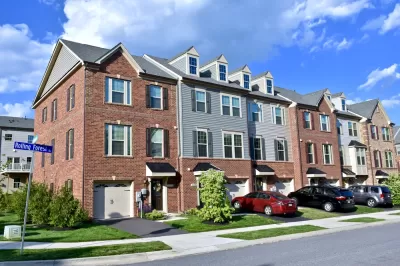
Navigating the density debate might be easier if more cities embraced "gentle density," which Brent Toderian defines as "attached, ground-oriented housing that's more dense than a detached house, but with a similar scale and character. Think duplexes, semi-detached homes, rowhouses, or even stacked townhouses."
While even this mild form of densification draws opposition, it's less drastic than big blocky mid-rises. "Many people don't mind sharing a common wall and are eager to cut their costs and carbon footprint, but still appreciate a direct relationship with the ground. That's why fellow urbanist Daniel Parolek in San Francisco calls this kind of density the 'missing middle.'"
Rowhouses, townhouses and the like used to be an urban staple. But now, planners in many cities will have to relearn them. "In most cities though, deliberate zoning decisions have made this kind of housing illegal."
Read the full story: Canadian cities need more 'gentle density' to address housing crunch

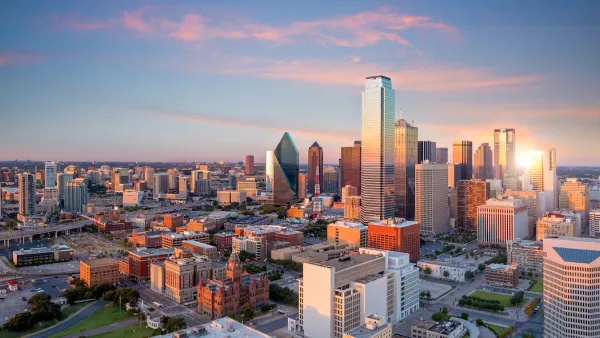
Dallas Code Reform Makes Way for Missing Middle Housing
The Dallas City Council voted to change the city’s building code to allow up to eight residential units in three-story buildings.

On the Massive Carbon Savings of Gentle Density
A thought experiment compares the carbon impact of three new single family homes with the same block if it contained a duplex, a triplex, and a fourplex.
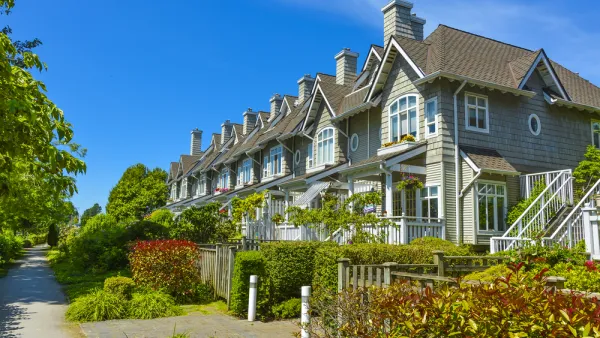
'Making Room Housing Program' Would Allow New Density in Vancouver
Duplexes, rowhouses, and small apartment buildings will be on the zoning menu for "housing choice neighborhoods" around Vancouver, thanks to the city's new "Making Room Housing Program."

Amtrak, CN end decades-long dispute with eight-year agreement
The new operating agreement establishes an updated framework for the companies to work together, including processes to resolve disputes.

Judges permit Denver to divert 77,000 acre feet from the Colorado River for reservoir expansion
Overuse and climate change have caused the Colorado River’s water levels to plummet.
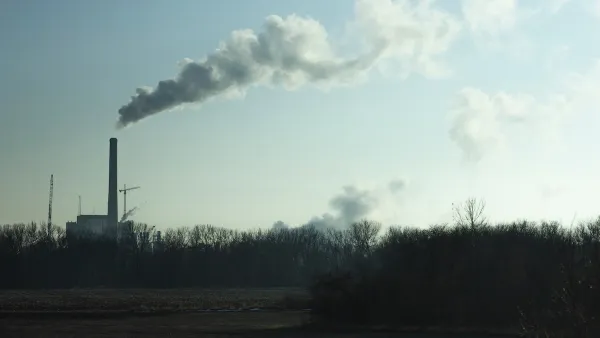
Nation's most wind-powered state turns to coal as data centers increase energy demand
For the first time in decades, Iowa has increased its generation of coal power.

Boston has spent millions making the Green Line more accessible — and there’s no end in sight
While the city has invested millions into expanding and adding platforms to the Green Line to make it more accessible, new train cars set to arrive next year will be too tall for disabled passengers to board without raising the current platforms.

Idaho may see an 18% drop in federal surface transit funding — the largest estimated cut in the US
Transit systems in rural communities are much more reliant on federal funding to provide their services.

How ‘post-disaster gentrification’ alters neighborhoods after natural calamities
After hurricanes, fires or other calamities, the original residents of a community are often replaced by younger, wealthier residents.

FREE Course: Walkable City 1: Why Walkability?
After describing his path towards focusing on walkability as the essence of good planning, Jeff Speck marches through his five principal reasons for making more walkable places.
Reinventing Malls: Planning Alchemy—Turning Gray Fields Into Gold
The course focuses on the opportunities and imperatives that shape reinvention of mall sites.

City of Wisconsin Rapids
Harvard University Graduate School of Design
KFH Group Inc.
The Architects Foundation
University of Cincinnati Online
The Pocatello Development Authority
The Urban Renewal Agency of the City of Pocatello