Earlier this week, Albany Mayor Kathy Sheehan sent a draft of the city's new Unified Sustainable Development Ordinance to the city's Common Council.


Jimmy Vielkind reports on a new zoning code in the city of Albany, New York. The new code was presented to the city's Common Council earlier this week, marking a culmination of the city's "the first comprehensive reboot of the rules governing land use in the capital in five decades." The new Unified Sustainable Development Ordinance, in the city's chosen nomenclature, as also been branded as ReZone Albany.
Vielkind examines the case study of Lark Street, located to the west of the State Capitol and Empire State Paza, "where residential and commercial uses collide on Lark Street and some business and restaurants operate as islands within residential blocks," as an example of the city's "hodgepodge" collection of zoning regulations. Thus Vielkind's lede proclaims: "New bars along Lark Street, a commercial strip popular with lawmakers and their employees, will be able to stay open until 2 a.m. and the Palais Royale can stay open until 4 a.m. for as long as it remains a bar…"
In a separate article, Joe Legault explains local concerns about the impacts of the new zoning code on Lark Street. Yet another article by Dominick Calsolaro opens up the discussion, and considers ReZone Albany as one tool the city hopes will keep the city's housing stock affordable.
Read the full story: One for the road: Zoning plan good news for some Albany saloons
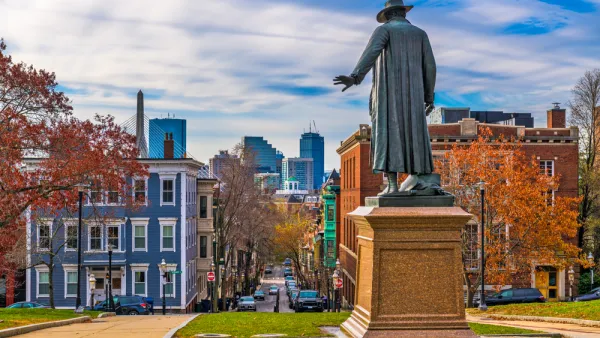
Boston to Begin Zoning Code Update, Mayor Announces
It’s been nearly 60 years, but the city of Boston is finally ready to do a comprehensive rewrite of its zoning code.
Zoning Changes Could Allow More Restaurants and Bars in D.C. Neighborhoods
Zoning can limit more than just multi-family housing.
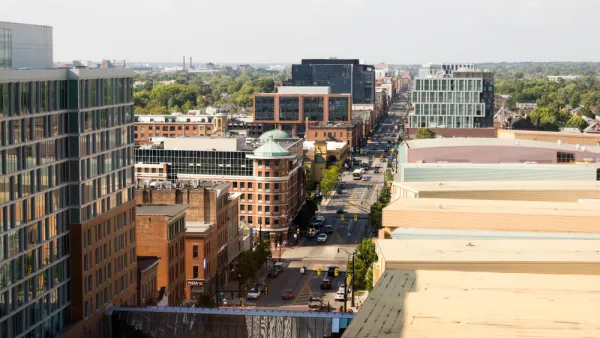
Columbus Rewriting its Zoning Code
Planners in Ohio’s capital city hope a new zoning code will help reverse some of the damage done by the city’s previous zoning codes.

Planetizen Federal Action Tracker
A weekly monitor of how Trump’s orders and actions are impacting planners and planning in America.

California plans to bury El Niño’s downpour
If the state plays its cards right, it may be able to store a billion acre-feet of El Niño’s water in aquifers.

Desperate measures: Advocates weigh draining Lake Powell to fill Colorado River
Draining the reservoir could reduce evaporation losses by a couple hundred thousand acre-feet.

Mamdani’s pied-à-terre tax survives legal challenge
A panel of judges found that the plaintiffs failed to demonstrate injury as a result of New York City's implementation of the tax.

Eastern Nebraska is running out of electricity
Data centers and electrification are straining eastern Nebraska’s grid, throttling economic development.

Seattle passes record-breaking transit services expansion
Proposition 1 will double the city’s transit tax to add 95,000 more bus trips and preserve 180,000 bus trips annually.

FREE Course: Walkable City 1: Why Walkability?
After describing his path towards focusing on walkability as the essence of good planning, Jeff Speck marches through his five principal reasons for making more walkable places.
Reinventing Malls: Planning Alchemy—Turning Gray Fields Into Gold
The course focuses on the opportunities and imperatives that shape reinvention of mall sites.

City of Rosemead
Rutgers University, Edward J. Bloustein School of Planning and Public Policy
One Hundred Miles
University of Michigan School for Environment and Sustainability (SEAS)
Hunter College, City University of New York (CUNY)
The Architects Foundation
City of Cambridge
Montrose County
The Pocatello Development Authority