The influx of new workers and residents in Downtown Boise has lead to a parking crunch, raising parking rates and leaving city officials searching for alternative solutions.


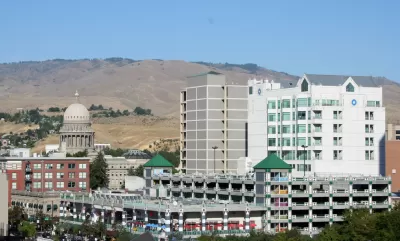
The shortage of parking in Downtown Boise is what the Idaho Statesman describes as a "good problem." The development boom, following the recession of 2008, has lead to an uptick in new workers that has so far overwhelmed the available downtown parking garages, creating an increase in parking rates and forcing workers to walk an extra few blocks from their parking space to their office. Sven Berg reports that Capital City Development Corporation (CCDC), whose goal is to spur urban renewal in the downtown area, has invested in acquiring spaces in parking garages to increase the supply for downtown businesses. However, the construction of new garages to meet the increased demand may be a ways off given the high costs to build new facilities.
In response, CCDC and city officials are focusing on freeing up parking by getting people out of their cars and into transit or onto bikes.
People who do business Downtown, as well those who plan its future, say the best answer lies in a quiver of partial solutions. Besides more car slots, they say, Downtown Boise needs to offer better alternatives to driving.
In the short term, that means adding park-and-ride systems. One initiative is already underway.
Berg reports that longer term solutions may focus on an improved bicycle network, and more buses. He notes that Boiseans, who have argued over transit for years, may have to "bite the bullet" on a light-rail system that currently has a $111 million price tag.
Read the full story: Growing pains: Boise looks for answers as Downtown parking tightens
Boise Approves First Zoning Code Update in 60 Years
A comprehensive update of the city’s zoning code aimed at making housing more affordable and promoting sustainable growth received unanimous support from the city council.
Watch: How to Remove Thousands of Parking Spaces
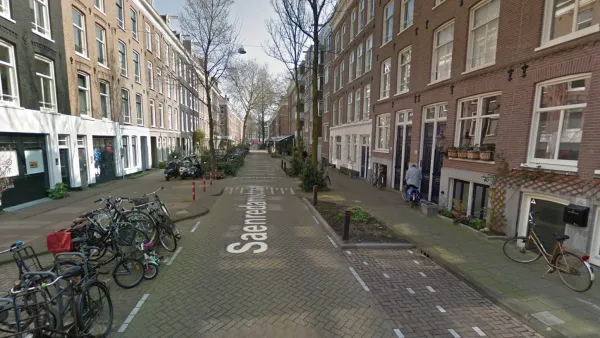
What the city of Amsterdam will gain by removing cars from on-street parking space.
How Much Parking Near Transit Is Too Much Parking Near Transit?
Faced with the expensive costs of adding park and ride facilities along its expanding transit system, transportation planners in the Seattle region wonder if it's money well spent.

Planetizen Federal Action Tracker
A weekly monitor of how Trump’s orders and actions are impacting planners and planning in America.

California plans to bury El Niño’s downpour
If the state plays its cards right, it may be able to store a billion acre-feet of El Niño’s water in aquifers.

Desperate measures: Advocates weigh draining Lake Powell to fill Colorado River
Draining the reservoir could reduce evaporation losses by a couple hundred thousand acre-feet.

Chicago voters approve permanent festival grounds, penalty for vacant property owners
Currently, major summer and fall festivals take over public parks for weeks at a time, drawing criticism from nearby residents

NYC votes to cut outdoor dining red tape, speed up permitting
New York City also voted to allow the Department of Transportation to begin work on urgent projects before notifying elected officials.

California appears to reject Prop. 45
The proposition would have expanded the projects that qualify for a streamlined environmental review, effectively paring down the California Environmental Quality Act.

FREE Course: Walkable City 1: Why Walkability?
After describing his path towards focusing on walkability as the essence of good planning, Jeff Speck marches through his five principal reasons for making more walkable places.
Reinventing Malls: Planning Alchemy—Turning Gray Fields Into Gold
The course focuses on the opportunities and imperatives that shape reinvention of mall sites.

City of Rosemead
Rutgers University, Edward J. Bloustein School of Planning and Public Policy
One Hundred Miles
Hunter College, City University of New York (CUNY)
The Architects Foundation
University of Cincinnati Online
City of Cambridge
Montrose County
The Pocatello Development Authority