The devil is in the details, as they say. That will be especially true as Congress and the Trump Administration decide how to allocate infrastructure spending around the county.


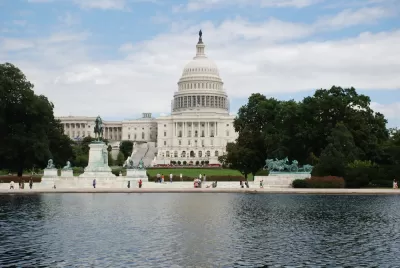
"Looking to bypass states, U.S. mayors are pressing for direct funding to flow from the federal government to cities as part of the $1 trillion infrastructure package that President Trump has identified as a priority for his administration," reports Bill Lucia.
Lucia is referring to a recent visit to Capitol Hill by 40 members of the U.S. Conference of Mayors earlier in March. Oklahoma City Mayor Mick Cornett, currently the president of the organization, provides several sound bites for the article, but the jist of each is the same: when federal infrastructure funding goes to states, cities see none of the benefit.
Though the meetings were short on details, "Cornett suggested a formula akin to the one used for the U.S. Department of Housing and Urban Development’s Community Development Block Grant program could be used to distribute federal infrastructure money to cities."
Read the full story: Mayors to Washington: Don’t Funnel Infrastructure Funding for Cities Through States


Undoing Biden's EV Rule
The partisan divide over how government should reduce greenhouse gas emissions was on full display after the Biden administration finalized its emissions standards rule for light and medium duty vehicles on March 20.
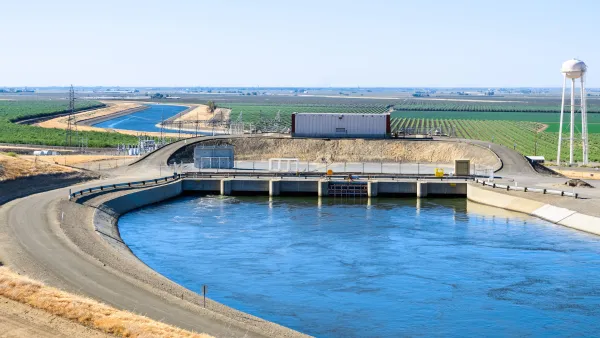
California Governor's Proposal Would Streamline Infrastructure Projects
Governor Newsom hopes his proposed changes to state laws would help speed up infrastructure projects before federal funding is put in jeopardy.
The Republican Energy and Climate Agenda
With many polls predicting a ‘red wave’ on Election Day, we take a look at the energy and climate agenda of the 118th Congress under Republican control.

Planetizen Federal Action Tracker
A weekly monitor of how Trump’s orders and actions are impacting planners and planning in America.

California plans to bury El Niño’s downpour
If the state plays its cards right, it may be able to store a billion acre-feet of El Niño’s water in aquifers.

Chicago breaks ground on $3 billion megadevelopment
The new neighborhood, titled Foundry Park, will one day host 3,700 residences.

California High-Speed Rail Authority CEO resigns after $600,000 scandal
Under Ian Choudri, the authority used taxpayer dollars to fund first class flights and trips to nightclubs.

Want to study the Missouri River? Soon, you may need unanimous approval from 10 states
Legislation would require 10 governors’ permission to study or build projects moving water outside the basin.

Desperate measures: Advocates weigh draining Lake Powell to fill Colorado River
Draining the reservoir could reduce evaporation losses by a couple hundred thousand acre-feet.

FREE Course: Walkable City 1: Why Walkability?
After describing his path towards focusing on walkability as the essence of good planning, Jeff Speck marches through his five principal reasons for making more walkable places.
Reinventing Malls: Planning Alchemy—Turning Gray Fields Into Gold
The course focuses on the opportunities and imperatives that shape reinvention of mall sites.

City of Rosemead
Rutgers University, Edward J. Bloustein School of Planning and Public Policy
One Hundred Miles
Hunter College, City University of New York (CUNY)
The Architects Foundation
University of Cincinnati Online
City of Cambridge
Montrose County
The Pocatello Development Authority