Governor Newsom hopes his proposed changes to state laws would help speed up infrastructure projects before federal funding is put in jeopardy.


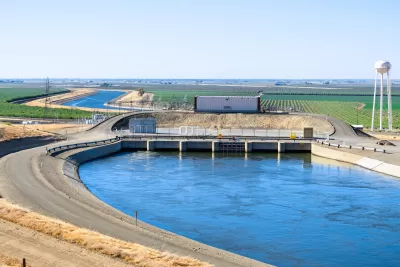
California Governor Gavin Newsom plans to issue an executive order and propose a package of legislation aimed at streamlining the contracting and permitting processes for transportation, energy, water, and other infrastructure projects so the state can take full advantage of federal funding brought in by the Inflation Reduction Act and other laws.
As Liam Dillon and Hannah Wiley report in the Los Angeles Times, “Altogether, administration officials hope the package could speed up project construction by more than three years and reduce costs by hundreds of millions of dollars — efforts they say are necessary to achieve the state’s aggressive climate goals.”
Newsom’s proposal takes aim at the state’s controversial California Environmental Quality Act (CEQA) by attempting to limit the length of time CEQA lawsuits can take. “The proposal aims to prevent any lawsuit against certain water, transportation, clean energy, semiconductor and microelectronics projects from lasting longer than nine months.”
The plan also includes the creation of a cross-agency “infrastructure strike team” that will decide how to best target projects for completion, simpler contracting models for California’s departments of transportation and water resources, and expedited timelines for three new wildlife crossings. “The final part of Newsom’s plan would streamline Caltrans’ environmental mitigation efforts and permitting for projects that affect endangered species or are within the Sacramento-San Joaquin River Delta.”
FULL STORY: Newsom unveils plan to speed up infrastructure in California


Executive Order Pauses Infrastructure, Clean Energy Funds
Trump’s order puts a freeze on unspent funding from the Inflation Reduction Act and the Infrastructure Investment and Jobs Act.
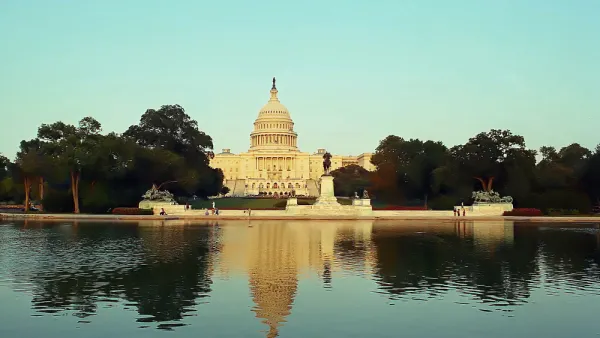
No Bragging Rights for Passing the Infrastructure Act?
You'd think the passage of the $1.2 trillion bipartisan infrastructure act would convey bragging rights for Democratic congress members facing competitive midterm elections today. Ironically, Republicans who opposed the bill are taking credit.
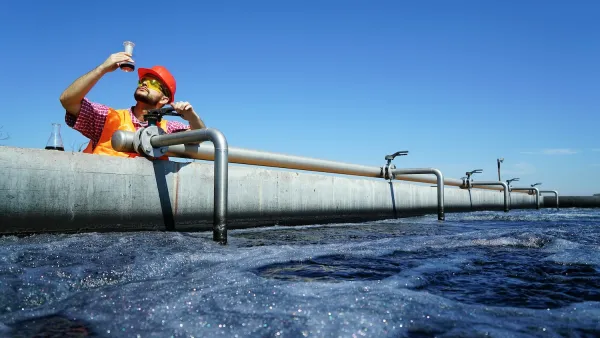
Judge Orders Release of Frozen IRA, IIJA Funding
The decision is a victory for environmental groups who charged that freezing funds for critical infrastructure and disaster response programs caused “real and irreparable harm” to communities.

The state-sanctioned urbicide of Austin
People don’t kill cities. Freeways do.

US to reduce Colorado River water deliveries to Mexico
A new Colorado Treaty amendment reduces Mexico’s Colorado River water allocation by 250,000 acre feet.

New Jersey’s second-largest city bans standalone data centers
Jersey City will continue to allow co-location facilities, such as those meant for research institutions that store their own data.

Amtrak not solely to blame for New Jersey commuter rail's unreliability, report finds
A new study from the Garden State Initiative found that NJ Transit’s budget grew 20% across a 4 year period, but reliability declined significantly over the same period.

EPA erases limits on planet-warming pollution from power plants
Under Monday’s plan, power plants would still have some limits on how much mercury, arsenic and other contaminants they can emit.

Phoenix announces new on-demand transit service, more frequent RAPID buses
Both new services will launch in October, and are part of Phoenix's Project Effective Access Solutions for Easing Congestion.

FREE Course: Walkable City 1: Why Walkability?
After describing his path towards focusing on walkability as the essence of good planning, Jeff Speck marches through his five principal reasons for making more walkable places.
Reinventing Malls: Planning Alchemy—Turning Gray Fields Into Gold
The course focuses on the opportunities and imperatives that shape reinvention of mall sites.

Eagle County Government
Harvard University Graduate School of Design
Nashville Planning Department
The Architects Foundation
University of Cincinnati Online
The Pocatello Development Authority
The Urban Renewal Agency of the City of Pocatello
Journal of the American Planning Association