Good urban design can make growth more appealing.



Amid the debate over growth and development in Los Angeles, urban designer Gerhard Mayer takes to Streetsblog LA to write, "The public resistance we are feeling against change is partially because we, the design profession, have not offered better ways to live in our cities"—nor does policy exist to support them.
Rather than defaulting to "extremes"—single-family houses and skyscrapers—he suggests that Los Angeles borrow from Europe and reorient itself to building "multiple types of dwellings for a variety of situations and income levels."
Two of what Mayer calls the "missing middle buildings" are the row house and the perimeter apartment block.
Row houses—which are banned in L.A.—are "the ideal single family house type near transit, and as such, they are the workhorses of a comfortable city," he writes. They "perfectly mediate between an urban core and a single family neighborhood," and "can achieve the minimum density required to run efficient, economically self-sustaining public transit."
Perimeter apartments "only line the edges against the streets, but inside the block there is a green courtyard"—where playgrounds or retail can be sited "in the middle of the city, but safe and unencumbered by automobiles."
Read the full story: Successful Buildings For A Better City
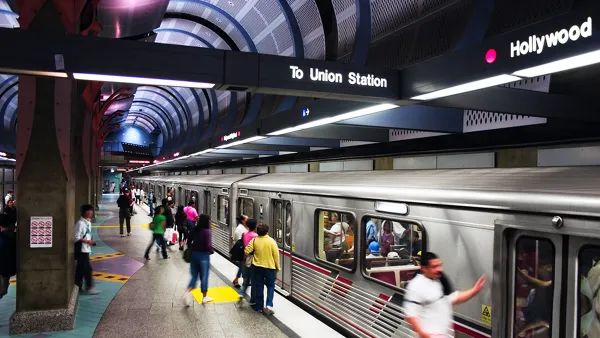
Can Los Angeles Fix its Bad Transit?
Transit writer Alon Levy argues it will take more than system improvements to integrate public transit into L.A.'s urban fabric.
Three Things the Mayor Can Do to Fix L.A.
Los Angeles Times architecture critic Christopher Hawthorne offers three pieces of advice to recently re-elected L.A. Mayor Antonio Villaraigosa for improving his city -- and his urban planning credibility.
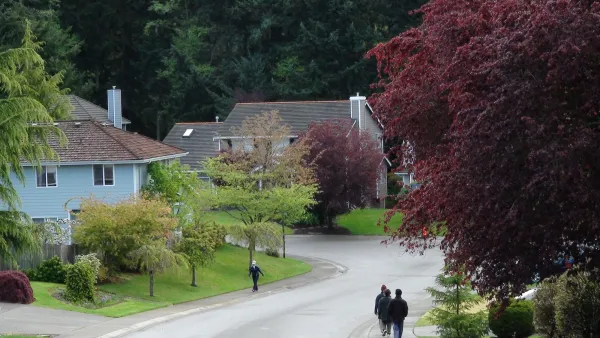
Move over, zoning. Housing’s unsung hero is better street design.
The physical layout of infrastructure is the quiet force that shapes housing supply.

Planetizen Federal Action Tracker
A weekly monitor of how Trump’s orders and actions are impacting planners and planning in America.

California plans to bury El Niño’s downpour
If the state plays its cards right, it may be able to store a billion acre-feet of El Niño’s water in aquifers.

Desperate measures: Advocates weigh draining Lake Powell to fill Colorado River
Draining the reservoir could reduce evaporation losses by a couple hundred thousand acre-feet.

Mamdani’s pied-à-terre tax survives legal challenge
A panel of judges found that the plaintiffs failed to demonstrate injury as a result of New York City's implementation of the tax.

Eastern Nebraska is running out of electricity
Data centers and electrification are straining eastern Nebraska’s grid, throttling economic development.

Seattle passes record-breaking transit services expansion
Proposition 1 will double the city’s transit tax to add 95,000 more bus trips and preserve 180,000 bus trips annually.

FREE Course: Walkable City 1: Why Walkability?
After describing his path towards focusing on walkability as the essence of good planning, Jeff Speck marches through his five principal reasons for making more walkable places.
Reinventing Malls: Planning Alchemy—Turning Gray Fields Into Gold
The course focuses on the opportunities and imperatives that shape reinvention of mall sites.

City of Rosemead
Rutgers University, Edward J. Bloustein School of Planning and Public Policy
One Hundred Miles
University of Michigan School for Environment and Sustainability (SEAS)
Hunter College, City University of New York (CUNY)
The Architects Foundation
City of Cambridge
Montrose County
The Pocatello Development Authority