It took awhile, but the city of Indianapolis has finally approved the nation's newest income tax to raise revenue for the IndyGo public transit system.


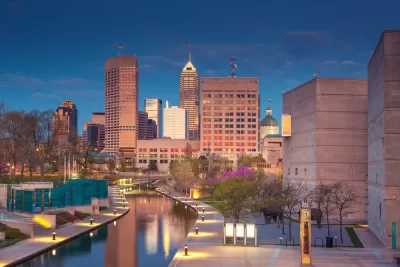
[Updated March 1, 2017] "The Marion County transit system is getting its first major expansion," reports James Briggs.
The City-County Council on Monday approved a 0.25 percent income tax hike that will pump more than $54 million a year into the county's meager bus service. The money will pay for the construction of three bus rapid transit lines, new buses, increased route frequency and new sidewalks and bus shelters.
The transit tax was closely watched by transit advocates around the country, as well as locals, for its unique method of raising revenue and its approval process. Planetizen readers will recall that Marion County voters overwhelmingly supported the income tax for transit, by approving Question 2 in the November 2016 election. The Indianapolis City-County Council delayed action on the results of that vote until yesterday. According to Briggs, the tax took years to approve, moving through layers of bureaucracy at the state and county levels, before finally gaining the approval of the Indianapolis City-County Council.
Now that the whole process is said and done, the income tax hike will take effect in October, explains Briggs, "costing Marion County residents about $100 per $40,000 of income."
[An earlier version of this article incorrectly described the Indianapolis transit tax as the first of its kind. Cincinnati has a 0.3 percent earnings tax that funds transit.]
FULL STORY: Indy council approves transit tax


Indianapolis City Council Has Yet to Sign Off on Voter-Approved Transit Tax
Waiting for the funding to back up a transit plan can be brutal—especially when the calendar says February you thought you approved a transit-funding tax in the November election.

Without Private Funding, Transit Revenue Could Take a Hit in Indianapolis
IndyGo transit officials are required to match transit income tax revenue with funding from private sources, but haven't yet met that end of the bargain. A new state law would hold IndyGo accountable to those requirements.
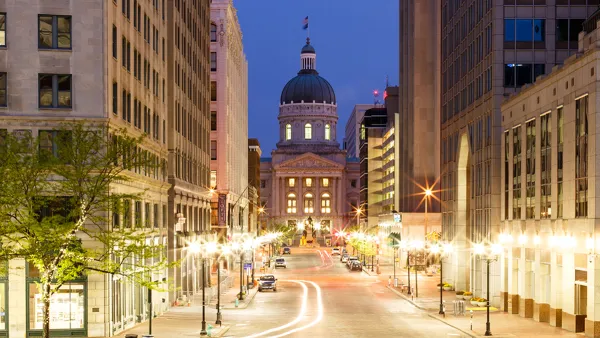
Indianapolis Voters Overwhelmingly Pass Income Tax for Transit
Marion County may soon have the nation's most progressive tax dedicated to public transit, and only bus transit at that. In addition to the faith and business communities that backed the measure, Gov. (now V.P.-elect) Mike Pence deserves credit.

The state-sanctioned urbicide of Austin
People don’t kill cities. Freeways do.

US to reduce Colorado River water deliveries to Mexico
A new Colorado Treaty amendment reduces Mexico’s Colorado River water allocation by 250,000 acre feet.

New Jersey’s second-largest city bans standalone data centers
Jersey City will continue to allow co-location facilities, such as those meant for research institutions that store their own data.

Amtrak not solely to blame for New Jersey commuter rail's unreliability, report finds
A new study from the Garden State Initiative found that NJ Transit’s budget grew 20% across a 4 year period, but reliability declined significantly over the same period.

EPA erases limits on planet-warming pollution from power plants
Under Monday’s plan, power plants would still have some limits on how much mercury, arsenic and other contaminants they can emit.

Phoenix announces new on-demand transit service, more frequent RAPID buses
Both new services will launch in October, and are part of Phoenix's Project Effective Access Solutions for Easing Congestion.

FREE Course: Walkable City 1: Why Walkability?
After describing his path towards focusing on walkability as the essence of good planning, Jeff Speck marches through his five principal reasons for making more walkable places.
Reinventing Malls: Planning Alchemy—Turning Gray Fields Into Gold
The course focuses on the opportunities and imperatives that shape reinvention of mall sites.

Eagle County Government
Harvard University Graduate School of Design
Nashville Planning Department
The Architects Foundation
University of Cincinnati Online
The Pocatello Development Authority
The Urban Renewal Agency of the City of Pocatello
Journal of the American Planning Association