In terms of travel times, jobs, and facilities, Tampa Bay ranks last or close to last in every category that measures public transit service and spending.


Florida is the most dangerous state in the United States to be a pedestrian. Tampa Bay is no exception, as more people in the state and city turn to private vehicles and away from public transit, it's only going to become more dangerous.
"In Tampa Bay, local leaders have debated ways to fix the area’s limited public transportation system for 30 years — then time and again, chosen to do nothing, the Tampa Bay Times has found," report Caitlin Johnston and Eli Zhang in the Tampa Bay Times. Among the many ways the city government has ignored the low hanging fruit of public transit, Johnston and Zhang point out, "Almost every other top-20 metro area has at least 600 buses. Tampa Bay has the fewest, about 360."
Some officials point to the city's sprawl as a reason for the intractable problems of public transit in the city, but this argument looks weak when you compare it to the many sprawling cities throughout the country that perform better in transit service. What's worse is that argument is self-serving. The less the city invests in transit, the more they will be encouraging sprawl. If you don’t have good transit options within the city, there's little advantage in living close to town.
FULL STORY: Tampa Bay has one of the worst public transit systems in America. Here’s why.

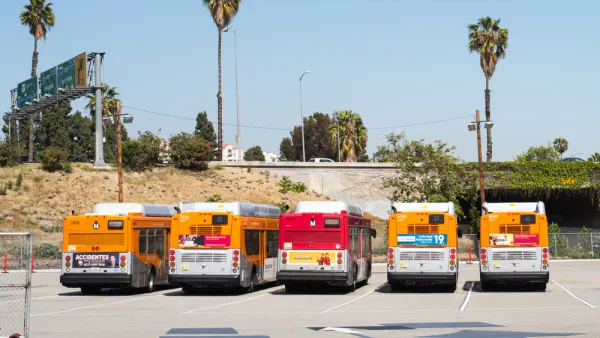
Another Year of Falling Ridership for L.A.'s Metro System
Even as extensions to the Gold Line and Measure S seem to paint a brighter future for public transit in Los Angeles, commuters continue to use less public transit, especially buses.
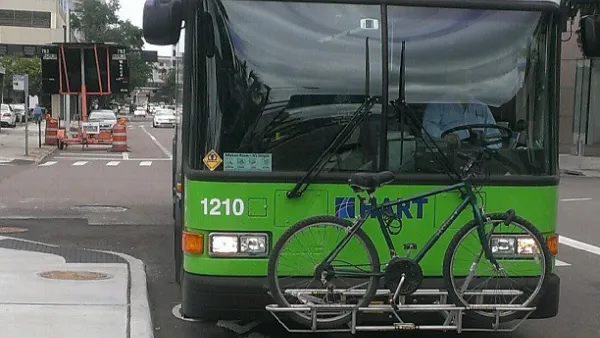
Bus Ridership Plummets Across the Tampa Bay Region
Bus ridership in the Tampa Bay region dropped for the first time after six straight years of growth.
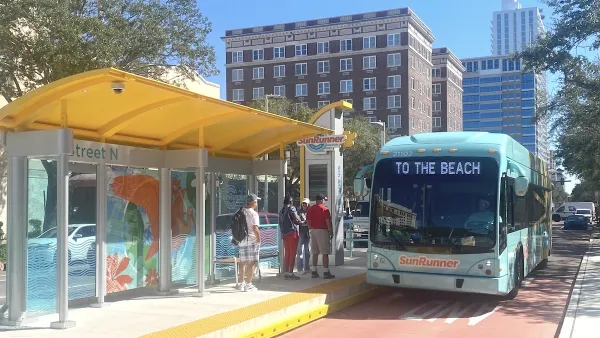
Florida Law Could Eliminate Dedicated Bus Lanes
A new law calls for a minimum ridership of 6,000 passengers in the first year for new bus rapid transit lines. To date, no bus lines in the Tampa Bay region come close.

The state-sanctioned urbicide of Austin
People don’t kill cities. Freeways do.

US to reduce Colorado River water deliveries to Mexico
A new Colorado Treaty amendment reduces Mexico’s Colorado River water allocation by 250,000 acre feet.

New Jersey’s second-largest city bans standalone data centers
Jersey City will continue to allow co-location facilities, such as those meant for research institutions that store their own data.

Amtrak not solely to blame for New Jersey commuter rail's unreliability, report finds
A new study from the Garden State Initiative found that NJ Transit’s budget grew 20% across a 4 year period, but reliability declined significantly over the same period.

EPA erases limits on planet-warming pollution from power plants
Under Monday’s plan, power plants would still have some limits on how much mercury, arsenic and other contaminants they can emit.

Phoenix announces new on-demand transit service, more frequent RAPID buses
Both new services will launch in October, and are part of Phoenix's Project Effective Access Solutions for Easing Congestion.

FREE Course: Walkable City 1: Why Walkability?
After describing his path towards focusing on walkability as the essence of good planning, Jeff Speck marches through his five principal reasons for making more walkable places.
Reinventing Malls: Planning Alchemy—Turning Gray Fields Into Gold
The course focuses on the opportunities and imperatives that shape reinvention of mall sites.

Eagle County Government
Harvard University Graduate School of Design
Nashville Planning Department
The Architects Foundation
University of Cincinnati Online
The Pocatello Development Authority
The Urban Renewal Agency of the City of Pocatello
Journal of the American Planning Association