The way Google predicts parking difficulty could make it easier to develop "smart city" applications in the future.


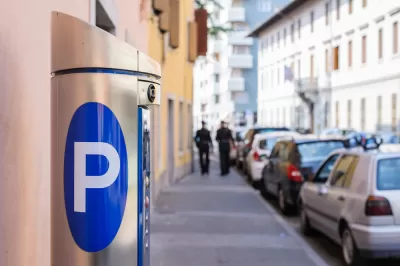
Earlier in February, "Google quietly launched a new parking feature for Google Maps on Android across 25 major US cities," according to Yitaek Hwang. "If you are in these metro areas, you will now see a red parking sign that indicates limited parking availability to help you plan your trip."
Hwang describes the machine learning process that Google used to determine parking difficulty before offering two lessons gleaned from Google's new parking predictor:
First, not all smart city applications require sensors. Sometimes the data is already available, and we don’t have to resort to adding new sensors to gather that information.
Second, even though neural networks are popular and accurate, sometimes simpler algorithms can fit the need just as well.
FULL STORY: Using Machine Learning to Predict Parking Difficulty


Google Maps Now Lets You Feed Your Parking Meter
Google's newest partnership offers contactless parking meter payments and transit fare purchases.

New Google Map Layer Shows COVID-19 Infection Rates
A new layer showing the seven-day average of confirmed COVID-19 cases started rolling out to Android and iPhones last week.
Opinion: Parking Has a Bigger Role to Play in the Smart City
Parking garages and lots could help shape the new mobility landscape in important ways that go far beyond storing cars.

The state-sanctioned urbicide of Austin
People don’t kill cities. Freeways do.

US to reduce Colorado River water deliveries to Mexico
A new Colorado Treaty amendment reduces Mexico’s Colorado River water allocation by 250,000 acre feet.

New Jersey’s second-largest city bans standalone data centers
Jersey City will continue to allow co-location facilities, such as those meant for research institutions that store their own data.

Amtrak not solely to blame for New Jersey commuter rail's unreliability, report finds
A new study from the Garden State Initiative found that NJ Transit’s budget grew 20% across a 4 year period, but reliability declined significantly over the same period.

EPA erases limits on planet-warming pollution from power plants
Under Monday’s plan, power plants would still have some limits on how much mercury, arsenic and other contaminants they can emit.

Phoenix announces new on-demand transit service, more frequent RAPID buses
Both new services will launch in October, and are part of Phoenix's Project Effective Access Solutions for Easing Congestion.

FREE Course: Walkable City 1: Why Walkability?
After describing his path towards focusing on walkability as the essence of good planning, Jeff Speck marches through his five principal reasons for making more walkable places.
Reinventing Malls: Planning Alchemy—Turning Gray Fields Into Gold
The course focuses on the opportunities and imperatives that shape reinvention of mall sites.

Eagle County Government
Harvard University Graduate School of Design
Nashville Planning Department
The Architects Foundation
University of Cincinnati Online
The Pocatello Development Authority
The Urban Renewal Agency of the City of Pocatello
Journal of the American Planning Association