Proposed rules to enforce wider paths on Toronto city sidewalks for pedestrians and the disabled is creating angst in local operators of sidewalk cafes.


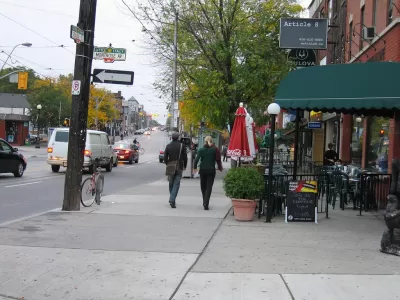
New regulations proposed by Toronto's Disability Access and Inclusion Advisory Committee would create a wider 'clearway' on local sidewalks, leaving some operators of sidewalk cafes fuming. Michael Smee of the CBC reports that the proposed rules would require the city to enforce a 2.1 meter (approx. 6.9 feet) clearway on main street and a smaller clearway on secondary streets. Smee writes that although the 2.1 meter clearway requirement is an existing regulation, some restaurateurs have failed to follow the law, and in general it hasn't been enforced.
...if bar or restaurant owners are forced to move their patio fences back from the roadway under the new rules, measures are being researched that could allow them to expand in other ways to make up for the lost square footage, the committee heard.
For instance, one of the new measures would allow patios to spread to the left or right, in front of neighbouring storefronts, provided those business owners agree.
Other suggestions to make up for the lost square footage include allowing cafe's to expand into adjacent parking spaces.
Read the full story: New plan proposes pushing patios back to make room for pedestrians, people with disabilities
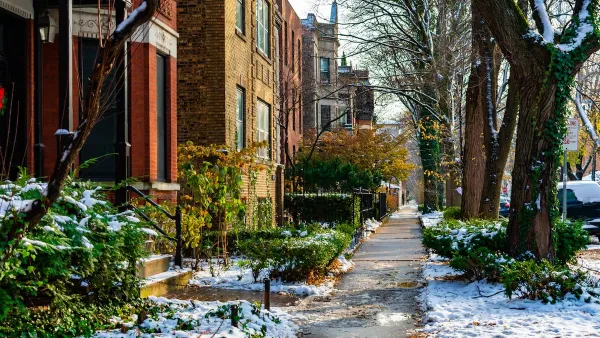
Chicago Budget Fails to Include Snow Plowing Program
Disability rights advocates say the “Plow the Sidewalks” program is a necessity for Chicagoans with limited mobility in winter months.
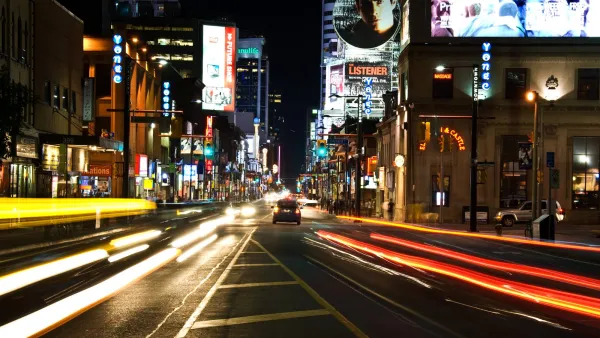
A Pedestrian-Forward Vision for Toronto Roadway
Toronto’s iconic Yonge Street is heavily used by pedestrians, and, according to this article, it's time for a revamp that acknowledges all of the street's users.
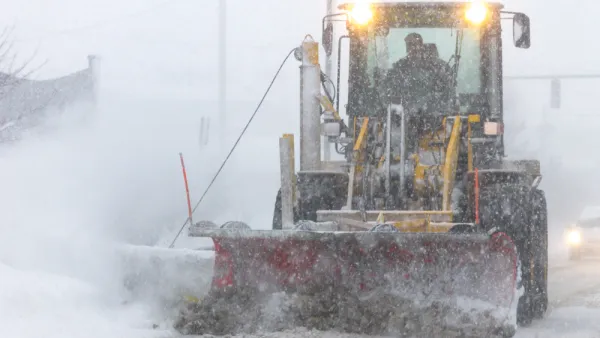
Editorial: Toronto’s Snow Clearing Plan Isn’t Fair
The city’s plan for dealing with snow and ice on sidewalks this winter doesn't address past problems and won't meet the needs of residents, say critics.

Planetizen Federal Action Tracker
A weekly monitor of how Trump’s orders and actions are impacting planners and planning in America.

California plans to bury El Niño’s downpour
If the state plays its cards right, it may be able to store a billion acre-feet of El Niño’s water in aquifers.

Desperate measures: Advocates weigh draining Lake Powell to fill Colorado River
Draining the reservoir could reduce evaporation losses by a couple hundred thousand acre-feet.

Mamdani’s pied-à-terre tax survives legal challenge
A panel of judges found that the plaintiffs failed to demonstrate injury as a result of New York City's implementation of the tax.

Eastern Nebraska is running out of electricity
Data centers and electrification are straining eastern Nebraska’s grid, throttling economic development.

Seattle passes record-breaking transit services expansion
Proposition 1 will double the city’s transit tax to add 95,000 more bus trips and preserve 180,000 bus trips annually.

FREE Course: Walkable City 1: Why Walkability?
After describing his path towards focusing on walkability as the essence of good planning, Jeff Speck marches through his five principal reasons for making more walkable places.
Reinventing Malls: Planning Alchemy—Turning Gray Fields Into Gold
The course focuses on the opportunities and imperatives that shape reinvention of mall sites.

City of Rosemead
Rutgers University, Edward J. Bloustein School of Planning and Public Policy
One Hundred Miles
University of Michigan School for Environment and Sustainability (SEAS)
Hunter College, City University of New York (CUNY)
The Architects Foundation
City of Cambridge
Montrose County
The Pocatello Development Authority