With rents on the rise even in "inexpensive" cities like New Orleans, artists and musicians are getting priced out. Affordable housing designated for artists is one way to help them stay.


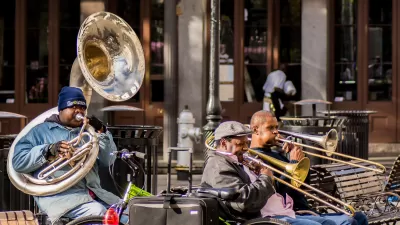
It's a story we hear a lot. Artists gave a place its cultural cachet, but they're getting priced out as gentrification sets in. Teresa Wiltz writes, "New Orleans, like much of the rest of the country, also has an affordable housing crisis — costs here have jumped 50 percent since 2000. As a result, many of the musicians tourists flock to see are forced to do the 'double-ZIP code thing': live outside the city and parachute in for gigs."
Last year, Mayor Mitch Landrieu announced a five-year housing plan to build or preserve 7,500 affordable units. That includes housing designated specifically for "service workers, artists and culture bearers."
Other cities are exploring similar options. "In New York City, Democratic Mayor Bill de Blasio announced plans in 2015 to provide 1,500 affordable housing units for artists and musicians by 2025." Dallas and Plano also have plans for arts districts with affordable living spaces.
"And this week, California is launching a pilot program to identify 10 to 15 communities that could be designated as cultural districts with housing and workspace for artists." Saddled with infrastructure costs and uncertain federal funding, cities are turning to philanthropy, tax credits, and elsewhere for the funds.
Read the full story: To keep their artists, cities explore affordable housing

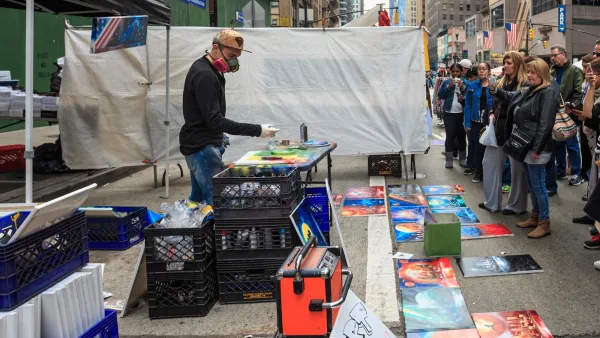
NYC has Lost 4% of its Resident Artists Since 2019
Advocates argue the city should build more affordable housing reserved for artists, who are being increasingly priced out.
August Must-Reads: Top 10 Articles From Last Month
In suburban Houston, cities are scrambling to expand water infrastructure to serve new communities. But can sprawl be part of a workable solution to the housing crisis?
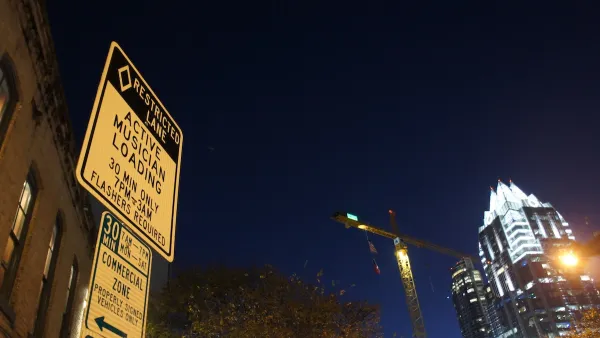
SXSW Panel Addresses Housing Affordability for Artists
Musicians are increasingly hard-pressed to find affordable housing in Austin, a city known for its music scene.

Planetizen Federal Action Tracker
A weekly monitor of how Trump’s orders and actions are impacting planners and planning in America.

Amtrak, CN end decades-long dispute with eight-year agreement
The new operating agreement establishes an updated framework for the companies to work together, including processes to resolve disputes.

Judges permit Denver to divert 77,000 acre feet from the Colorado River for reservoir expansion
Overuse and climate change have caused the Colorado River’s water levels to plummet.

Boston has spent millions making the Green Line more accessible — and there’s no end in sight
While the city has invested millions into expanding and adding platforms to the Green Line to make it more accessible, new train cars set to arrive next year will be too tall for disabled passengers to board without raising the current platforms.

Idaho may see an 18% drop in federal surface transit funding — the largest estimated cut in the US
Transit systems in rural communities are much more reliant on federal funding to provide their services.

How ‘post-disaster gentrification’ alters neighborhoods after natural calamities
After hurricanes, fires or other calamities, the original residents of a community are often replaced by younger, wealthier residents.

FREE Course: Walkable City 1: Why Walkability?
After describing his path towards focusing on walkability as the essence of good planning, Jeff Speck marches through his five principal reasons for making more walkable places.
Reinventing Malls: Planning Alchemy—Turning Gray Fields Into Gold
The course focuses on the opportunities and imperatives that shape reinvention of mall sites.

Harvard University Graduate School of Design
KFH Group Inc.
Greater Baltimore Committee
The Architects Foundation
University of Cincinnati Online
The Pocatello Development Authority
The Urban Renewal Agency of the City of Pocatello