The Los Angeles Times uncovers a state with a lot more energy that it needs, which has regulators explaining their decisions residents and businesses opening their wallets.


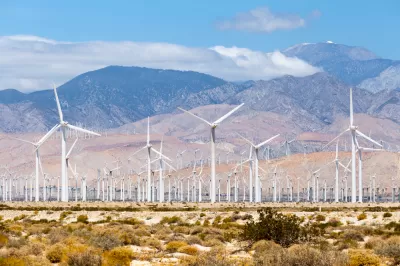
Ivan Penn and Ryan Menezes report on the state of California's energy infrastructure planning. The premise of the article: The state is using less energy, and even shutting down unnecessary facilities, but it also continues to approve new electricity facilities.
California has a big — and growing — glut of power, an investigation by the Los Angeles Times has found. The state’s power plants are on track to be able to produce at least 21% more electricity than it needs by 2020, based on official estimates. And that doesn’t even count the soaring production of electricity by rooftop solar panels that has added to the surplus.
Those extra facilities and surplus capacity add up to higher bills for Californians: "residential and business customers together pay $6.8 billion more for power than they did [in 2008]," according to Penn and Menezes, despite the fact that they also use 2.6 percent less energy since then.
The article is of feature length, breadth, and depth, with a lot more detail on the politics of energy in California. Also included is an interactive graphic illustrating some of the key points for understanding California's current energy portfolio.
Read the full story: Californians are paying billions for power they don't need

Washington Tribes Oppose Wind Project
Tribal communities claim that a major wind energy project threatens sensitive cultural and environmental resources.
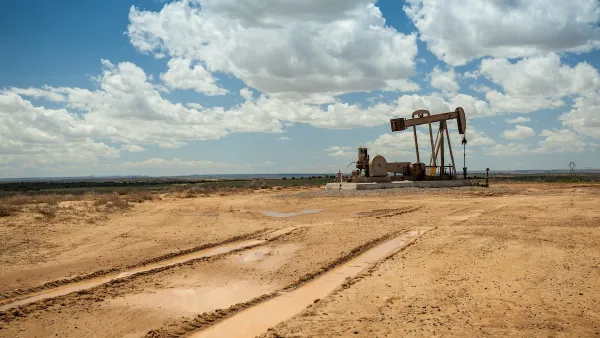
High Ozone Levels Threaten New Mexico Oil Town
The small community of Loving, New Mexico has higher ozone levels than dense cities like Los Angeles.

Federal Regulators Reject Energy Projects on Navajo Land
The decision signals a new policy that respects tribal sovereignty and requires collaboration with local tribes.

Planetizen Federal Action Tracker
A weekly monitor of how Trump’s orders and actions are impacting planners and planning in America.

California plans to bury El Niño’s downpour
If the state plays its cards right, it may be able to store a billion acre-feet of El Niño’s water in aquifers.

Desperate measures: Advocates weigh draining Lake Powell to fill Colorado River
Draining the reservoir could reduce evaporation losses by a couple hundred thousand acre-feet.

Housing is the top priority of Seattle’s sole new councilmember
Jenks campaigned on building 1,000 new units of affordable housing.

New tax cuts may slash $1.5 billion in funding for Miami transit, public parks
Amendment 3 will save Miami-Dade residents homeowners $2,700 in 2028.

Arizona, Wisconsin, Pennsylvania hope to finally advance climate goals post-midterms
The three states have spent years under Republican or divided control.

FREE Course: Walkable City 1: Why Walkability?
After describing his path towards focusing on walkability as the essence of good planning, Jeff Speck marches through his five principal reasons for making more walkable places.
Reinventing Malls: Planning Alchemy—Turning Gray Fields Into Gold
The course focuses on the opportunities and imperatives that shape reinvention of mall sites.

City of Rosemead
Rutgers University, Edward J. Bloustein School of Planning and Public Policy
One Hundred Miles
University of Michigan School for Environment and Sustainability (SEAS)
Hunter College, City University of New York (CUNY)
The Architects Foundation
City of Cambridge
Montrose County
The Pocatello Development Authority