Access to healthcare and city or suburban lifestyles seem to be tied to a longer life.


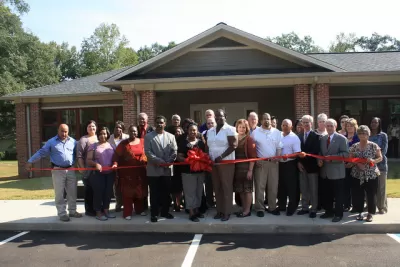
Where you live plays a big part in your life expectancy. "Many studies have recently highlighted this growing divide between health outcomes in urban and rural America. But it’s increasingly true that, more than income, more than the frequency with which you exercise, the simple fact of where you live can have a huge impact on your health" according to a story from Sarah Frostenson in Vox.
Over the past 15 years, the rates of deaths from heart disease and cancer have slowed down as treatments improved. But, "[i]n rural areas, improvements are now slowing and even declining, widening the rural-urban health gap," Frostenson writes. "Most shockingly, rural Americans were 50 percent more likely to die from an unintentional injury than urban Americans during this 15-year period," she continues. There are many possible causes for the poor public health outcomes of rural areas, including the lack of health resources in sparsely populated areas. "Rural health clinics are far more likely to be understaffed (only 11 percent of all physicians choose to practice in rural areas), and they often lack subspecialty care, which hurts people who need specialized treatment," Frostenson writes.
Read the full story: The death rate gap between urban and rural America is getting wider

Living (and Dying) with COVID: How Many Deaths are Acceptable?
Political analyst Philip Bump asks the "unstated, unpleasant question" that the U.S. has struggled with since the inception of the pandemic, more relevant now with the widespread availability of vaccines that are effective at preventing most deaths.
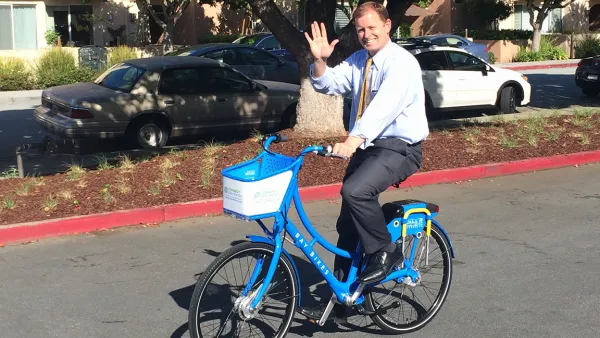
Bike to Work and Live Longer
A large scale study conducted in the U.K. shows biking to work leads to a longer life, despite dangers on the roads.

Is the built environment partly to blame for population decline?
The way communities are designed could be contributing to lower birth rates.

Planetizen Federal Action Tracker
A weekly monitor of how Trump’s orders and actions are impacting planners and planning in America.

California plans to bury El Niño’s downpour
If the state plays its cards right, it may be able to store a billion acre-feet of El Niño’s water in aquifers.

Chicago breaks ground on $3 billion megadevelopment
The new neighborhood, titled Foundry Park, will one day host 3,700 residences.

California High-Speed Rail Authority CEO resigns after $600,000 scandal
Under Ian Choudri, the authority used taxpayer dollars to fund first class flights and trips to nightclubs.

Want to study the Missouri River? Soon, you may need unanimous approval from 10 states
Legislation would require 10 governors’ permission to study or build projects moving water outside the basin.

Desperate measures: Advocates weigh draining Lake Powell to fill Colorado River
Draining the reservoir could reduce evaporation losses by a couple hundred thousand acre-feet.

FREE Course: Walkable City 1: Why Walkability?
After describing his path towards focusing on walkability as the essence of good planning, Jeff Speck marches through his five principal reasons for making more walkable places.
Reinventing Malls: Planning Alchemy—Turning Gray Fields Into Gold
The course focuses on the opportunities and imperatives that shape reinvention of mall sites.

City of Rosemead
Rutgers University, Edward J. Bloustein School of Planning and Public Policy
One Hundred Miles
Hunter College, City University of New York (CUNY)
The Architects Foundation
University of Cincinnati Online
City of Cambridge
Montrose County
The Pocatello Development Authority