Proposed long-range transportation plan for Madison emphasizes biking, walking, bus rapid transit.



In one of their first actions of the year, Madison's Public Works Board recommended the adoption of a 30-year plan called 'Madison in Motion.' According to reporting from Lisa Speckhard in The Capital Times, "The plan outlines the strategies for all modes of transportation that will be necessary to accommodate the 100,000 new residents, 70,000 new jobs and increased numbers of commuters that the next 40 years are expected to bring."
In particular the plan offered suggestions to bolster the city’s biking and walking infrastructure. "Because some people might not be comfortable biking on a congested roadway like East Washington, the plan would create more alternatives such as off-street paths or curb-protected bike lanes like those on University Avenue at the UW-Madison campus," Speckhard writes. Among suggestions for walking infrastructure, "The plan recommends that new subdivisions install sidewalks on both sides of the street, as well as improving intersections through measures like raised crosswalks and flashing pedestrian crossing signals," Speckhard says.
Read the full story: Proposed long-range transportation plan for Madison emphasizes biking, walking, bus rapid transit
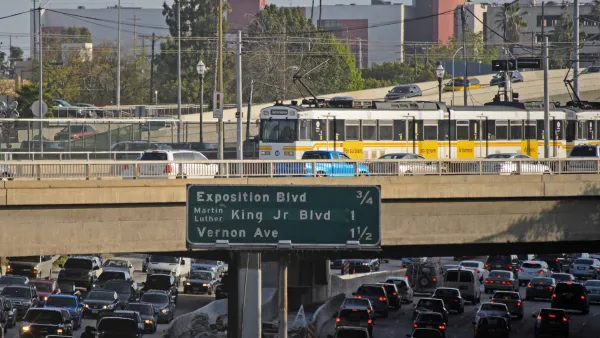
Congestion Pricing Study Taking Shape in Los Angeles
New York City is the furthest along with a congestion pricing scheme, but San Francisco and Los Angeles are catching up in California.

Planning and Teaching in Southern California
Elizabeth Gallardo is a planning associate with the city of Los Angeles, working as part of an ambitious effort to update the city's numerous community plans while also teaching planning courses at a nearby university.
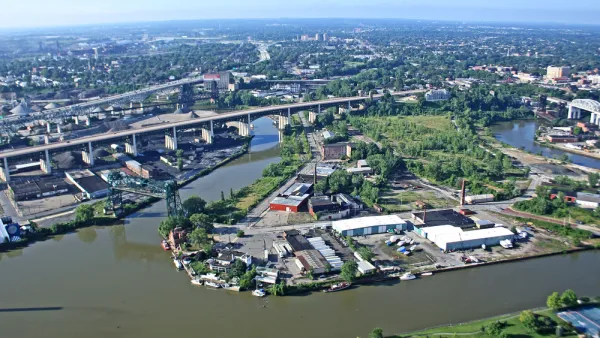
A Long-Range Transportation Plan for Ohio
The Ohio Department of Transportation is gathering public input for the "Access Ohio 2045" long-range transportation plan.

Planetizen Federal Action Tracker
A weekly monitor of how Trump’s orders and actions are impacting planners and planning in America.

Eastern Nebraska is running out of electricity
Data centers and electrification are straining eastern Nebraska’s grid, throttling economic development.

California High-Speed Rail Authority picks trainset manufacturer
The California High-Speed Rail Authority aims to start servicing passengers by 2033.

What could the future of LA transit look like under Raman?
The mayor-elect views broken sidewalks and potholes as crises that can be fixed with better governance.

States are counting on battery farms. Some towns don’t want them.
While fire safety has improved, some communities are still wary.

Dallas releases zoning code overhaul to officials
The drafted overhaul is over 400 pages long.

FREE Course: Walkable City 1: Why Walkability?
After describing his path towards focusing on walkability as the essence of good planning, Jeff Speck marches through his five principal reasons for making more walkable places.
Reinventing Malls: Planning Alchemy—Turning Gray Fields Into Gold
The course focuses on the opportunities and imperatives that shape reinvention of mall sites.

City of Rosemead
Rutgers University, Edward J. Bloustein School of Planning and Public Policy
One Hundred Miles
University of Michigan School for Environment and Sustainability (SEAS)
Hunter College, City University of New York (CUNY)
The Architects Foundation
City of Cambridge
The Pocatello Development Authority
The Urban Renewal Agency of the City of Pocatello