The city of Seattle is moving through the planning and design stages on two important bike infrastructure projects located at the south end of Downtown.


Ryan Packer analyzes two separate but proximate bike infrastructure projects proposed for Seattle—both intended to connect to the city's larger bike network.
The first project would add a protected bike lane on South Dearborn Street, a projected complicated by its passage underneath the I-5 Freeway, which necessitates the participation of the Washington State Department of Transportation.
Construction is slated to begin this spring on the area west of I-5, all the way to 6th Ave S. In the summer, crews will put down a pilot protected bike lane between the west side of I-5 and Rainier Avenue. This will allow SDOT to see how the protected bike lane works before summer 2018, when Dearborn is repaved between Rainier and the east side of I-5 and the bike lane has to be redone with the rest of the street.
The many spatial details of the projects, along with its many complications, is informative of the challenges of implementing bike infrastructure on existing streets.
The second project, the King Street Greenway, is expected for construction in 2018. The neighborhood greenway will pass through the International District at the south end of Downtown Seattle. "King Street greenway will bring the Seattle greenways program into a different sort of territory: a wholly urban one," explains Packer of the significance of the project.
Read the full story: Planning Safe Connections To South Downtown

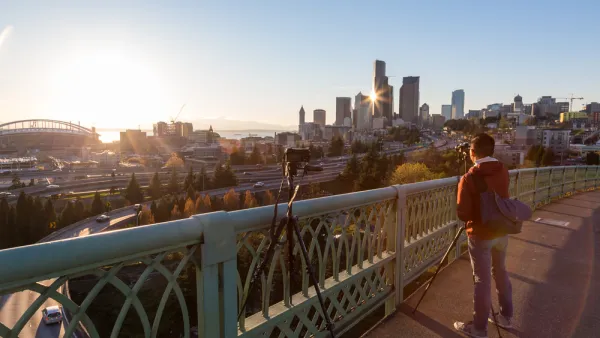
A Thorough, Mixed Review for a New Protected Bike Lane in Seattle
So many highly anticipated bike facilities finally deliver only to fall short of real game changing status. Seattle provides the latest example of the phenomenon in the wild.
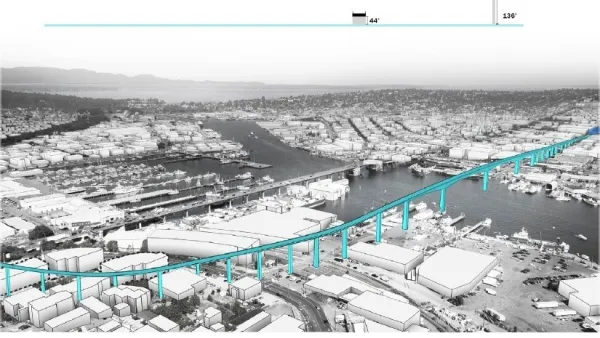
Seattle Ponders Improvements to Ballard Bridge for All Modes of Transport
The Seattle Department of Transportation (SDOT) is in the midst of a planning study on Ballard Bridge, soliciting feedback from the community about how to improve circulation of vehicles and pedestrians.
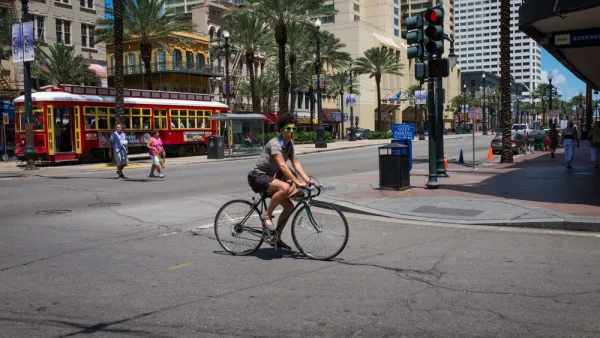
New Orleans Seeking Funds for Big Protected Bike Lane Plans
With a $2.6 million grant already in hand to research the process of planning and developing protected bikes, the city of New Orleans is seeking more funding in the hopes of adding 75 miles of protected bike lanes.

Planetizen Federal Action Tracker
A weekly monitor of how Trump’s orders and actions are impacting planners and planning in America.

Amtrak, CN end decades-long dispute with eight-year agreement
The new operating agreement establishes an updated framework for the companies to work together, including processes to resolve disputes.

Judges permit Denver to divert 77,000 acre feet from the Colorado River for reservoir expansion
Overuse and climate change have caused the Colorado River’s water levels to plummet.

NYC DOT wants faster, more permanent street upgrades
The city is examining ways to build more concrete infrastructure without getting entangled in 'decades-long' projects.

'Something we’ve never seen before:' rising utility rates could strain city finances nationwide
Data centers, climate change and other factors have caused utility rates in the United States to increase by 38% since 2020.

Trump to overrule local leaders, lease millions of acres of America’s Pacific Island territories’ seafloors to mining companies
International law says that the Indigenous people of America’s territories have a right to prior and informed consent regarding projects that impact their countries.

FREE Course: Walkable City 1: Why Walkability?
After describing his path towards focusing on walkability as the essence of good planning, Jeff Speck marches through his five principal reasons for making more walkable places.
Reinventing Malls: Planning Alchemy—Turning Gray Fields Into Gold
The course focuses on the opportunities and imperatives that shape reinvention of mall sites.

Harvard University Graduate School of Design
KFH Group Inc.
Greater Baltimore Committee
The Architects Foundation
University of Cincinnati Online
The Pocatello Development Authority
The Urban Renewal Agency of the City of Pocatello