Not every transit project has a positive effect on adjacent property values. A study finds that people do not, in fact, want to live next to Norfolk, Virginia's Tide light rail.


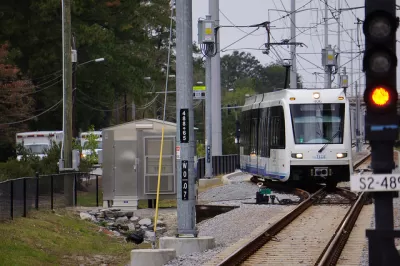
Norfolk's Tide light rail system isn't doing so well. Jen Kinney writes, "Despite the fact that the Tide remains one of the biggest money losers per ride in the country, operator Hampton Roads Transit has argued that at least light rail has contributed to economic development in downtown, pointing to a figure of $532 million in investment since 2011."
A recent study, however, seems to disprove that assertion. "To the lead author's surprise, they found one of the largest negative impacts of light rail on housing prices in the existing literature." "homes within 1,500 meters of a Tide station sold for approximately 8 percent less than similar homes in the Virginia Beach control group."
Kinney speculates that the Tide's failures may be due to its poor positioning. As Kate Bachelder Odell wrote in the Wall Street Journal, "The Tide moves from places you don't work to areas you don't wish to visit."
The lesson? Light rail systems should be judged on their individual merits, not lumped together for general praise or condemnation.
FULL STORY: Measurements of Light Rail’s Impact on House Prices Are Uneven

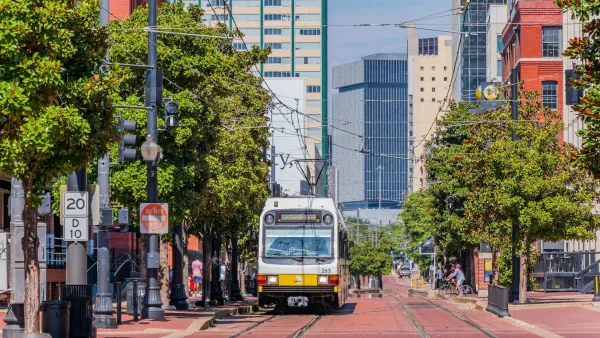
Development Near Dallas Light Rail has ‘Directly Created’ Over 5,000 Jobs, Generated $18 Billion Over 25 Years
Transit-oriented development has spurred billions in economic activity along DART light rail.

Study: Nearly Half of Portland TOD Residents Commute by Transit
People living in transit-oriented developments are more likely to ditch the car and opt for transit or walking, new research shows.
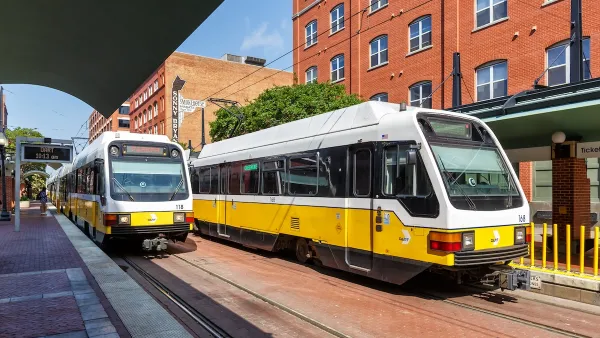
North Texas Transit Leaders Tout Benefits of TOD for Growing Region
At a summit focused on transit-oriented development, policymakers discussed how North Texas’ expanded light rail system can serve as a tool for economic growth.

Planetizen Federal Action Tracker
A weekly monitor of how Trump’s orders and actions are impacting planners and planning in America.

The state-sanctioned urbicide of Austin
People don’t kill cities. Freeways do.

US to reduce Colorado River water deliveries to Mexico
A new Colorado Treaty amendment reduces Mexico’s Colorado River water allocation by 250,000 acre feet.

5 New England states march closer to 800 megawatt wind energy project
Securing federal approval for the project may be complicated under the Trump administration, which has historically been hostile towards domestic wind power.

Baltimore to break ground on $50 million Transit Priority Project
The project will bring faster bus trips, safer streets and better bike connections to Baltimore.

Airbnb launches $250 million 'last-dollar financing' housing accelerator, makes first investment in Austin
The company will put $6.4 million towards affordable housing development in Texas’ capital.

FREE Course: Walkable City 1: Why Walkability?
After describing his path towards focusing on walkability as the essence of good planning, Jeff Speck marches through his five principal reasons for making more walkable places.
Reinventing Malls: Planning Alchemy—Turning Gray Fields Into Gold
The course focuses on the opportunities and imperatives that shape reinvention of mall sites.

Eagle County Government
Harvard University Graduate School of Design
Nashville Planning Department
The Architects Foundation
University of Cincinnati Online
The Pocatello Development Authority
The Urban Renewal Agency of the City of Pocatello
Journal of the American Planning Association