What does Vancouver’s housing market implosion mean for the Seattle area?


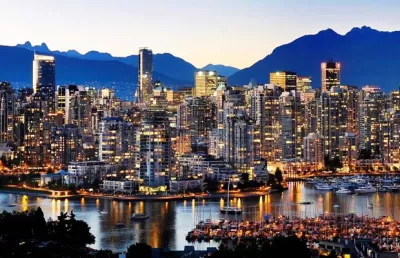
Journalist and author Paul Roberts reports in Crosscut about the implosion in Vancouver, B.C.'s housing market and its effects on the Seattle housing market.
Only three months ago, the British Columbia Real Estate Association forecasted a rosy 5.8 percent price increase for Vancouver-area housing in 2017. But in a report last week, the organization predicted that prices would instead fall by almost nine percent.
So, what, if anything, does Vancouver’s implosion mean for the Seattle area? A great deal, actually. Already, some of the foreign capital that was either in Vancouver or headed there has since shifted to other markets — notably, our own. Realtors here report a steady uptick in purchases by wealthy foreign buyers. Dean Jones, head of Realogics Sotheby’s International Realty, which focuses in part on Asian buyers, estimates that half of the Seattle-area suburban home sales handled by the firm this year have involved Chinese buyers — up from perhaps 30 percent in 2015, according to a recent Bloomberg story.
Read the full story: Vancouver’s housing mess: Could it happen here?

Planetizen Federal Action Tracker
A weekly monitor of how Trump’s orders and actions are impacting planners and planning in America.

California plans to bury El Niño’s downpour
If the state plays its cards right, it may be able to store a billion acre-feet of El Niño’s water in aquifers.

Desperate measures: Advocates weigh draining Lake Powell to fill Colorado River
Draining the reservoir could reduce evaporation losses by a couple hundred thousand acre-feet.

Mamdani’s pied-à-terre tax survives legal challenge
A panel of judges found that the plaintiffs failed to demonstrate injury as a result of New York City's implementation of the tax.

Eastern Nebraska is running out of electricity
Data centers and electrification are straining eastern Nebraska’s grid, throttling economic development.

Seattle passes record-breaking transit services expansion
Proposition 1 will double the city’s transit tax to add 95,000 more bus trips and preserve 180,000 bus trips annually.

FREE Course: Walkable City 1: Why Walkability?
After describing his path towards focusing on walkability as the essence of good planning, Jeff Speck marches through his five principal reasons for making more walkable places.
Reinventing Malls: Planning Alchemy—Turning Gray Fields Into Gold
The course focuses on the opportunities and imperatives that shape reinvention of mall sites.

City of Rosemead
Rutgers University, Edward J. Bloustein School of Planning and Public Policy
One Hundred Miles
University of Michigan School for Environment and Sustainability (SEAS)
Hunter College, City University of New York (CUNY)
The Architects Foundation
City of Cambridge
Montrose County
The Pocatello Development Authority