After the city's government cut funding to mental health services, closing many of the city's clinics, residents of Chicago's West Side voted overwhelmingly to tax their properties to reverse that trend.


Since the start of Rahm Emanuel's first term as mayor of Chicago, mental health facilities have been a hot-button issue. When the mayor's office and the City Council voted to close a number of facilities around the city, setting off protests and think pieces.
Some funds for those facilities will be back in the budget after West Side residents voted to tax themselves. "By a vote of 86 percent to 14 percent, residents on the West Side voted for an additional levy on their properties," Paris Schutz writes for Chicago Tonight.
"The initiative was led by the nonprofit Coalition to Save Our Mental Health Centers and a collection of clergy and community activists on the West Side. They spent the summer gathering petitions to get the binding referendum on the ballot, and then urging people to vote yes," Schutz explains. The new mental health center is scheduled to open in 2018.
Read the full story: West Side Residents Approve Higher Taxes for Mental Health


No Slowdown of Out-Migration of Black Residents from Chicago
The city of Chicago continues to see a decline in population, including tens of thousands of African-Americans who have left in recent years.
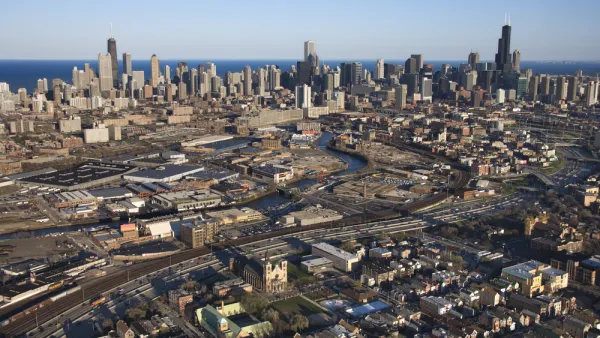
Chicago Planning Commissioner Focuses on Disinvested Neighborhoods
A new initiative seeks to bring investment dollars to Chicago communities that for decades have suffered from the loss of wealth and population.

The Case Against Aldermanic Control of Infrastructure Spending
Chicago’s alderman have control of millions of dollars of street resurfacing "menu money" for local projects. Inspector General Joe Ferguson argues that money would be better spent in a coordinated effort.

Planetizen Federal Action Tracker
A weekly monitor of how Trump’s orders and actions are impacting planners and planning in America.

The state-sanctioned urbicide of Austin
People don’t kill cities. Freeways do.

Colorado’s Largest Data Center Could Rise Next to Homes — Without a Public Hearing
The proposed campus would consume 11 times the power of Denver International Airport; as it has across the country, opposition mounts.

Judges permit Denver to divert 77,000 acre feet from the Colorado River for reservoir expansion
Overuse and climate change have caused the Colorado River’s water levels to plummet.

Amtrak, CN end decades-long dispute with eight-year agreement
The new operating agreement establishes an updated framework for the companies to work together, including processes to resolve disputes.
Raised interest rates may kill financially vulnerable construction projects
The chief economist at ConstructConnect warns that if construction project owners are negatively impacted by the raised rates, it could result in delayed payments to contractors.

FREE Course: Walkable City 1: Why Walkability?
After describing his path towards focusing on walkability as the essence of good planning, Jeff Speck marches through his five principal reasons for making more walkable places.
Reinventing Malls: Planning Alchemy—Turning Gray Fields Into Gold
The course focuses on the opportunities and imperatives that shape reinvention of mall sites.

KFH Group Inc.
Greater Baltimore Committee
Eagle County Government
The Architects Foundation
University of Cincinnati Online
The Pocatello Development Authority
The Urban Renewal Agency of the City of Pocatello