Failing to receive protection from the St. Petersburg, Florida city council, a historic downtown block faces an uncertain future.


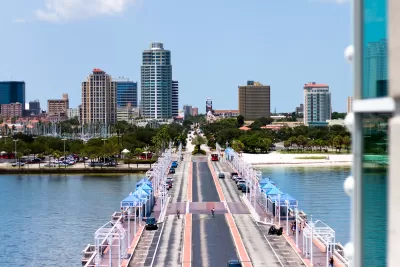
Downtown St. Pete's First Block, comprising 15 historic, low-rise structures in the heart of downtown, has failed to gain protection from potential redevelopment after the city council failed to support a bid to preserve the block. As Linda Saul-Sena of Creative Loafing writes, First Block is a magnet for "energy, activity and authenticity" with a number of bars and restaurants and a music venue anchoring the block. However, after a surprising 4-4 vote by the City Council, which leaves the block unprotected, the Mayor and preservationists are worried for the block's future. A report prepared by staff for the City Council in 2014 identified First Block as an ideal candidate for preservation.
The official city report states, ”The existing building array provides a highly distinctive experience set apart from all other blocks in the urban core. The fully extant row of buildings along Central Avenue represents an existing stock with a large percentage of primary inner constructed skeletons dating no later than 1913.
“Certain visual aspects of the block, as well as its compactness amid surrounding redevelopments encourages feelings of historic quaintness, messy vibrancy, and a certain beauty of age that deliver a strong sense of place. The attraction to the core of mostly brick, low-scaled buildings is delivered in part by how the buildings relate to the visitor in a human scale.”
FULL STORY: Last gasp for First Block? History goes unprotected in Downtown St. Pete

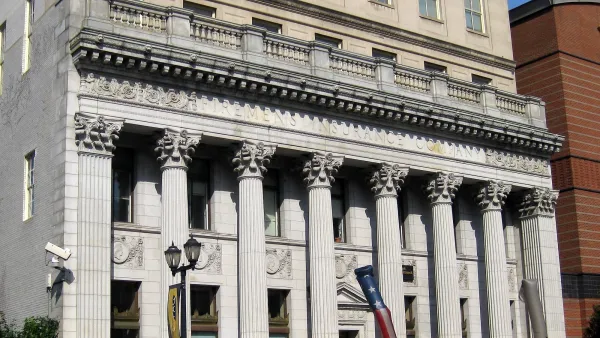
Historic Newark building to become affordable housing
The century-old building will be converted into nearly 200 homes with ground-floor retail.
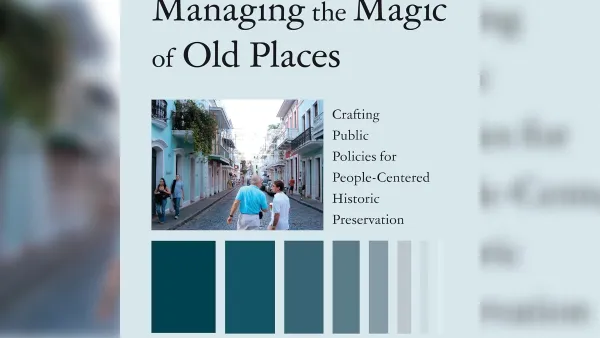
A call for people-centered historic preservation
'Managing the Magic of Old Places' offers a new vision for preservation that maintains its relevance while prioritizing the lived experience of residents of historic places.
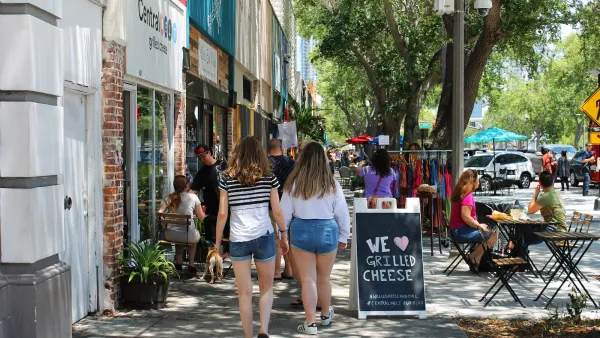
St. Petersburg Launches Sidewalk Master Plan to Close Gaps in Pedestrian Network and Improve Accessibility
The plan will inform priorities for fiscal year 2027.

Planetizen Federal Action Tracker
A weekly monitor of how Trump’s orders and actions are impacting planners and planning in America.

The state-sanctioned urbicide of Austin
People don’t kill cities. Freeways do.

US to reduce Colorado River water deliveries to Mexico
A new Colorado Treaty amendment reduces Mexico’s Colorado River water allocation by 250,000 acre feet.

5 New England states march closer to 800 megawatt wind energy project
Securing federal approval for the project may be complicated under the Trump administration, which has historically been hostile towards domestic wind power.

Baltimore to break ground on $50 million Transit Priority Project
The project will bring faster bus trips, safer streets and better bike connections to Baltimore.

Airbnb launches $250 million 'last-dollar financing' housing accelerator, makes first investment in Austin
The company will put $6.4 million towards affordable housing development in Texas’ capital.

FREE Course: Walkable City 1: Why Walkability?
After describing his path towards focusing on walkability as the essence of good planning, Jeff Speck marches through his five principal reasons for making more walkable places.
Reinventing Malls: Planning Alchemy—Turning Gray Fields Into Gold
The course focuses on the opportunities and imperatives that shape reinvention of mall sites.

Eagle County Government
Harvard University Graduate School of Design
Nashville Planning Department
The Architects Foundation
University of Cincinnati Online
The Pocatello Development Authority
The Urban Renewal Agency of the City of Pocatello
Journal of the American Planning Association