Curbed surveyed landscape architects specializing in drought-resistant lawns for their best "tips and tricks."


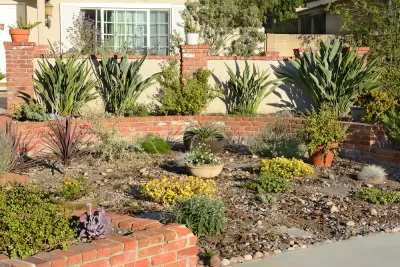
Residents of the United States raise 40 million acres of turf grass crops every year, more than any other crop. Some, in areas where water is expensive or scarce, are looking to modify their lawns and gardens by planting less water-intensive plants.
Like any project where one diverges from the standard way of doing things, the process can seem intimidating. In an article for Curbed, Kate Losse spoke with landscape architects in drought-plagued Southern California to get their insights into handling this issue. Among other suggestions, they advised that anyone intending to change their outdoor space budget time for research into both their specific lawn and the plants that might flourish there. Losse was also told that no garden is a set it and forget it proposition. "Experts caution that just because a garden is drought-tolerant, doesn’t mean it doesn’t need attention, and that paying attention to your garden and its needs is a crucial element to its growth," the Curbed piece reports.
There have certainly been misadventures in reducing water use in gardens, but the Curbed piece aims to show how the project can be managed to fit the climate and the ambition of the gardener.
Read the full story: Drought-tolerant gardens: Expert tips and tricks
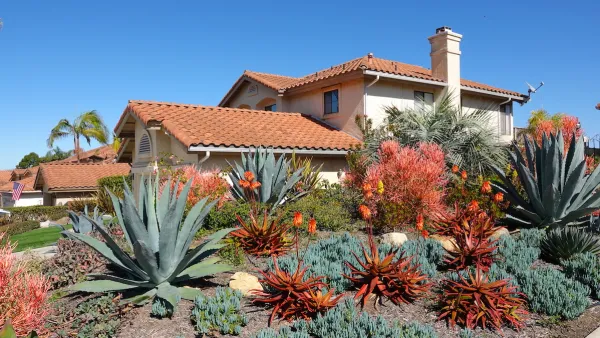
California Agency Awards $38 Million for Turf Replacement
The grant funds grass replacement rebates for commercial and residential properties and water-saving devices for fire stations.
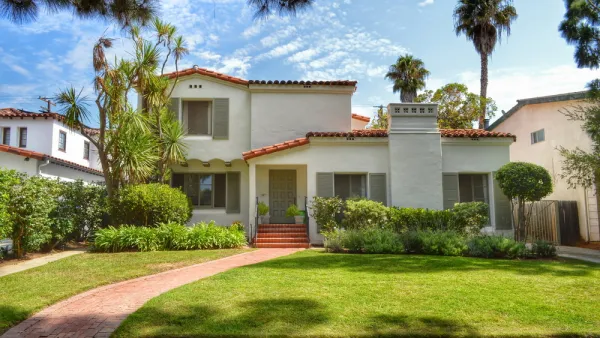
Evaluating California's 'Cash-for-Lawns' Rebate
At the height of the California drought, a group of water suppliers offered rebates for people willing to remove lawns. Now, it's time to figure out if the experiment worked.

Ramping Up Recycled Wastewater
States like Colorado and water suppliers in parts of Southern California are expanding the use of recycled wastewater to protect dwindling drinking water supplies.

Washington state to charge fee to drivers with fuel-efficient cars
Revenue from the fee will go towards supporting the state’s highways.

Illinois considers spending $1 billion in taxpayer money on data center
A quantum computing campus and data center are currently under construction in Chicago.

Trump to blast ‘hydrocarbon highway’ through ‘world’s longest art gallery’
Environmental and historic preservation groups are suing to stop the project.

Boston City Council votes to no longer mandate parking in residential developments
The Boston Zoning Commission still needs to approve the proposal.

Passengers in New York, California lift off in air taxis
Two air taxi companies have received a Special Airworthiness Market Survey Certificate, which allows them to service passengers.

MTA to upgrade subway signals for entire network by 2050
This is the first time New York City has planned to modernize subway signals in the Bronx.

FREE Course: Walkable City 1: Why Walkability?
After describing his path towards focusing on walkability as the essence of good planning, Jeff Speck marches through his five principal reasons for making more walkable places.
Reinventing Malls: Planning Alchemy—Turning Gray Fields Into Gold
The course focuses on the opportunities and imperatives that shape reinvention of mall sites.

City of Charlotte
City of Rosemead
Rutgers University, Edward J. Bloustein School of Planning and Public Policy
University of Michigan School for Environment and Sustainability (SEAS)
Hunter College, City University of New York (CUNY)
The Architects Foundation
University District Partnership