The Courier-Journal is launching a series of reports on the city of Louisville's ongoing work to clean up its sewer system.


James Bruggers reports: "A decade after the U.S. Environmental Protection Agency and the Kentucky Energy and Environment Cabinet forced a court-approved, 19-year plan to clean up Jefferson County's wastewater system, a Courier-Journal analysis has found that while much progress has been made, Louisville is still dumping huge volumes of untreated sewage into waterways."
The article kicks off a series of investigations into the accomplishments and shortcomings of the sewer clean up efforts. Bruggers's initial work maps out all the key statistics, like how many spillage sites have been cleaned, how much sewage is still spilling into local waterways, and how much the ongoing project will cost when it's complete.
As noted by Bruggers, Louisville is just one of many cities around the country tasked with enforcing federal requirements for keeping sewage out of local waterways.
Read the full story: Yuck! Louisville still has $943M sewer problem

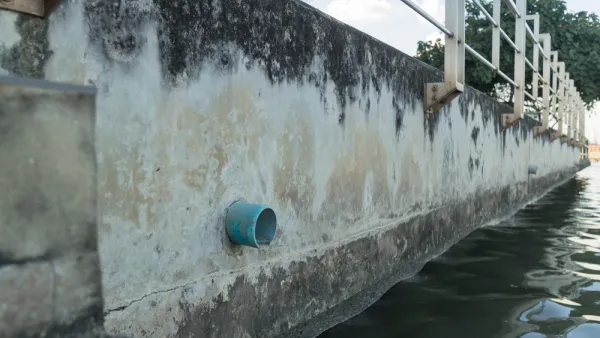
Florida Plagued by Sewage Spills
The state’s aging sewage infrastructure is failing, but the cost to replace it would be monumental.
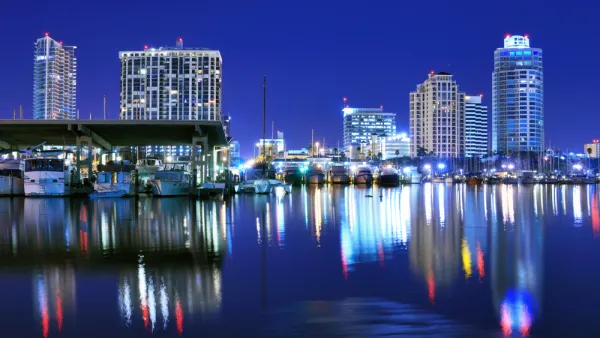
St. Petersburg Struggling to Keep its Sewage out of its Bays
A writer for the Tampa Bay Times critiques the city of St. Petersburg's response to repeat storm events that have sent millions of gallons of untreated wastewater into its public waters.
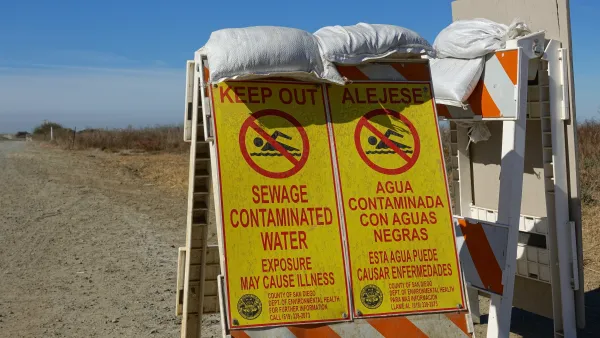
San Diego County to build treatment plant for Tijuana River sewage pollution crisis
The river has carried millions of gallons of untreated sewage into San Diego’s South Bay region.

Planetizen Federal Action Tracker
A weekly monitor of how Trump’s orders and actions are impacting planners and planning in America.

‘Going backwards:’ Baltimore mayor, students rally against state's transit funding plan
Maryland's proposed six-year plan provides no funding for Baltimore’s BMORE bus program and reduces its road maintenance funding.

Detroit to transform waterfront with $2.2 billion investment
Developers will convert about 18 acres of unused parking lot space into civic spaces.

85-year-old ranch is Texas’ newest state park
The 650 acre ranch is one of the largest parcels of land along Lake Palestine.

MIT to create AI-powered hub for public transportation companies
Google awarded the project, titled the Public Transit Intelligence Hub, $2.1 million in funding.

A 3D concrete printer may solve Virginia’s housing crisis
The printer is able to build concrete walls much faster than humans, and can do so directly at job sites.

FREE Course: Walkable City 1: Why Walkability?
After describing his path towards focusing on walkability as the essence of good planning, Jeff Speck marches through his five principal reasons for making more walkable places.
Reinventing Malls: Planning Alchemy—Turning Gray Fields Into Gold
The course focuses on the opportunities and imperatives that shape reinvention of mall sites.

City of Thousand Oaks
City of Wisconsin Rapids
Harvard University Graduate School of Design
The Architects Foundation
University of Cincinnati Online
Northern Illinois Transit Authority (NITA)
The Pocatello Development Authority
The Urban Renewal Agency of the City of Pocatello