Ten newspapers have joined California Gov. Jerry Brown in opposing Proposition 51, a $9 billion bond ballot measure endorsed by both Democrats, including the lieutenant governor, and Republicans.



California voters will need to sort through 17 ballot measures on November 8. The state "Official Voter Information Guide" is not a pamphlet, but a 223-page booklet.
A bond measure that provides funds "to repair or renovate crumbling classrooms and build new facilities" would seem the least debatable of the three education measures, writes the editorial board of the Santa Cruz Sentinel. They add that Democratic Gov. Jerry Brown "calls it a 'blunderbuss effort that promotes sprawl and squanders money' that should instead first go to poorer school districts."
State funds should go to needy districts — with developers paying more to help districts that are trying to cope with an influx of students from additional residential development. Instead this measure‘s funding process favors schools that apply for projects early, allowing affluent districts with more seasoned administrators could muscle out poorer ones.
The Sentinel rarely, if ever, recommends voters turn down a school bond measure. But Prop. 51 just continues a pattern instead of bringing necessary reform...
The editorial board of the Sacramento Bee concurs.
The California Democratic and Republican parties endorse the measure, as does the California Chamber of Commerce, the California Labor Federation and many elected leaders including Lt. Gov. Gavin Newsom. But Brown is correct, and we side with the governor...
"Gov. Jerry Brown is right: Prop. 51 an awful idea," opines The San Diego Union-Tribune. "The school bond process in California needs broad, fundamental reform," they add.
Brown is not the only one expressing disapproval of aspects of the measure. "The Legislative Analyst’s Office had an even more critical view of the current approach to funding school construction in its 2015-16 budget report," writes the editorial board of the Los Angeles Times.
“Notably,” it said, “the existing program fails to treat school facility costs as an ongoing expense despite the recurring nature of facility needs, allows disparities based on school district property wealth, fails to target funding according to greatest need...
They write that the LAO report goes on to criticize that new home developers will not pay the full costs of building the new schools to accommodate residents of their developments.
That extra subsidy for new construction at a time when many existing schools are underutilized only encourages the sprawl that has been an environmental and resources drain on the state.
Planetizen has also covered two other propositions that appear on next month's ballot:
- Prop 53, restrictions on revenue bonds that will make it difficult to fund larger projects like high-speed rail and the Delta water tunnels
- Prop 67, the plastic bag ban referendum. A "no" vote will undo state legislation banning single-use plastic bags passed in 2014.
Read the full story: Gov. Jerry Brown Condemns State School Bond Measure for Promoting Sprawl

California Initiative to Limit the Size of Revenue Bonds Qualifies for Ballot
A California initiative has been likened to the landmark Proposition 13 for how it would affect the budget and major projects proposed in California, including the $64 billion high-speed rail project and $17 billion Delta water tunnels.
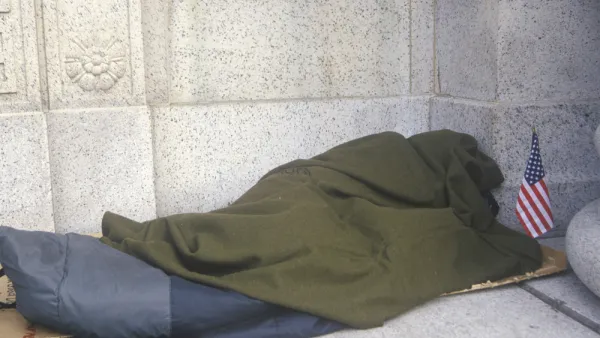
$2 Billion Bond Measure on California Ballot to House the Mentally Ill Homeless
The revenue bonds would be funded from a millionaires' surtax, approved by voters in 2004, to pay for health programs, but not housing, for the mentally ill. Also on ballot: a $4 billion general obligation bond measure to fund housing for veterans.

How Environment and Energy Ballot Measures Fared in Tuesday's Election
More than the president was decided. Results are in on a Washington carbon tax, a California plastic bag ban, a Sunshine State restriction on solar panels, and on a ban on oil drilling in a California county that actually has oil drilling.

Planetizen Federal Action Tracker
A weekly monitor of how Trump’s orders and actions are impacting planners and planning in America.

California plans to bury El Niño’s downpour
If the state plays its cards right, it may be able to store a billion acre-feet of El Niño’s water in aquifers.

Chicago breaks ground on $3 billion megadevelopment
The new neighborhood, titled Foundry Park, will one day host 3,700 residences.

California High-Speed Rail Authority CEO resigns after $600,000 scandal
Under Ian Choudri, the authority used taxpayer dollars to fund first class flights and trips to nightclubs.

Want to study the Missouri River? Soon, you may need unanimous approval from 10 states
Legislation would require 10 governors’ permission to study or build projects moving water outside the basin.

Desperate measures: Advocates weigh draining Lake Powell to fill Colorado River
Draining the reservoir could reduce evaporation losses by a couple hundred thousand acre-feet.

FREE Course: Walkable City 1: Why Walkability?
After describing his path towards focusing on walkability as the essence of good planning, Jeff Speck marches through his five principal reasons for making more walkable places.
Reinventing Malls: Planning Alchemy—Turning Gray Fields Into Gold
The course focuses on the opportunities and imperatives that shape reinvention of mall sites.

City of Rosemead
Rutgers University, Edward J. Bloustein School of Planning and Public Policy
One Hundred Miles
Hunter College, City University of New York (CUNY)
The Architects Foundation
University of Cincinnati Online
City of Cambridge
Montrose County
The Pocatello Development Authority