In the state of Washington, 9th U.S. Circuit Court of Appeals delivered what some are calling the "most important ruling on treaty fishing rights since 1974."


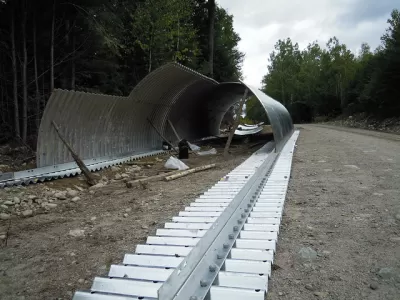
“[T]he 9th U.S. Circuit Court of Appeals has decided the state [of Washington] must do more toward fixing its hundreds of culverts,” reports Daniel Jack Chasan.
“The court affirmed a lower court decision ordering the state to replace its worst salmon-killing culverts that block passage upstream for the fish. A unanimous three-judge panel held that the culverts violate federal treaties signed with Washington tribes,” adds Chasan.
The court decided the state had drastically overstated the estimated cost of replacing the culverts—at $1.9 billion. Chasan also notes that the case has legal underpinnings that go back over a century. The decision could also impact the future of four lower Snake River Dams.
Read the full story: License to kill: How Washington may lose its right to wipe out salmon

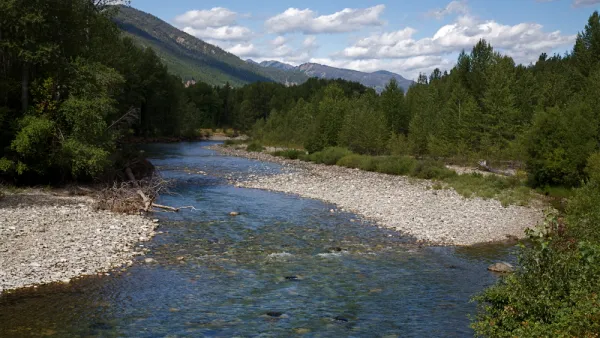
Court Decision Makes it Final: Washington State Owes $2 Billion for Culvert Repairs
When it refused to reconsider a 2016 ruling that mandated the state of Washington to broken culverts around the state, the 9th U.S. Circuit of Appeals put to rest a legal controversy ongoing since 2001.
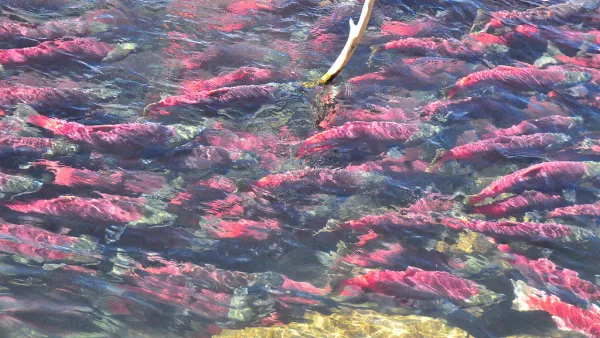
Alaskans to Choose Between Salmon Habitat Protections and Resource Extraction
A contentious initiative on the Alaska ballot next month pits protecting salmon habitat protections against the interests of the oil and gas industry and mining companies.
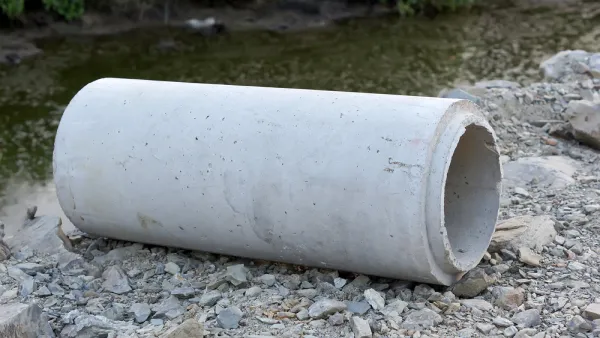
Blocked Culverts Continue to Plague Washington Salmon Habitat
Ineffective, blocked, obsolete, and in disrepair—Washington is full of culverts that pose an impediment to the survival of salmon. A court decision should have fixed the problem, but the state's budget has a long way to go to clean up the mess.

Planetizen Federal Action Tracker
A weekly monitor of how Trump’s orders and actions are impacting planners and planning in America.

Amtrak, CN end decades-long dispute with eight-year agreement
The new operating agreement establishes an updated framework for the companies to work together, including processes to resolve disputes.

Judges permit Denver to divert 77,000 acre feet from the Colorado River for reservoir expansion
Overuse and climate change have caused the Colorado River’s water levels to plummet.

NYC DOT wants faster, more permanent street upgrades
The city is examining ways to build more concrete infrastructure without getting entangled in 'decades-long' projects.

'Something we’ve never seen before:' rising utility rates could strain city finances nationwide
Data centers, climate change and other factors have caused utility rates in the United States to increase by 38% since 2020.

Trump to overrule local leaders, lease millions of acres of America’s Pacific Island territories’ seafloors to mining companies
International law says that the Indigenous people of America’s territories have a right to prior and informed consent regarding projects that impact their countries.

FREE Course: Walkable City 1: Why Walkability?
After describing his path towards focusing on walkability as the essence of good planning, Jeff Speck marches through his five principal reasons for making more walkable places.
Reinventing Malls: Planning Alchemy—Turning Gray Fields Into Gold
The course focuses on the opportunities and imperatives that shape reinvention of mall sites.

Harvard University Graduate School of Design
KFH Group Inc.
Greater Baltimore Committee
The Architects Foundation
University of Cincinnati Online
The Pocatello Development Authority
The Urban Renewal Agency of the City of Pocatello