As the public health and planning professions expand their partnership around the world, consider this list by the Johns Hopkins Bloomberg School of Public Health of the 100 Objects That Shaped Public Health.”



To celebrate its centennial this year, the Johns Hopkins Bloomberg School of Public Health published a list of the 100 objects that shaped public health over the course of that history.
The interactive list is separated into the following categories: Cancer, disease-fighters, eating and drinking, everyday objects, furniture and appliances, material and child health, medical innovations, road safety, tech and innovation, and things you wear. By now, the well-informed planner should already be chomping at the bit to imagine the potential professional and practical cross-over of the list, and Linda Poon has already done some of the work of pulling out planning-related items on the list.
“Some have, for better or worse, an obvious connection to public health, including automobiles, toilets, and cigarettes. Others are a bit unexpected—such as spittoons, smartphones, and the Chevrolet Corvair,” writes Poon before digging deeper into the examples of the Corvair, window screens, spittoons, smartphones, rats, and air conditioners.
Read the full story: 100 Objects That Shaped Public Health


Making Healthy Places
The editors of the book "Making Healthy Places," recently published in a second edition by Island Press, discuss the intersections of public health and planning, including key concepts such as green gentrification, health impact assessments, and AI.
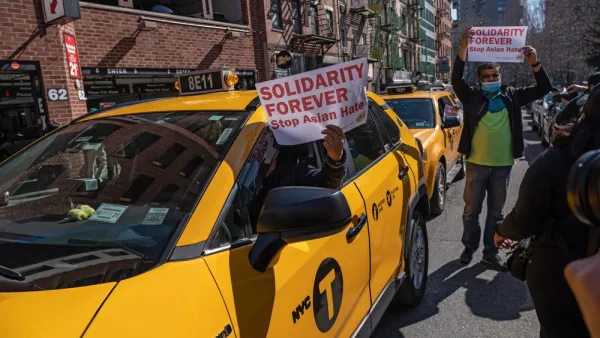
'Never Let a Good Crisis Go to Waste' and Planning in the Pandemic
The latest in a series of compendia collecting news and commentary focusing on the complexities of the COVID-19 pandemic's effect on communities.
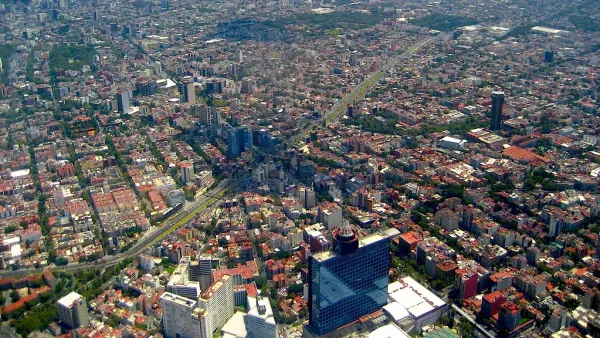
A Compact, Connected, Clean, and Inclusive Recovery for Mexico
As the Mexican government charts the country’s recovery from COVID-19, a newly published paper charts national solutions to urban transportation and housing challenges that will put Mexico’s cities on a path to prosperity and resilience.

Planetizen Federal Action Tracker
A weekly monitor of how Trump’s orders and actions are impacting planners and planning in America.

‘Going backwards:’ Baltimore mayor, students rally against state's transit funding plan
Maryland's proposed six-year plan provides no funding for Baltimore’s BMORE bus program and reduces its road maintenance funding.

Detroit to transform waterfront with $2.2 billion investment
Developers will convert about 18 acres of unused parking lot space into civic spaces.

HUD, USDA agree on framework to simplify housing environmental review standards
Their agreement is a requirement of the 21st Century ROAD to Housing Act.

Cost of water rising at a faster pace than inflation, median household income
California and Maryland residents have seen their water bills grow especially high.

NYC building owners overwhelmingly comply with new emissions limits
The New York City Department of Buildings is fining owners who did not file emissions reports.

FREE Course: Walkable City 1: Why Walkability?
After describing his path towards focusing on walkability as the essence of good planning, Jeff Speck marches through his five principal reasons for making more walkable places.
Reinventing Malls: Planning Alchemy—Turning Gray Fields Into Gold
The course focuses on the opportunities and imperatives that shape reinvention of mall sites.

City of Thousand Oaks
City of Wisconsin Rapids
Harvard University Graduate School of Design
The Architects Foundation
University of Cincinnati Online
Northern Illinois Transit Authority (NITA)
The Pocatello Development Authority
The Urban Renewal Agency of the City of Pocatello