Recycled metals, plastics, glass, and other materials are more economical than ever. Welcome to a new era of waste management.


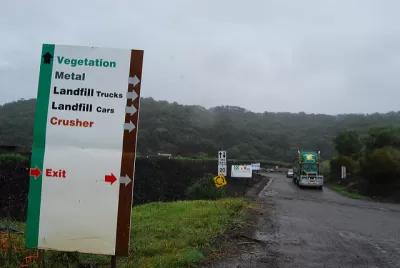
Michael J. Coren reports: “For at least a decade, investors poured money into technologies to turn garbage into electricity by burning it. That proved profitable enough. But in the last five years, the economics have changed.”
Investors are convinced, according to Coren, “that waste streams, if efficiently processed, could unlock a profitable new source of materials. Wang says the emerging vision for waste management is using software, analytics, and robotics to better catalogue and process trash at the source in homes and businesses. Companies can stream this data to processors who efficiently acquire, refine, and resell the materials back into the supply chain.”
Coren provides additional details about the shifting flows of capital, as waste management goes from energy production to recycling.
Read the full story: Tech investors bet they’ll make more money mining garbage than burning it

First New U.S. Waste-to-Energy Plant in 20 Years to Open in Florida
Waste-to-energy plants, or incinerators, are classified as renewable power plants by the EPA. A controversial Baltimore plant is under construction as well. More common in Europe, they may be catching on stateside due to low recycling rates.
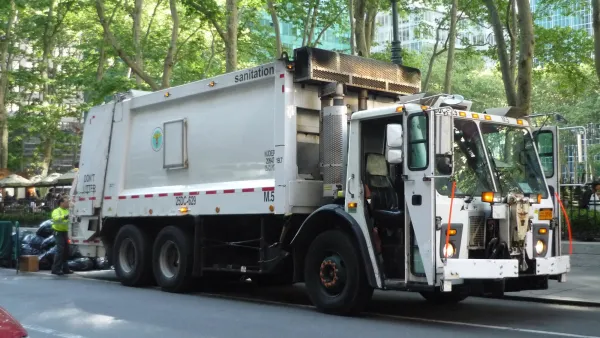
New York City’s Trash Problem
The city had ambitious goals to reduce waste, but millions of tons of garbage are still sent to communities around the country each year.
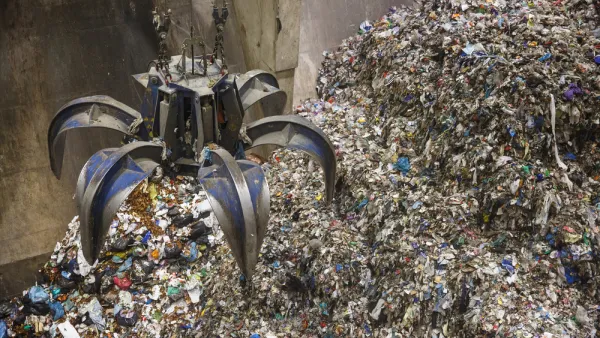
Recyclables Headed to Incinerators or Landfills
China's decision to halt imports of most recyclables from the United States has caused turmoil. With few markets for their recyclables, Philadelphia is sending half of them to a waste-to-energy incinerator in Chester not designed to burn them.

Planetizen Federal Action Tracker
A weekly monitor of how Trump’s orders and actions are impacting planners and planning in America.

Amtrak, CN end decades-long dispute with eight-year agreement
The new operating agreement establishes an updated framework for the companies to work together, including processes to resolve disputes.

Northwest rail fans eager for Sept. 30 debut of Amtrak’s Airo fleet
Get ready for that new train smell and more seats. But they won’t go faster or run more frequently on the Cascades route in Washington and Oregon.

Brightline Florida files for bankruptcy
The transit company is over $5 billion in debt.

St. Louis Metro to test if single-car trains can reduce operating costs, maintain rider satisfaction
The pilot program will run from October to spring 2027, and begin with one single-car train operating on Metrolink’s Red and Blue lines.

Pennsylvania is building data centers in abandoned mines
Housing data centers in mines provides an alternative to destroying local forests and may spare residents from data centers’ noise and air pollution.

FREE Course: Walkable City 1: Why Walkability?
After describing his path towards focusing on walkability as the essence of good planning, Jeff Speck marches through his five principal reasons for making more walkable places.
Reinventing Malls: Planning Alchemy—Turning Gray Fields Into Gold
The course focuses on the opportunities and imperatives that shape reinvention of mall sites.

City of Thousand Oaks
City of Wisconsin Rapids
Harvard University Graduate School of Design
The Architects Foundation
University of Cincinnati Online
The Pocatello Development Authority
The Urban Renewal Agency of the City of Pocatello