A year of political obsession with walls along national borders has Chuck Wolfe contemplating city gates of the past and present. Using the foil of proposed border walls, he examines the historic role of city gates, modern gateways, and more.


In a time of urbanization, refugee and "arrival cities," Wolfe asks, how and why would a city differentiate itself from its barrios, suburbs and exurbs? If so, what form would this entry take, or would it have any form at all?
He then examines the signature, historic, feature of urban grandeur—the city gate—which was once the point of access to and from walled cities, championed by Biblical passages championing safety, and defense. He discusses gates as ornamental artifacts, and how, ironically, public art sometimes remember city gates that that never were, and how cities like New York bestow the "Key to the City" as a symbolic gesture in honor of civic contribution.
With gate-less cities came less restricted gateway, he notes, with the historic, defensive city gate lost to history (with the exception of "gated community" residential enclaves, security-based, but often seen as inequitable). He concludes with a description of modern, often virtual gateways, including a first, virtual visit by Google Street View mouse clicks from across the world. Yet, with irony, he observes: "Even in this age of ubiquity, maybe nothing has changed. In this political year, some among us still need tangible structures to assert the power and defense of times gone by."
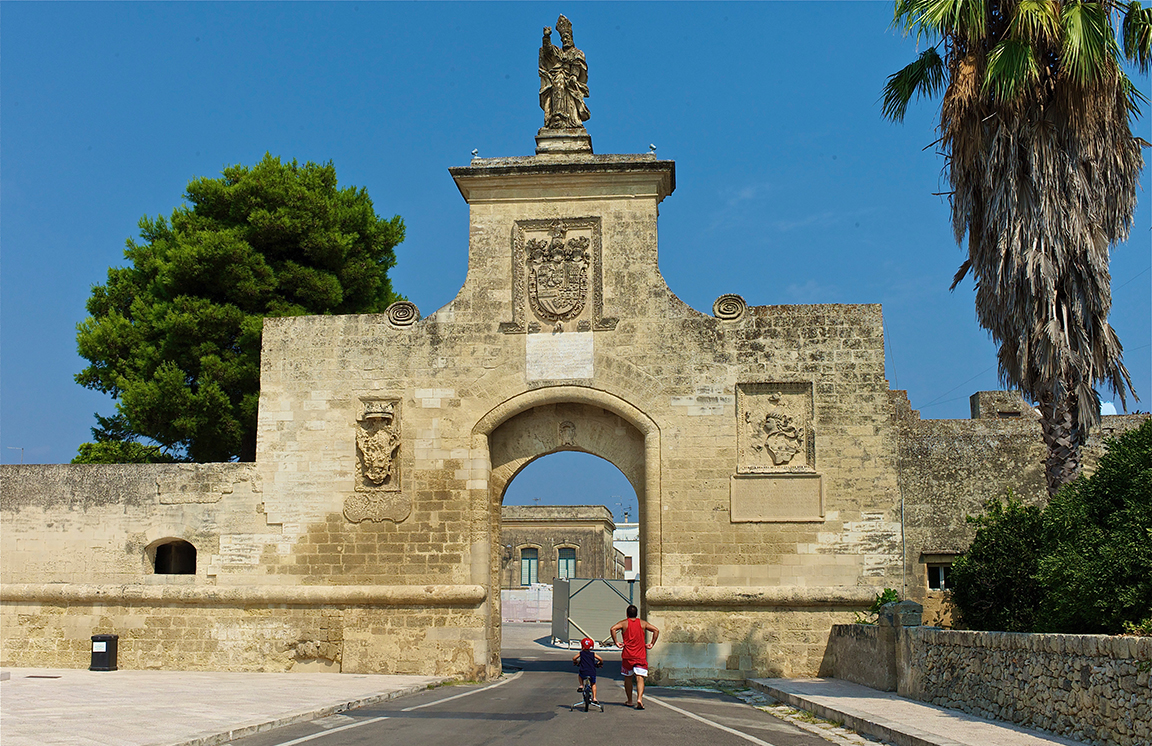
FULL STORY: City Gates: Now You See Them, Now You Don't

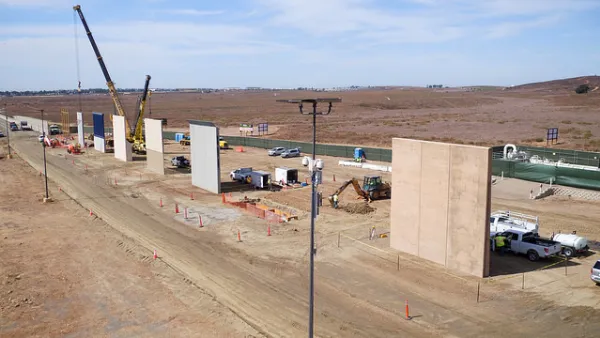
Homeland Security Waives More Than 30 Laws to Expedite Border Wall
In the drive to begin construction in New Mexico, the Trump Administration has bypassed dozens of federal environmental regulations.
Prototypes for Trump's Border Wall Now on View in California
The U.S.-Mexico border between San Diego and Tijuana received eight controversial additions over the weekend.
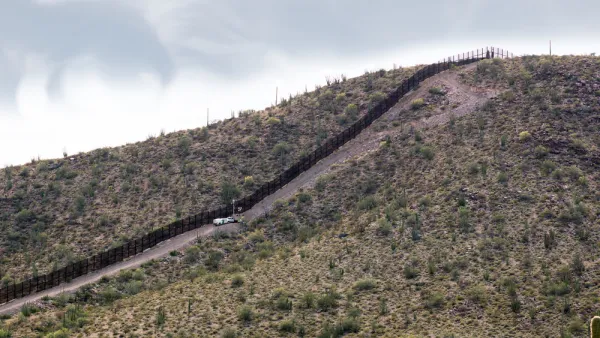
Four Companies Selected to Build Prototypes of Trump's Border Wall
In what was called a "significant milestone" by U.S. Customs and Border Protection officials, Trump's controversial border wall project has shown its first tangible results.

Planetizen Federal Action Tracker
A weekly monitor of how Trump’s orders and actions are impacting planners and planning in America.

The state-sanctioned urbicide of Austin
People don’t kill cities. Freeways do.

US to reduce Colorado River water deliveries to Mexico
A new Colorado Treaty amendment reduces Mexico’s Colorado River water allocation by 250,000 acre feet.

5 New England states march closer to 800 megawatt wind energy project
Securing federal approval for the project may be complicated under the Trump administration, which has historically been hostile towards domestic wind power.

Baltimore to break ground on $50 million Transit Priority Project
The project will bring faster bus trips, safer streets and better bike connections to Baltimore.

Airbnb launches $250 million 'last-dollar financing' housing accelerator, makes first investment in Austin
The company will put $6.4 million towards affordable housing development in Texas’ capital.

FREE Course: Walkable City 1: Why Walkability?
After describing his path towards focusing on walkability as the essence of good planning, Jeff Speck marches through his five principal reasons for making more walkable places.
Reinventing Malls: Planning Alchemy—Turning Gray Fields Into Gold
The course focuses on the opportunities and imperatives that shape reinvention of mall sites.

Eagle County Government
Harvard University Graduate School of Design
Nashville Planning Department
The Architects Foundation
University of Cincinnati Online
The Pocatello Development Authority
The Urban Renewal Agency of the City of Pocatello
Journal of the American Planning Association