With a slew of new rail transit lines opening on the FasTracks system, Denver-area suburbs are readying their development environments for transit-oriented opportunities.


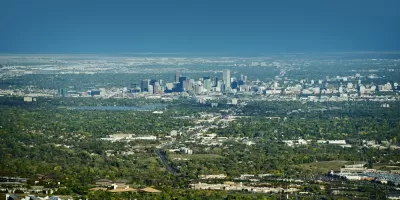
John Aguilar reports on the land use decisions of the city of Wheat Ridge—a bedroom community west of Denver—in preparation for the region's expanding transit system.
The city approved a zoning change that will allow for "a sizable multifamily housing development to go in next to the end-of-the-line station on the G-Line," according to Aguilar. The G Line is expected to open to service in October, as part of a series of transit openings in the region this year, as part of the FasTracks system expansion.
Wheat Ridge isn't the only Denver-area suburb to make room for more multi-family development, according to Aguilar. "Twenty miles away, Lone Tree has massive plans at not only its existing Lincoln Station light rail stop but for three additional stations that will be built over the next two years as part of the Regional Transportation District’s Southeast Rail Extension." The mayor of Lone Tree has described transit-oriented development as a "new Colorado Gold Rush."
Back in Wheat Ridge, the zoning change isn't the only way the city is preparing for its new transit options. "Wheat Ridge recently hired a consultant to help identify the steps it needs to take to 'catalyze TOD development' at the station while voters this fall will decide whether to pass a sales tax increase that will pump $12 million into street construction and a pedestrian bridge at the site," writes Aguilar.
Read the full story: Wheat Ridge planning to turn its lone rail stop into a slice of urban living in the suburbs
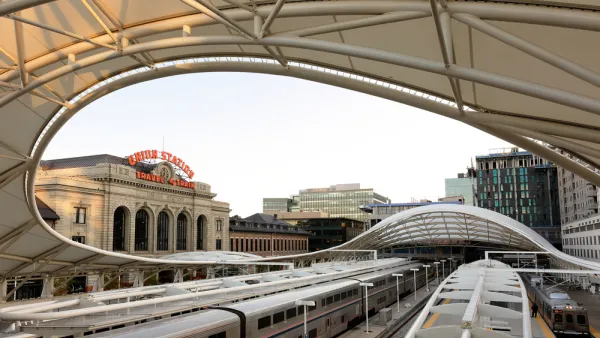
B Line Commuter Rail Extension Gets a Green Light in Colorado
The Board of Directors for the Regional Transportation District has given a preliminary green light to accelerate planning work on the B Line extension from Denver to Boulder and Longmont.
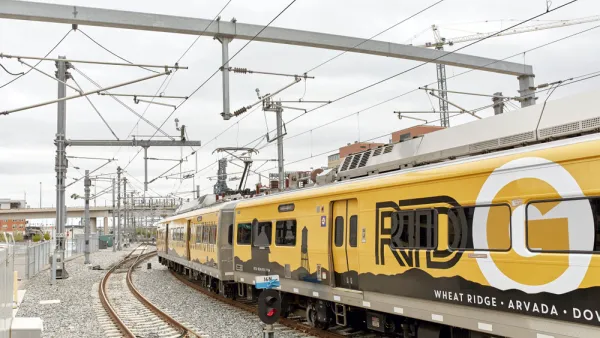
Political Pressure Reinvigorates B Line Extension Plans in Colorado
The CEO of the Regional Transportation District speculated recently about whether a planned extension of the B Line to Boulder was necessary or desirable. The governor doesn't think the speculation was necessary or desirable.
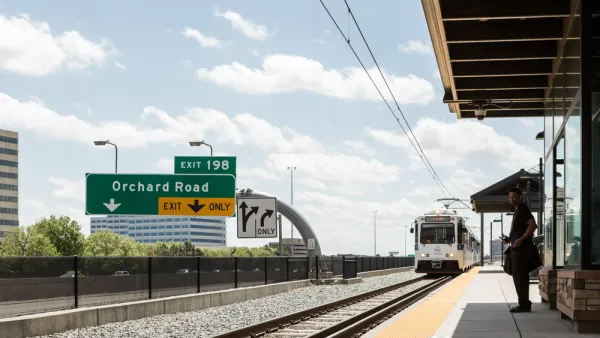
A Planning Controversy of the Transit Oriented Variety in Suburban Denver
A controversy has erupted over a proposed vision for transit oriented mixed in a Denver suburb.

Planetizen Federal Action Tracker
A weekly monitor of how Trump’s orders and actions are impacting planners and planning in America.

California plans to bury El Niño’s downpour
If the state plays its cards right, it may be able to store a billion acre-feet of El Niño’s water in aquifers.

Desperate measures: Advocates weigh draining Lake Powell to fill Colorado River
Draining the reservoir could reduce evaporation losses by a couple hundred thousand acre-feet.

Los Angeles just elected an urban planner as its mayor
Transportation analysts are optimistic that Raman will be more aggressive in addressing transit issues than Bass.

Mamdani’s pied-à-terre tax survives legal challenge
A panel of judges found that the plaintiffs failed to demonstrate injury as a result of New York City's implementation of the tax.

Eastern Nebraska is running out of electricity
Data centers and electrification are straining eastern Nebraska’s grid, throttling economic development.

FREE Course: Walkable City 1: Why Walkability?
After describing his path towards focusing on walkability as the essence of good planning, Jeff Speck marches through his five principal reasons for making more walkable places.
Reinventing Malls: Planning Alchemy—Turning Gray Fields Into Gold
The course focuses on the opportunities and imperatives that shape reinvention of mall sites.

City of Rosemead
Rutgers University, Edward J. Bloustein School of Planning and Public Policy
One Hundred Miles
University of Michigan School for Environment and Sustainability (SEAS)
Hunter College, City University of New York (CUNY)
The Architects Foundation
City of Cambridge
Montrose County
The Pocatello Development Authority