Besting all expectations, ridership numbers have increased 83 percent since Seattle's Sound Transit light rail system added two new stations, connecting downtown to the city's Capitol Hill neighborhood and the University of Washington.


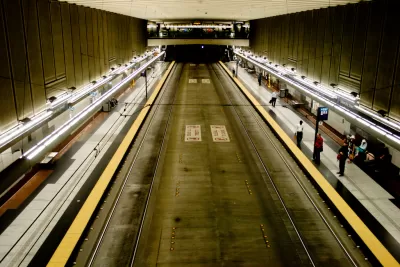
The opening of two new Sound Transit stations in March of this year has resulted in a significant bump in Seattle transit ridership, according to data released by the transit agency. Josh Cohn of Next Cityreports that Sound Transit data shows that ridership in May 2016 is almost double what ridership was one month prior to the station openings. While Sound Transit had expected the number of boardings to increase to 1.8 million by September, they were surprised to achieve that goal four months early. In response, Cohn reports that the agency has increased the number of three-car trains it is running at peak hours to meet the demand.
Sound Transit recently released its May ridership report. There were over 1.77 million boardings on light rail in May 2016, an 83 percent increase over May 2015’s ridership. Perhaps even more telling, light rail had 904,000 boardings in February (the last month before the expansion), which means ridership has nearly doubled with the new stations.
The good ridership news precedes the scheduled opening of four new stations through 2021, and the proposed 62-mile expansion of the system through a ballot measure dubbed Sound Transit 3 (ST3). ST3 will go before voters this November and, if approved, would raise $54 billion through "property, sales and motor vehicle excise taxes through 2041" and a mix of Federal grants, fares, and other revenue sources.
Read the full story: Seattle Embraces Expanded Light-Rail System

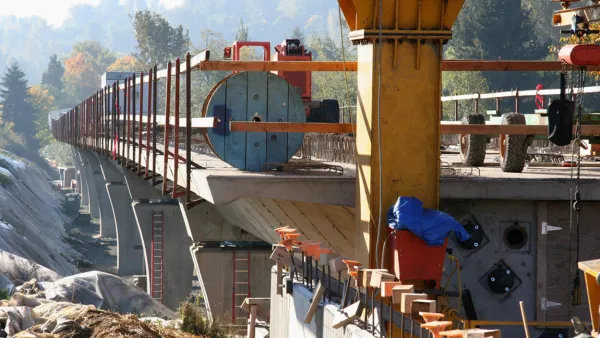
Details of the Seattle's Big ST3 Light Rail Plan
The $54 billion ST3 plan would add 62 miles of light rail over 25 years.

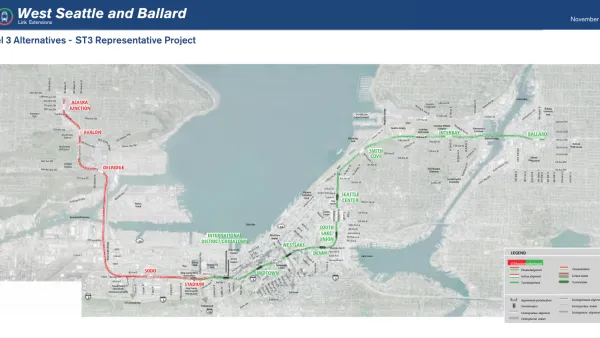
West Seattle Link Expansion Could Cost $7 Billion
Sound Transit is moving forward with a proposed route despite severe cost overruns, throwing other major rail projects into question.
Checking in on the Progress of the Sound Transit 3 Plan
The Seattle area's $53.8 billion transit expansion plan is moving along in fits and starts.

Planetizen Federal Action Tracker
A weekly monitor of how Trump’s orders and actions are impacting planners and planning in America.

Amtrak, CN end decades-long dispute with eight-year agreement
The new operating agreement establishes an updated framework for the companies to work together, including processes to resolve disputes.

Judges permit Denver to divert 77,000 acre feet from the Colorado River for reservoir expansion
Overuse and climate change have caused the Colorado River’s water levels to plummet.

NYC DOT wants faster, more permanent street upgrades
The city is examining ways to build more concrete infrastructure without getting entangled in 'decades-long' projects.

'Something we’ve never seen before:' rising utility rates could strain city finances nationwide
Data centers, climate change and other factors have caused utility rates in the United States to increase by 38% since 2020.

Trump to overrule local leaders, lease millions of acres of America’s Pacific Island territories’ seafloors to mining companies
International law says that the Indigenous people of America’s territories have a right to prior and informed consent regarding projects that impact their countries.

FREE Course: Walkable City 1: Why Walkability?
After describing his path towards focusing on walkability as the essence of good planning, Jeff Speck marches through his five principal reasons for making more walkable places.
Reinventing Malls: Planning Alchemy—Turning Gray Fields Into Gold
The course focuses on the opportunities and imperatives that shape reinvention of mall sites.

Harvard University Graduate School of Design
KFH Group Inc.
Greater Baltimore Committee
The Architects Foundation
University of Cincinnati Online
The Pocatello Development Authority
The Urban Renewal Agency of the City of Pocatello