There's a difference between designing for safety and designing for fear.


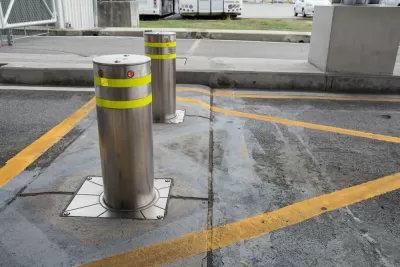
Ankita Rao explores a growing turn in architecture, and the culture that surrounds it, toward secure design. She writes:
Our culture of fear has changed the role of architecture in the United States… While legislators falter over gun control laws, architects and building designers are working to rethink the concept of a safe space.
Rao compares the built-in security measures of the Freedom Tower, the "behemoth" at the World Trade Center, to those of the outward-facing remodel of Sandy Hook Elementary School, where "natural surveillance" is encouraged. Both were rebuilt after devastating (and very different) attacks; their contrast points to the difficulty in striking what Rao terms "the balance between ominous and open" when designing for safety.
Read the full story: Architects Are Designing Buildings for the Age of Mass Shootings
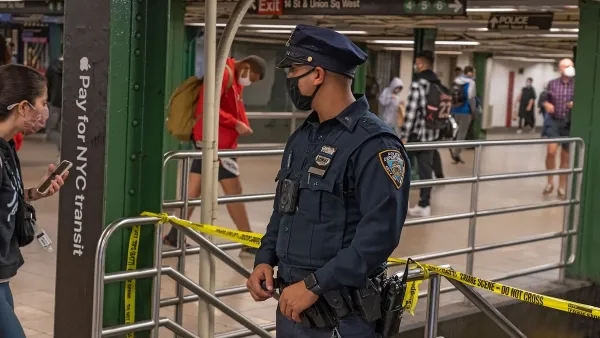
NYC Subway Has Safest Month Ever
The city’s subway system is seeing increased ridership and a sharp drop in crime a year after the MTA implemented new security measures.
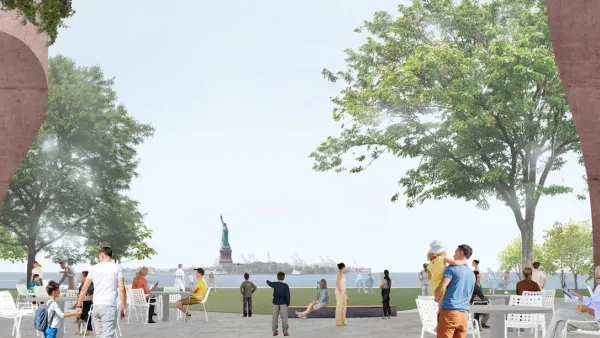
Battery Park Resilience Project Breaks Ground
By 2027, the shoreline will be elevated by 5 feet to prevent flooding from future storm surges.
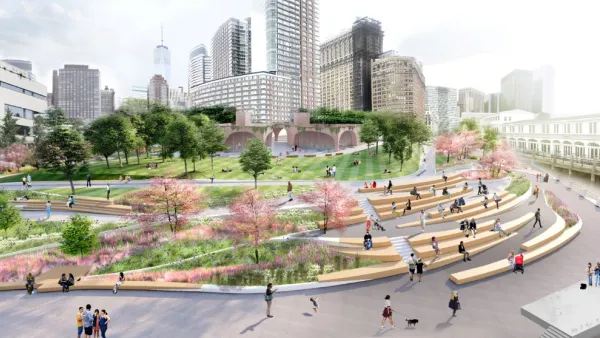
In Battery Park City, Public Infrastructure Meets Climate Resilience
A massive project underway in Lower Manhattan seeks to protect the shoreline from future flooding and mitigate the effects of climate change and rising sea levels.

Planetizen Federal Action Tracker
A weekly monitor of how Trump’s orders and actions are impacting planners and planning in America.

Eastern Nebraska is running out of electricity
Data centers and electrification are straining eastern Nebraska’s grid, throttling economic development.

Study reveals best places in the U.S. for cycling, walking
New research from Streetlight Data examines bicycle and pedestrian miles per capita in the 100 largest U.S. cities by population.

Developers reveal $10 billion stadium plan as ‘Hail Mary’ to keep Bears in Chicago
The plan would also boast a public park, high- and mid-rise buildings and a youth sports complex.

As Texas embraces carbon storage, a Black community questions the risks
Texas now issues permits for companies to store carbon dioxide underground. East Texas residents fear safety risks, and skeptics doubt the climate benefits.

New BLM proposal would slash public comment periods, environmental protections
The proposed rewrite would also strip legal leverage from Tribal nations and state governments.

FREE Course: Walkable City 1: Why Walkability?
After describing his path towards focusing on walkability as the essence of good planning, Jeff Speck marches through his five principal reasons for making more walkable places.
Reinventing Malls: Planning Alchemy—Turning Gray Fields Into Gold
The course focuses on the opportunities and imperatives that shape reinvention of mall sites.

City of Rosemead
Rutgers University, Edward J. Bloustein School of Planning and Public Policy
One Hundred Miles
University of Michigan School for Environment and Sustainability (SEAS)
Hunter College, City University of New York (CUNY)
The Architects Foundation
City of Cambridge
The Pocatello Development Authority
The Urban Renewal Agency of the City of Pocatello