Don't call Denver a transit-rich city yet, says a Denver Post reporter.


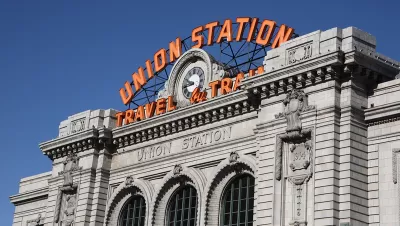
"This is a banner year for the Denver metro transit system, with the opening of four rail lines serving places from Wheat Ridge to the airport and the Flatiron Flyer rapid bus route to Boulder," admits an article by Jon Murray.
But there's a but: "But don’t call Denver a transit-rich city — not yet." The city falls short of that title, according to Murray's argument, because the core city struggles with too many transit gaps.
Largely rooted in a bus network that is spread too thin, those shortcomings make travel between some of Denver’s most urban neighborhoods, job centers, recreation spots and nightlife districts cumbersome or downright unmanageable. Closer to the city limits, especially in east Denver neighborhoods that are miles from new and upcoming rail lines, transit access flickers.
Hence the reasoning behind Denver's first-ever citywide transit planning effort, kicked off earlier this summer. According to Murray, the city also has options for implementing technological and governance innovations to gain new transit capabilities.
Read the full story: RTD’s rail system is having its biggest year, but Denver is still a city with many transit gaps
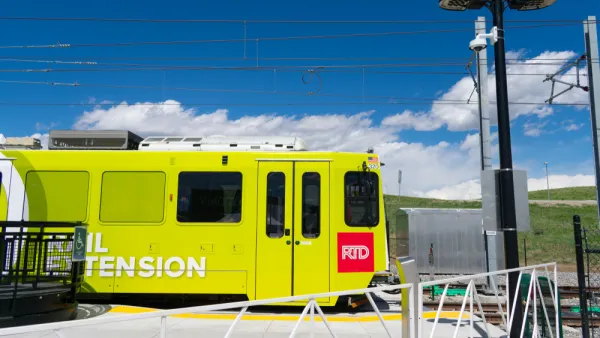
Denver’s C and F Light Rail Routes Closed Permanently
The Regional Transportation District in Denver suspended two light rail lines at the onset of Covid-19 in March 2020. The routes have now been permanently discontinued.
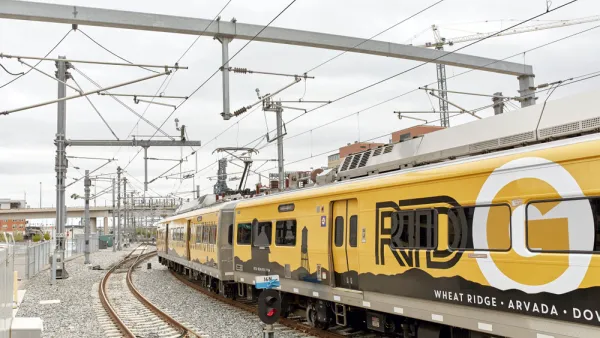
Underwhelming FasTracks Plan Inspires Transit History Lesson in Denver
FasTracks, one of the most ambitious long-term transit plans in the U.S., has been underway for over 15 years. With the finish line in sight, some locals wonder how useful the new hub-and-spoke system (regional routes connecting to downtown) will be.
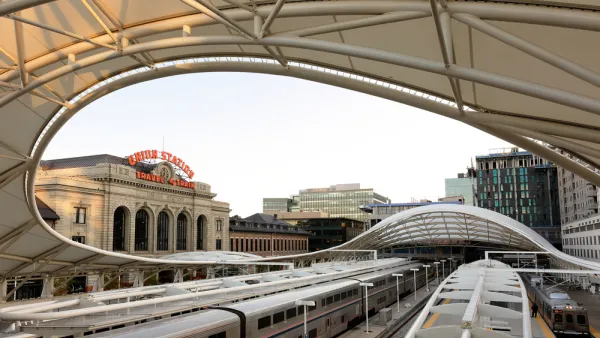
B Line Commuter Rail Extension Gets a Green Light in Colorado
The Board of Directors for the Regional Transportation District has given a preliminary green light to accelerate planning work on the B Line extension from Denver to Boulder and Longmont.

Planetizen Federal Action Tracker
A weekly monitor of how Trump’s orders and actions are impacting planners and planning in America.

California plans to bury El Niño’s downpour
If the state plays its cards right, it may be able to store a billion acre-feet of El Niño’s water in aquifers.

Desperate measures: Advocates weigh draining Lake Powell to fill Colorado River
Draining the reservoir could reduce evaporation losses by a couple hundred thousand acre-feet.

Mamdani’s pied-à-terre tax survives legal challenge
A panel of judges found that the plaintiffs failed to demonstrate injury as a result of New York City's implementation of the tax.

Eastern Nebraska is running out of electricity
Data centers and electrification are straining eastern Nebraska’s grid, throttling economic development.

Seattle passes record-breaking transit services expansion
Proposition 1 will double the city’s transit tax to add 95,000 more bus trips and preserve 180,000 bus trips annually.

FREE Course: Walkable City 1: Why Walkability?
After describing his path towards focusing on walkability as the essence of good planning, Jeff Speck marches through his five principal reasons for making more walkable places.
Reinventing Malls: Planning Alchemy—Turning Gray Fields Into Gold
The course focuses on the opportunities and imperatives that shape reinvention of mall sites.

City of Rosemead
Rutgers University, Edward J. Bloustein School of Planning and Public Policy
One Hundred Miles
University of Michigan School for Environment and Sustainability (SEAS)
Hunter College, City University of New York (CUNY)
The Architects Foundation
City of Cambridge
Montrose County
The Pocatello Development Authority