The Regional Transportation District in Denver suspended two light rail lines at the onset of Covid-19 in March 2020. The routes have now been permanently discontinued.


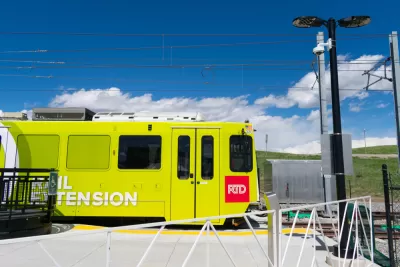
“The Regional Transportation District is ending any hope for a return of regular service on the C and F light-rail lines next month after suspending them during the pandemic in early 2020,” reports Jon Murray for the Denver Post in an article that requires an email to access without a subscription.
“The elimination of the lines, which were consolidated with other lines on RTD’s southwest and southeast rail corridors, was recommended by the System Optimization Plan adopted by the transit agency’s board last summer. The plan prioritizes service restorations and route changes as RTD ridership and funding recover from the pandemic,” adds Murray.
The abandonment of those lines requires some riders to transfer to the E-Line or D-Line south of Downtown Denver.
Additional coverage of the RTD’s decision to stop running trains on the C and F light rail lines is available from Alexander Kirk for 9 News.
Read the full story: RTD is officially killing its C and F lines after suspending them during the pandemic

New York, Boston Transit Agencies Back Off Proposed Cuts
News of a potential economic stimulus package in Congress is followed by news that two of the nation's most prominent transit systems are reducing cuts proposed to address plummeting revenues.
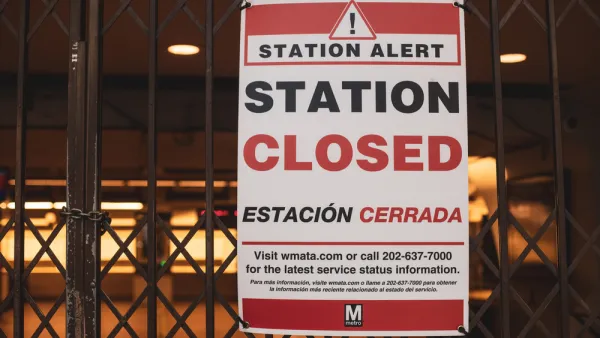
D.C. Metro Seeks Public Input on Proposed Service Cuts
D.C. Metro Seeks Public Input on Proposed Service Cuts
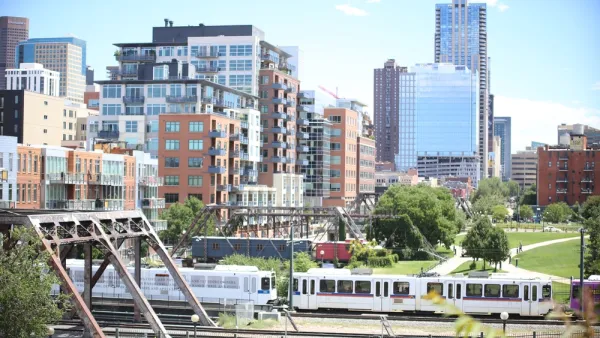
Pandemic Casts a Shadow Over Today's Big Rail Line Opening in Denver
The N Line between Denver and its northern suburbs opens today to the public, but N Line trains are expected to carry far fewer passengers, and lower frequencies, than originally planned.

Planetizen Federal Action Tracker
A weekly monitor of how Trump’s orders and actions are impacting planners and planning in America.

California plans to bury El Niño’s downpour
If the state plays its cards right, it may be able to store a billion acre-feet of El Niño’s water in aquifers.

Chicago breaks ground on $3 billion megadevelopment
The new neighborhood, titled Foundry Park, will one day host 3,700 residences.

California High-Speed Rail Authority CEO resigns after $600,000 scandal
Under Ian Choudri, the authority used taxpayer dollars to fund first class flights and trips to nightclubs.

Want to study the Missouri River? Soon, you may need unanimous approval from 10 states
Legislation would require 10 governors’ permission to study or build projects moving water outside the basin.

Desperate measures: Advocates weigh draining Lake Powell to fill Colorado River
Draining the reservoir could reduce evaporation losses by a couple hundred thousand acre-feet.

FREE Course: Walkable City 1: Why Walkability?
After describing his path towards focusing on walkability as the essence of good planning, Jeff Speck marches through his five principal reasons for making more walkable places.
Reinventing Malls: Planning Alchemy—Turning Gray Fields Into Gold
The course focuses on the opportunities and imperatives that shape reinvention of mall sites.

City of Rosemead
Rutgers University, Edward J. Bloustein School of Planning and Public Policy
One Hundred Miles
Hunter College, City University of New York (CUNY)
The Architects Foundation
University of Cincinnati Online
City of Cambridge
Montrose County
The Pocatello Development Authority