Urban vs. rural is just one example of the many false dichotomies presented as fact during the presidential campaign. A more nuanced understanding of these terms reveals more of the country's real character.



"Notwithstanding…political divisions, a close look at the data shows that urban and rural America are not as distant, economically or geographically, as the rhetoric may suggest," according to an article by Alan Berube.
To back up that argument, Berube calls on the definitions used by the U.S. Census Bureau to distinguish between urban and rural. "The Bureau classifies more densely developed areas as urban, and identifies large clusters of urban territory (with populations exceeding 50,000) as 'urbanized areas.' Urbanized areas, in turn, form the basis for identifying metropolitan areas, which approximate regional labor markets…" Areas that don't meet urban densities are classified as rural.
The catch, however, is that many of those rural areas are included in metropolitan areas. In fact, according to Berube, 54 percent of people living in areas classified as rural also live in metropolitan areas. "These 32 million residents of rural communities are thus part of wider labor markets that cluster around one or more cities, and most of them likely live within a reasonable commuting distance of those cities," writes Berube.
Rather than trying to make rural communities seem more urban, however, Berube's argument serves to prove the proximity, economically and geographically, of urban and rural communities.
FULL STORY: Political rhetoric exaggerates economic divisions between rural and urban America

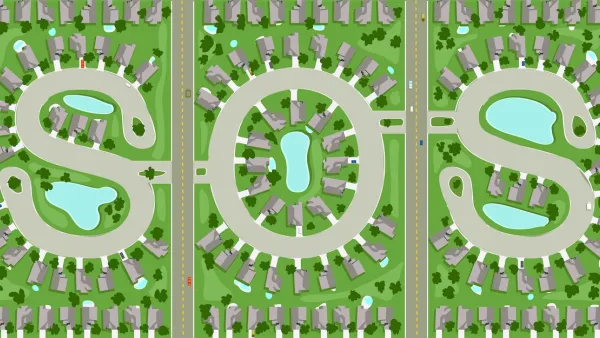
Are Regional Governments the Answer to the Housing Crisis?
A never-realized model of regional governance once proposed in California could help ease the housing crunch and create more housing in suburbs and peripheral areas.
Urban Population Shrinks After Census Definition Change
The U.S. Census Bureau raised the bar for communities to qualify as urban areas.
Major U.S. Metro Areas in a Transition Period, According to Census Analysis
The nation's growth slowed from 2010 and 2020, according to 2020 Census data, and demographers are still trying to figure out what population trends mean for the future of country's major metropolitan areas.

Planetizen Federal Action Tracker
A weekly monitor of how Trump’s orders and actions are impacting planners and planning in America.

The state-sanctioned urbicide of Austin
People don’t kill cities. Freeways do.

US to reduce Colorado River water deliveries to Mexico
A new Colorado Treaty amendment reduces Mexico’s Colorado River water allocation by 250,000 acre feet.

Mamdani overhauls NYC's Vision Zero plan with 100 new policy goals
The overhaul aims to reduce traffic deaths and make streets safer for pedestrians, cyclists and drivers through lower speed limits, new safety infrastructure and more.

Amtrak not solely to blame for New Jersey commuter rail's unreliability, report finds
A new study from the Garden State Initiative found that NJ Transit’s budget grew 20% across a 4 year period, but reliability declined significantly over the same period.

EPA erases limits on planet-warming pollution from power plants
Under Monday’s plan, power plants would still have some limits on how much mercury, arsenic and other contaminants they can emit.

FREE Course: Walkable City 1: Why Walkability?
After describing his path towards focusing on walkability as the essence of good planning, Jeff Speck marches through his five principal reasons for making more walkable places.
Reinventing Malls: Planning Alchemy—Turning Gray Fields Into Gold
The course focuses on the opportunities and imperatives that shape reinvention of mall sites.

Eagle County Government
Harvard University Graduate School of Design
Nashville Planning Department
The Architects Foundation
University of Cincinnati Online
The Pocatello Development Authority
The Urban Renewal Agency of the City of Pocatello
Journal of the American Planning Association