Though housing advocates consider micro-housing units a helpful tool in keeping housing affordable, the city of Seattle has nonetheless produced a series of regulations making such projects harder and harder to build.


Architect David Neiman writes: "Taking stock and looking back over that last couple years, I think I’m ready to call it: The war against micro-housing is over…and micro-housing has lost."
Neiman is admittedly self-interested in the proliferation of micro-housing. His firm Neiman Taber has a business practice he describes as "deeply involved in micro-housing – as architects, as developers, and as proponents in the public policy sphere."
Nonetheless, Neiman reports that regulations pertaining to micro-housing in Seattle have finally procuded the "straw that broke the camel's back." Namely, "a recent SDCI director’s rule [pdf] that places new restrictions on Small Efficiency Dwelling Units (SEDU’s) to the extent that that they will no longer be meaningfully smaller than a typical studio apartment."
Before this last straw, however, came "a series of unforced errors that has taken Seattle from being a national leader on this issue to leaving the stage altogether," according to Neiman, who then provides a timeline of how the city killed micro-housing, starting in 2009, when examples first starting appearing in the Seattle housing market, provoking public "outrage."
hat tip to Josh Feit for sharing Neiman's blog post, along with a few other relevant, Seattle-area stories.
Read the full story: The War Against Micro-housing is Over. Micro-housing Lost.

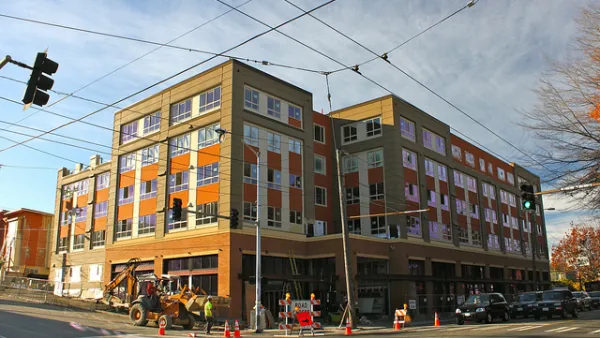
Seattle Densification Strategy: Build Apartments Without Parking
Not just any apartments, only those served by frequent transit. Developers will still have a "mobility" requirement: In lieu of a parking space, they'll need to provide tenants with transit passes and memberships in car and bikeshare services.

Micro-Housing Debate Continues in Seattle
The "D" word (Density) is in play in Seattle, as city leaders and residents debate micro-housing regulations proposed by the City Council in May.
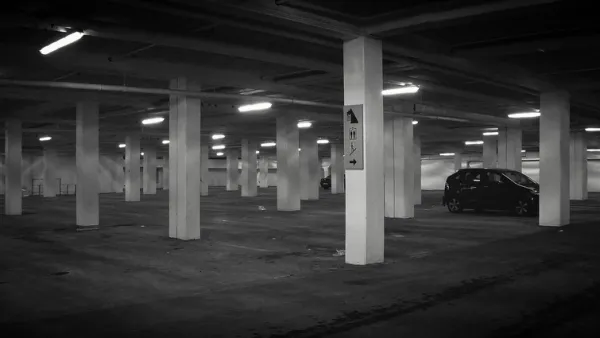
Can a Parking Garage Village be Livable?
Students in Atlanta have designed a tiny house village inside a parking garage to help better understand how livable micro-housing projects can be.

Planetizen Federal Action Tracker
A weekly monitor of how Trump’s orders and actions are impacting planners and planning in America.

Amtrak, CN end decades-long dispute with eight-year agreement
The new operating agreement establishes an updated framework for the companies to work together, including processes to resolve disputes.

Judges permit Denver to divert 77,000 acre feet from the Colorado River for reservoir expansion
Overuse and climate change have caused the Colorado River’s water levels to plummet.

NYC DOT wants faster, more permanent street upgrades
The city is examining ways to build more concrete infrastructure without getting entangled in 'decades-long' projects.

'Something we’ve never seen before:' rising utility rates could strain city finances nationwide
Data centers, climate change and other factors have caused utility rates in the United States to increase by 38% since 2020.

Trump to overrule local leaders, lease millions of acres of America’s Pacific Island territories’ seafloors to mining companies
International law says that the Indigenous people of America’s territories have a right to prior and informed consent regarding projects that impact their countries.

FREE Course: Walkable City 1: Why Walkability?
After describing his path towards focusing on walkability as the essence of good planning, Jeff Speck marches through his five principal reasons for making more walkable places.
Reinventing Malls: Planning Alchemy—Turning Gray Fields Into Gold
The course focuses on the opportunities and imperatives that shape reinvention of mall sites.

Harvard University Graduate School of Design
KFH Group Inc.
Greater Baltimore Committee
The Architects Foundation
University of Cincinnati Online
The Pocatello Development Authority
The Urban Renewal Agency of the City of Pocatello