The chickens have come home to roost in Seattle, where the state has tallied up the cost and time overruns for the Highway 99 tunnel project.


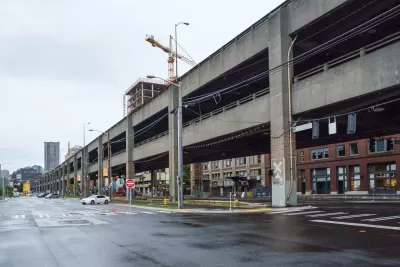
Mike Lindblom reports: "Tunnel-machine Bertha’s two-year breakdown will further delay the Highway 99 tunnel’s grand opening until 2019 and saddle Washington state with an estimated $223 million in cost overruns, lawmakers were told Thursday."
The expected cost of the project could continue to rise even higher, according to testimony from Roger Millar, acting transportation secretary of the Washington State Department of Transportation, depending on the outcome of court battles between the lead contractor on the project, Seattle Tunnel Partners, and the state.
"The extra costs almost certainly would be paid by the state’s drivers in gas taxes, more transportation-fund debt, or by tolls and fees," according to Lindblom. On the subject of tolls, the state's toll division is considering tolls of up to $2.50 in each direction at peak hours for the use of the tunnel when it opens. That cost has also risen substantially since an initial recommendation of $1.25 each direction.
Read the full story: Bertha’s woes grind on: cost rises, tunnel delayed until 2019

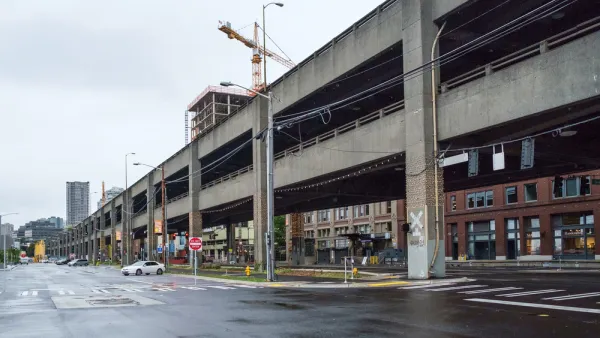
Another, Final(?) Delay for Alaskan Way Viaduct Replacement
The Washington Department of Transportation announced that Seattle's Alaskan Way Viaduct will close permanently in January 2019, with service switching over the tunnel Bertha built. The previous plan expected the switch to occur in the Fall.
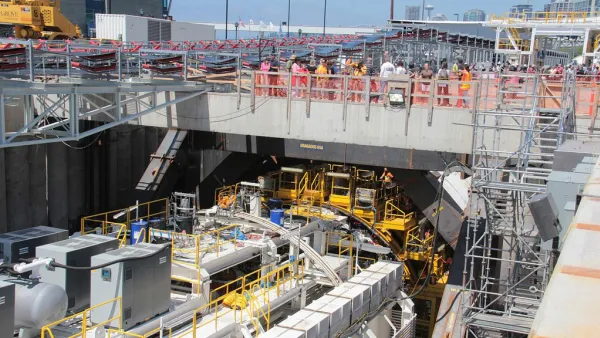
Bertha Stuck Again: Sinkhole Prompts Suspension of Highway 99 Tunnel Project
The adventure of Bertha the tunnel-boring machine, already two years behind schedule, has a new twist.
Bertha Awakens—New Hope After a Two-Year Delay for Seattle Tunnel-Boring Machine
Baby steps are an improvement for the tunnel-boring machine known as Bertha. The drill moved a total of 1.5 feet this week, but the symbolic distance probably felt like a mile.

Planetizen Federal Action Tracker
A weekly monitor of how Trump’s orders and actions are impacting planners and planning in America.

California plans to bury El Niño’s downpour
If the state plays its cards right, it may be able to store a billion acre-feet of El Niño’s water in aquifers.

Chicago breaks ground on $3 billion megadevelopment
The new neighborhood, titled Foundry Park, will one day host 3,700 residences.

Satanic place names
From streams and lakes to valleys and canyons, I mapped more than 1,000 places named after the Devil.

California High-Speed Rail Authority CEO resigns after $600,000 scandal
Under Ian Choudri, the authority used taxpayer dollars to fund first class flights and trips to nightclubs.

Want to study the Missouri River? Soon, you may need unanimous approval from 10 states
Legislation would require 10 governors’ permission to study or build projects moving water outside the basin.

FREE Course: Walkable City 1: Why Walkability?
After describing his path towards focusing on walkability as the essence of good planning, Jeff Speck marches through his five principal reasons for making more walkable places.
Reinventing Malls: Planning Alchemy—Turning Gray Fields Into Gold
The course focuses on the opportunities and imperatives that shape reinvention of mall sites.

City of Rosemead
Rutgers University, Edward J. Bloustein School of Planning and Public Policy
One Hundred Miles
Hunter College, City University of New York (CUNY)
The Architects Foundation
University of Cincinnati Online
City of Cambridge
Montrose County
The Pocatello Development Authority