New York's Clean Energy Standard, if approved, would mark the first time a state put a price on carbon emissions.


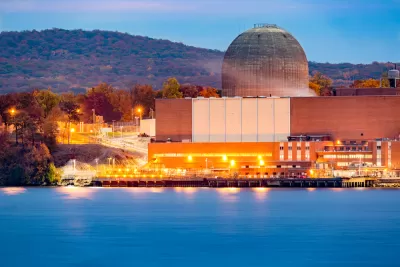
Scott Waldman writes: "By adding a nuclear component to the Clean Energy Standard, the Cuomo administration has recognized nuclear plants as another essential tool in reducing air pollution, one worthy of state incentives."
Waldman expects the New York Public Service Commission to approve the Clean Energy Standard [pdf] in early August, in effect "[forcing] utilities to purchase power from nuclear plants through zero-emissions credits." According to Waldman, some estimates predict "[b]illions of dollars, perhaps more than $8 billion, will go to nuclear reactors…"
But the support for nuclear is only part of the story. Some of the same environmental groups that worked to close California's last nuclear reactor in recent weeks "told POLITICO New York on background that they could not oppose a plan that gave unprecedented support to clean energy." Unprecedented is right: "The deal means New York is among the first states to put a price on carbon, to enact a policy that recognizes the social cost of fossil fuels, such as their role in creating climate change."
Read the full story: Cuomo nuclear plan blunts criticism by combining with renewables

Indian Point Nuclear Plant to Shut Down by 2021
Continuing a string of high-profile infrastructure announcements, New York Gov. Andrew Cuomo announced a deal to shut down the Indian Point Nuclear Plant, located less than 30 miles from Midtown Manhattan.
In Energy, It's 'All Of The Above' That's Necessary
An MIT professor testified before Congress for a broad policy to address energy and climate crises - including carbon pricing, carbon sequestration, expanded fossil fuel and nuclear production, and more research spending.
Google Inks Nuclear Power Deal
Tech giants are seeking out renewable energy to fuel power-hungry data centers and AI applications.

Planetizen Federal Action Tracker
A weekly monitor of how Trump’s orders and actions are impacting planners and planning in America.

Amtrak, CN end decades-long dispute with eight-year agreement
The new operating agreement establishes an updated framework for the companies to work together, including processes to resolve disputes.

Northwest rail fans eager for Sept. 30 debut of Amtrak’s Airo fleet
Get ready for that new train smell and more seats. But they won’t go faster or run more frequently on the Cascades route in Washington and Oregon.

Brightline Florida files for bankruptcy
The transit company is over $5 billion in debt.

St. Louis Metro to test if single-car trains can reduce operating costs, maintain rider satisfaction
The pilot program will run from October to spring 2027, and begin with one single-car train operating on Metrolink’s Red and Blue lines.

Pennsylvania is building data centers in abandoned mines
Housing data centers in mines provides an alternative to destroying local forests and may spare residents from data centers’ noise and air pollution.

FREE Course: Walkable City 1: Why Walkability?
After describing his path towards focusing on walkability as the essence of good planning, Jeff Speck marches through his five principal reasons for making more walkable places.
Reinventing Malls: Planning Alchemy—Turning Gray Fields Into Gold
The course focuses on the opportunities and imperatives that shape reinvention of mall sites.

City of Thousand Oaks
City of Wisconsin Rapids
Harvard University Graduate School of Design
The Architects Foundation
University of Cincinnati Online
The Pocatello Development Authority
The Urban Renewal Agency of the City of Pocatello