For a year, Boston has been developing a new kind of park-and-ride system: park-and-pedal. One commentator evaluates the idea as a nice halfway point between the first-mile and the last-mile.


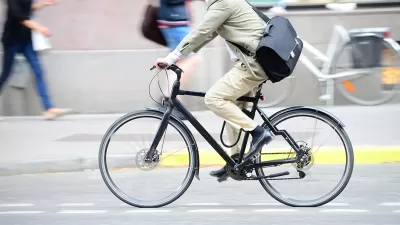
"Boston is trying 'Park & Pedals,' dedicated parking lots where suburban commuters can drive to the edge of the city, then bicycle the last couple of miles," according to an article by Dan Malouf.
According to Malouf, Park-and-Pedals split the difference between long, suburban distances and the efficiency of traveling the city on a bike. Maloof also offers this assessment of the idea: "[it's] a fascinating idea and an unusual twist on the last-mile problem of urban transportation."
Boston began implementing the idea in August 2015, while expanding the footprint of the idea as recently as June of this year. Maloof, writing for D.C.-area publications Beyond DC and Greater Greater Washington, concludes the article by speculating about how to implement the idea in the region surrounding the nation's capital.
Read the full story: Boston's "park & pedals" are park and rides for bikes

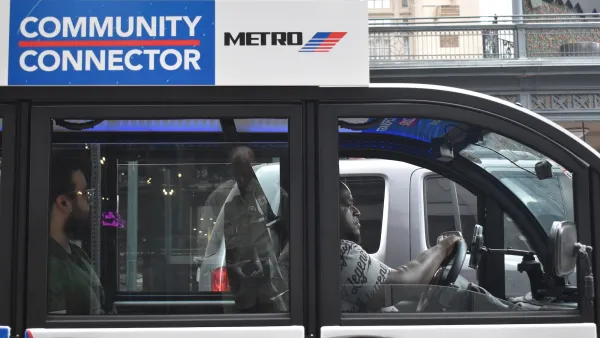
Houston Metro Secures Long-Term Funding for On-Demand Microtransit
The agency is working to integrate the Community Connector service into Houston’s broader transit network.
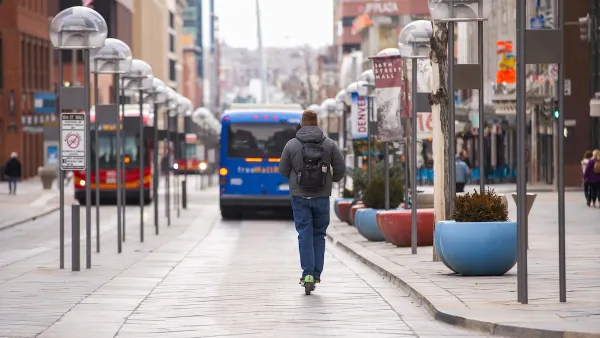
Denver Transit Agency Will Subsidize First Mile of Shared Scooter Trips
A pilot program seeks to address the problem of transit access by paying for the first mile of trips to and from two light rail stations.
Houston Council Member Questions Microtransit Investment
METRO’s support of an on-demand microtransit service comes as the agency is scaling back its bigger bus projects.

Planetizen Federal Action Tracker
A weekly monitor of how Trump’s orders and actions are impacting planners and planning in America.

Northwest rail fans eager for Sept. 30 debut of Amtrak’s Airo fleet
Get ready for that new train smell and more seats. But they won’t go faster or run more frequently on the Cascades route in Washington and Oregon.

Judges permit Denver to divert 77,000 acre feet from the Colorado River for reservoir expansion
Overuse and climate change have caused the Colorado River’s water levels to plummet.

Massive tunnel-boring machine breaks ground on Gateway Project
The Trump administration revoked funding for the project in October 2025, and then restored it earlier this year.

Airo trainsets begin service on Amtrak Cascades route
The trains feature panoramic windows, complementary wifi and over 300 seats per train set.

As El Niño approaches, Newsom vetos bill aimed at protecting California levees from flooding
Gov. Gavin Newsom said the state’s allocated $170 million was enough funding; State experts estimate it will cost $3.3 billion to repair the California Delta's levees.

FREE Course: Walkable City 1: Why Walkability?
After describing his path towards focusing on walkability as the essence of good planning, Jeff Speck marches through his five principal reasons for making more walkable places.
Reinventing Malls: Planning Alchemy—Turning Gray Fields Into Gold
The course focuses on the opportunities and imperatives that shape reinvention of mall sites.

City of Thousand Oaks
City of Wisconsin Rapids
Harvard University Graduate School of Design
The Architects Foundation
University of Cincinnati Online
The Pocatello Development Authority
The Urban Renewal Agency of the City of Pocatello