A package of bills making their way through the New York State Legislature could usher in an era of new height in parts of New York City.


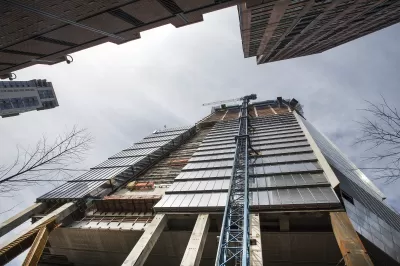
Matt A.V. Chaban reports on the potential impact of a legislative package emerging the New York state capital this week "that would remove restrictions on the size of residential buildings in the five boroughs."
The bills, quietly introduced by Brooklyn Senator Simcha Felder and Harlem Assemblyman Keith Wright, would remove a 1961 density cap placed on residential buildings. Under the new rules — which could be passed before the session ends next Friday — residential buildings in most of the city could be far bigger than they are now.
Chaban details the effect of the bills—namely, to change the calculation of floor-to-area ratio (FAR) for residential buildings. In the city of New York, residential FAR is actually set by the state.
Among the additional details of the legislative package is a requirement for Department of City Planning and City Council approval for projects above the current limit of 12 FAR.
FULL STORY: A Nearly Secret Albany Bill Could Bring a Row of 80-Story Skyscrapers to Your Block


Bill to Increase Multi-Family FAR Breaks Along Surprising Political Lines in New York
A state bill would allow for higher floor area ratio in New York City, designed to alleviate housing costs in the city, has gained most support from legislators representing areas outside the city.
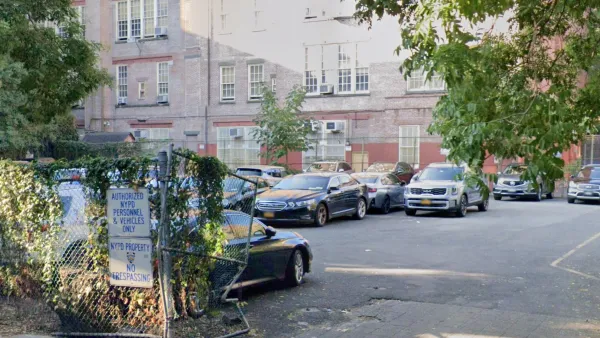
NYPD parking lot to become affordable housing as part of Mamdani's Block by Block initiative
The city awarded the lot to a group of developers to build a mixed-use project with 131 housing units.

Philadelphia gained 4,000 new housing permits per year after upzoning
The Urban Institute found that zoning reforms in Philadelphia and New York led to a boom in housing permits, especially when coupled with other policy and financial tools.

The state-sanctioned urbicide of Austin
People don’t kill cities. Freeways do.

US to reduce Colorado River water deliveries to Mexico
A new Colorado Treaty amendment reduces Mexico’s Colorado River water allocation by 250,000 acre feet.

New Jersey’s second-largest city bans standalone data centers
Jersey City will continue to allow co-location facilities, such as those meant for research institutions that store their own data.

Amtrak not solely to blame for New Jersey commuter rail's unreliability, report finds
A new study from the Garden State Initiative found that NJ Transit’s budget grew 20% across a 4 year period, but reliability declined significantly over the same period.

EPA erases limits on planet-warming pollution from power plants
Under Monday’s plan, power plants would still have some limits on how much mercury, arsenic and other contaminants they can emit.

Phoenix announces new on-demand transit service, more frequent RAPID buses
Both new services will launch in October, and are part of Phoenix's Project Effective Access Solutions for Easing Congestion.

FREE Course: Walkable City 1: Why Walkability?
After describing his path towards focusing on walkability as the essence of good planning, Jeff Speck marches through his five principal reasons for making more walkable places.
Reinventing Malls: Planning Alchemy—Turning Gray Fields Into Gold
The course focuses on the opportunities and imperatives that shape reinvention of mall sites.

.jpg)
Eagle County Government
Harvard University Graduate School of Design
Nashville Planning Department
The Architects Foundation
University of Cincinnati Online
The Pocatello Development Authority
The Urban Renewal Agency of the City of Pocatello
Journal of the American Planning Association