The shortcomings of American bus systems are not lost on transportation planners. The adage of "getting what you pay for" appears to be mostly true.


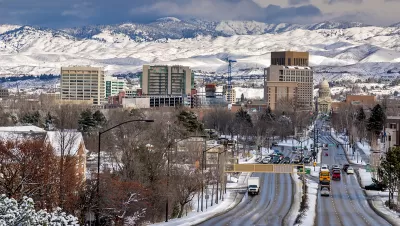
In Boise (Idaho), journalist Robert Ehlert writes about a recent experience riding Valley Transit, the local bus transit system. That experience illustrated the following observations:
If you look at the evolution of most big-city transportation systems, they started with buses — and still include them in the spoke-and-wheel infrastructure that allows them to deliver people to their destinations. Today, the [Treasure] Valley is operating with essentially the same bus system that served it in the 1990s — even though the places of growth and employment are more widely dispersed in many new directions. Before we aspire to ride anything else into the future, we had better learn to support and patronize the interim means: the bus.
Read the full story: What would it take to get you to ride the bus?


Milwaukee transit agency plans 25% service cuts
The MCTS system will have to make a difficult choice between service frequency and coverage.

Fisticuffs: The argument AGAINST fare-free transit
If a terrible bus becomes free, will it truly free you?
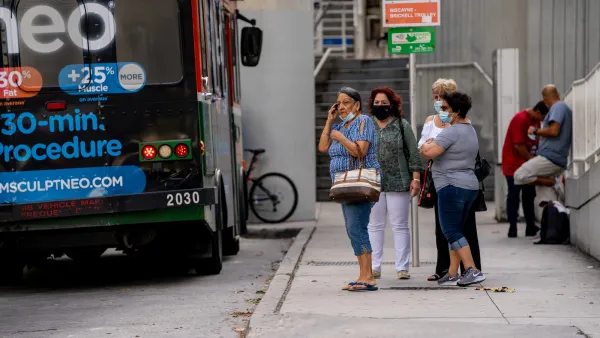
Miami promised a 'Better Bus Network.' Riders say it hasn't delivered.
Ridership on Miami-Dade Transit dropped by 2%-10% every month between October and December 2025.

Planetizen Federal Action Tracker
A weekly monitor of how Trump’s orders and actions are impacting planners and planning in America.

Chicago breaks ground on $3 billion megadevelopment
The new neighborhood, titled Foundry Park, will one day host 3,700 residences.

This MA town is drowning in its own sewage — and residents like it that way
Susan Murcott, a waste water expert, said if Carlisle didn't address their leaking sewage, the problem could turn “deadly.”

Iowa taxpayers are paying thousands to clean manure out of their water
While the Clean Water Act makes states responsible for regulating factory farms that discharge pollutants, Iowa has turned a blind eye to the polluting farms.

Amtrak cuts ribbon on Seattle Airo maintenance facility
The $250 million, nearly 100,000-square-foot building can house an entire Cascades Airo trainset.

To power data centers, Google seeks autonomous control of thousands of homes’ electricity
The tech company has signed a deal to indirectly pay Mid-Atlantic residents to reduce their power demand when the grid is strained.

FREE Course: Walkable City 1: Why Walkability?
After describing his path towards focusing on walkability as the essence of good planning, Jeff Speck marches through his five principal reasons for making more walkable places.
Reinventing Malls: Planning Alchemy—Turning Gray Fields Into Gold
The course focuses on the opportunities and imperatives that shape reinvention of mall sites.

City of Rosemead
Rutgers University, Edward J. Bloustein School of Planning and Public Policy
One Hundred Miles
The Architects Foundation
University of Cincinnati Online
Montrose County
The Pocatello Development Authority
The Urban Renewal Agency of the City of Pocatello