On average, women spend longer in traffic than men—perhaps because of the gendered division of labor that still exists in many households.


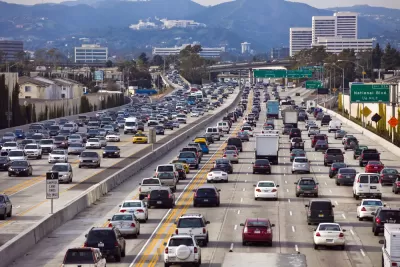
In Pacific Standard, contributor Tristan Bridges reflects on traffic research suggesting that women make up the majority of congestion—and why.
Women may tend to leave for work closer to peak hours, but work seems not to be the driver of their time stuck in traffic.
When automobiles were first marketed for household use, they were targeted to married women, who were tasked with completing errands throughout the day while their husbands were at work.
Still today, most car trips are made for errands—and a majority of those errands are undertaken by women:
It’s a portion of the "second shift," women's disproportionate contribution to the division of labor inside the household even when they are working outside of the household as well.
Relatedly or not, women are more likely than men to combine multiple errands into one trip. (As Bridges notes, "Traffic experts call this 'trip chaining,' but the rest of us call it multi-tasking.")
Read the full story: Contrary to Stereotypes, Women Lose More Time in Traffic Than Men
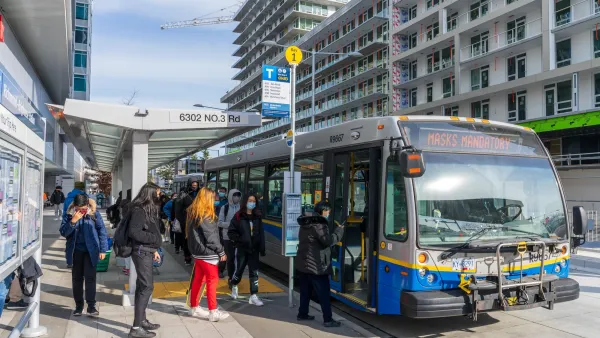
Why “Full Buses are a Car Commuter’s Dream”
Even a 5-10% drop in cars on the road can dramatically ease congestion, making healthy transit systems a win-win for transit users and drivers alike.
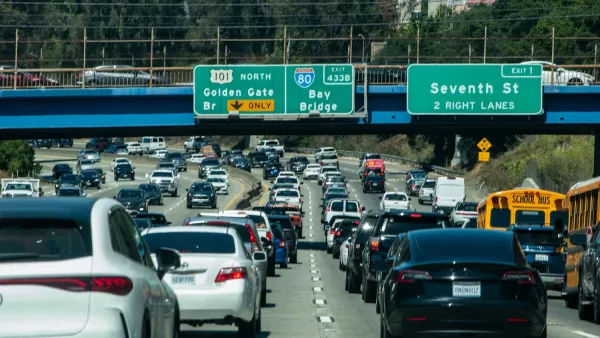
US Commuters Lost 8 Workdays to Traffic in 2024
As more employers call workers back to the office, commute times are growing — and costing drivers in time and money.
Vehicle Miles Travelled, Level of Service, and a Soon-to-be-Insolvent Transportation Trust Fund
Level of Service and the gas tax have served our transportation needs for a long time. Now, it’s time for a change.

Planetizen Federal Action Tracker
A weekly monitor of how Trump’s orders and actions are impacting planners and planning in America.

Eastern Nebraska is running out of electricity
Data centers and electrification are straining eastern Nebraska’s grid, throttling economic development.

Move over, LA: St. Louis gears up for Olympics, invests millions in downtown redevelopment
The Missouri city will host the 2028 Olympic soccer group stage and knockout matches.

Dallas releases zoning code overhaul to officials
The drafted overhaul is over 400 pages long.

NYC renovations for dangerous, ‘mercilessly crammed’ street delayed until 2027
Construction was supposed to begin this fall.

San Diego’s Midway Rising project gets greenlight from city council
The project looks to become the largest affordable housing development in California's history.

FREE Course: Walkable City 1: Why Walkability?
After describing his path towards focusing on walkability as the essence of good planning, Jeff Speck marches through his five principal reasons for making more walkable places.
Reinventing Malls: Planning Alchemy—Turning Gray Fields Into Gold
The course focuses on the opportunities and imperatives that shape reinvention of mall sites.

City of Rosemead
Rutgers University, Edward J. Bloustein School of Planning and Public Policy
One Hundred Miles
University of Michigan School for Environment and Sustainability (SEAS)
Hunter College, City University of New York (CUNY)
The Architects Foundation
City of Cambridge
The Pocatello Development Authority
The Urban Renewal Agency of the City of Pocatello