Though the plan to move water storage capacity for the Washington Park reservoirs underground is getting more expensive, the project must be completed to comply with federal regulations.


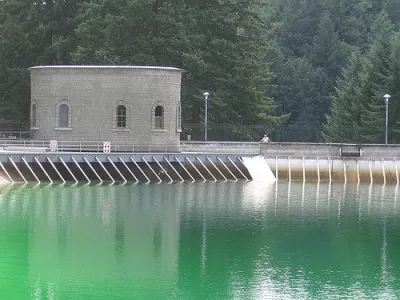
The cost of bringing Portland's Washington Park reservoirs into compliance with federal regulations is rising—now at $190 million after increasing by $20 million since eight months ago. Brad Schmidt reports, however, that the price increase will not deter the city from completing the project, even if the price continues to rise.
According to Schmidt, the "reservoir project would mark the city's second-most expensive public works effort behind the $1.4 billion Big Pipe." When complete in 2024, the project won't change the appearance of the reservoir, though storage will move to an underground facility. Schmidt explains:
Officials plan to replace the open-air Reservoir 3 with a closed underground reservoir that features a reflective pond on top, similar in appearance to what's there now. Reservoir 4 will be disconnected from the water system but Portland will build a bioswale and reflective pool.
Read the full story: Portland reservoir project increases (again) to $190 million
Mississippi Investigated for Civil Rights Violations in Jackson Water Crisis
The NAACP has accused a pair of Mississippi departments of discrimination against Black Mississippians, leading to the loss of drinking water in the state's capital city at the end of the summer.

Environmentalists Object to California Desalination Plan
Critics of a controversial desalination project planned for Orange County claim Governor Newsom is pressuring officials to support the plant in spite of environmental concerns.
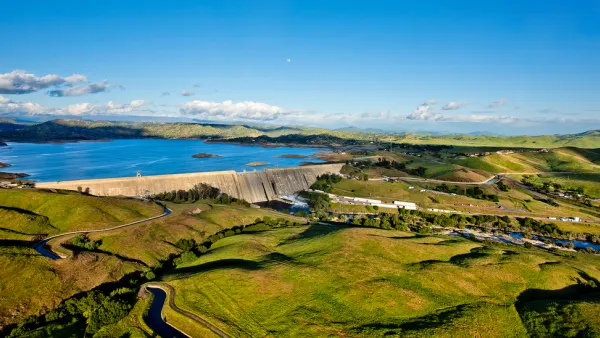
California Reservoir Project at Risk of Forfeiting $171 Million in State Funding
The Temperance Flat Reservoir Project might be falling too far behind schedule to maintain a huge chunk of state funding, according to reports.

Eastern Nebraska is running out of electricity
Data centers and electrification are straining eastern Nebraska’s grid, throttling economic development.

Move over, LA: St. Louis gears up for Olympics, invests millions in downtown redevelopment
The Missouri city will host the 2028 Olympic soccer group stage and knockout matches.
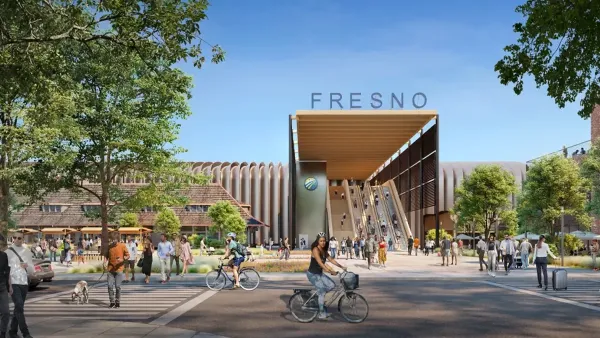
California High-Speed Rail Authority picks trainset manufacturer
The California High-Speed Rail Authority aims to start servicing passengers by 2033.

Dallas releases zoning code overhaul to officials
The drafted overhaul is over 400 pages long.

NYC renovations for dangerous, ‘mercilessly crammed’ street delayed until 2027
Construction was supposed to begin this fall.

San Diego’s Midway Rising project gets greenlight from city council
The project looks to become the largest affordable housing development in California's history.

FREE Course: Walkable City 1: Why Walkability?
After describing his path towards focusing on walkability as the essence of good planning, Jeff Speck marches through his five principal reasons for making more walkable places.
Reinventing Malls: Planning Alchemy—Turning Gray Fields Into Gold
The course focuses on the opportunities and imperatives that shape reinvention of mall sites.

City of Rosemead
Rutgers University, Edward J. Bloustein School of Planning and Public Policy
One Hundred Miles
University of Michigan School for Environment and Sustainability (SEAS)
Hunter College, City University of New York (CUNY)
The Architects Foundation
City of Cambridge
The Pocatello Development Authority
The Urban Renewal Agency of the City of Pocatello