Southern California Edison wants to add 1,500 public charging stations to its service area, potentially expanding the effort to 30,000 charging stations if all goes well.


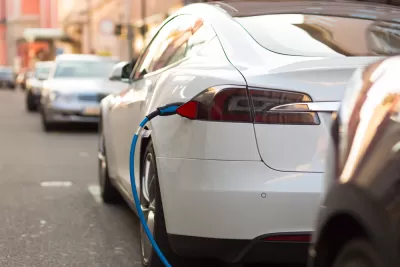
"Southern California Edison is looking to increase the number of public electric vehicle charging stations in California by 16 percent," reports Steve Scauzillo. The investor-owned utility will "spend $22 million to offset the cost of installing 1,500 public charging stations at workplaces and multi-unit apartment and condominium complexes within its 50,000-square-mile service area."
If the initial project goes well, the utility hopes to expand that effort to add an additional 30,000 charging stations at a total cost of $355 million. Early indications from the workplaces component of that plan are already good. In a separate article, Scauzillo provides a dispatch from an event with potential customers about a week after the news was announced. There, large companies and organizations from a variety of industries indicated their interest in the potential of adding new electric vehicle charging stations.
SCE's electric vehicle charging station plans fit into a larger state plan to "put 1.5-million zero-emission vehicles on the road by 2025 for an 80 percent reduction in carbon pollution from the transportation sector by 2050," explains Scauzillo.
Read the full story: Southern California Edison plugging into electric-vehicle charging market
To Fight ‘Range Anxiety,’ Oregon To Invest $100 Million in Electric Vehicle Charging
The Oregon Department of Transportation plans to install EV chargers along crucial transportation corridors and expand charging options around the state to encourage more Oregonians to buy electric vehicles.
Bill Requiring Zero-Emissions Car Sales by 2035 Passes New York Legislature
The bill also calls for increased investment in charging infrastructure and financial incentives for consumers.
The High Cost of Curbside Electric Vehicle Charging
There's nothing like the convenience of charging one's electric vehicle at home, assuming you have a garage, driveway, or your apartment building has a charger. California cities and utilities are working to increase EV infrastructure on all fronts.

Planetizen Federal Action Tracker
A weekly monitor of how Trump’s orders and actions are impacting planners and planning in America.

Eastern Nebraska is running out of electricity
Data centers and electrification are straining eastern Nebraska’s grid, throttling economic development.

Move over, LA: St. Louis gears up for Olympics, invests millions in downtown redevelopment
The Missouri city will host the 2028 Olympic soccer group stage and knockout matches.

Dallas releases zoning code overhaul to officials
The drafted overhaul is over 400 pages long.

NYC renovations for dangerous, ‘mercilessly crammed’ street delayed until 2027
Construction was supposed to begin this fall.

San Diego’s Midway Rising project gets greenlight from city council
The project looks to become the largest affordable housing development in California's history.

FREE Course: Walkable City 1: Why Walkability?
After describing his path towards focusing on walkability as the essence of good planning, Jeff Speck marches through his five principal reasons for making more walkable places.
Reinventing Malls: Planning Alchemy—Turning Gray Fields Into Gold
The course focuses on the opportunities and imperatives that shape reinvention of mall sites.

City of Rosemead
Rutgers University, Edward J. Bloustein School of Planning and Public Policy
One Hundred Miles
University of Michigan School for Environment and Sustainability (SEAS)
Hunter College, City University of New York (CUNY)
The Architects Foundation
City of Cambridge
The Pocatello Development Authority
The Urban Renewal Agency of the City of Pocatello