An op-ed argues that instead of building a more resilient and sustainable water supply infrastructure, two water bills before congress would rollback exiting environmental protections.


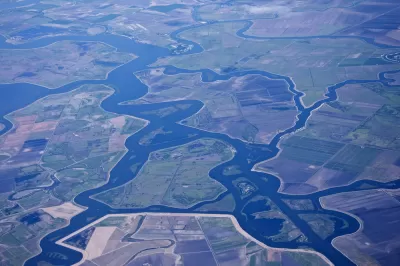
Peter H. Gleick, a hydroclimatologist who serves as thepresident of the Pacific Institute and a member of the U.S. National Academy of Sciences, writes an opinion piece for the Los Angeles Times claiming that the federal government is on the precipice of enacting legislation that "wipe out decades of progress in sustainable water use."
Namely, "a California-centric bill sponsored by Sen. Dianne Feinstein and a Western water bill sponsored by Rep. David Valadao both contain egregious, anti-environmental giveaways hidden behind modest provisions for modernizing California's water system," writes Gleick.
The laundry list of complaints voiced by Gleick include the bills' potential to undermine environmental protections for salmon and other endangered species, preempt the state's existing watershed rules for rivers, provide "pork-barrel federal funding for reservoirs that would produce little usable water, flood Native American cultural sites, or violate Wild and Scenic River protections."
The problem with the two bills is one of concept, according to Gleick. Both bills endeavor to "squeeze even more water out of an already overtapped system."Instead of the many bad parts of this bill, according to Gleick, in support of a few good changes, no bill would be preferable.
FULL STORY: Congress is about to wipe out decades of progress in sustainable water use

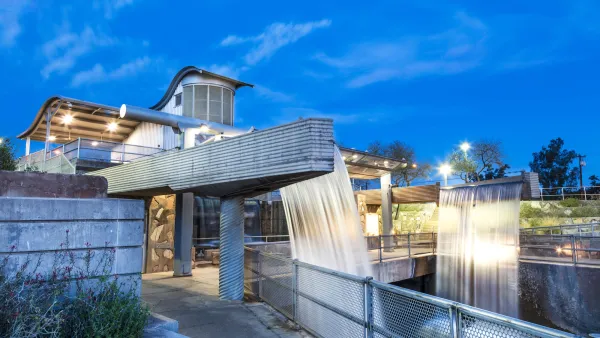
Phoenix and Tucson create emergency water reserve, anticipating Colorado River cuts
The Secure Water Arizona Program will allow participating cities to use a reserve of water or make agreements to buy it from other jurisdictions.
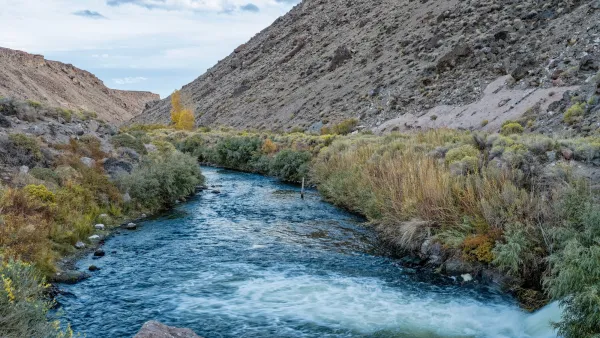
California is Out of Drought for First Time in 25 Years
The state’s reservoirs are reaching capacity for the first time in decades, but more rain could prompt flooding in downstream communities.
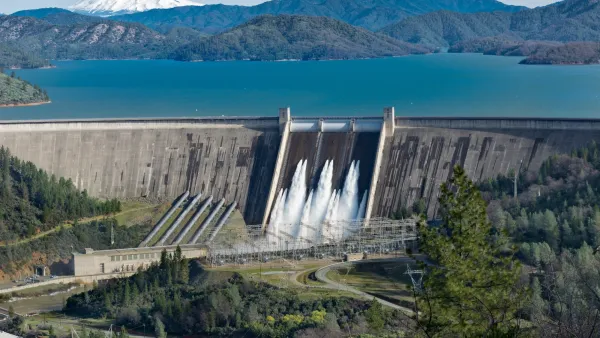
California’s Largest Reservoir Rose to 77% Capacity After Recent Rains
Almost all of the state’s reservoirs are nearing capacity after significant storms passed across the state.

Planetizen Federal Action Tracker
A weekly monitor of how Trump’s orders and actions are impacting planners and planning in America.

The state-sanctioned urbicide of Austin
People don’t kill cities. Freeways do.

US to reduce Colorado River water deliveries to Mexico
A new Colorado Treaty amendment reduces Mexico’s Colorado River water allocation by 250,000 acre feet.

5 New England states march closer to 800 megawatt wind energy project
Securing federal approval for the project may be complicated under the Trump administration, which has historically been hostile towards domestic wind power.

Baltimore to break ground on $50 million Transit Priority Project
The project will bring faster bus trips, safer streets and better bike connections to Baltimore.

Airbnb launches $250 million 'last-dollar financing' housing accelerator, makes first investment in Austin
The company will put $6.4 million towards affordable housing development in Texas’ capital.

FREE Course: Walkable City 1: Why Walkability?
After describing his path towards focusing on walkability as the essence of good planning, Jeff Speck marches through his five principal reasons for making more walkable places.
Reinventing Malls: Planning Alchemy—Turning Gray Fields Into Gold
The course focuses on the opportunities and imperatives that shape reinvention of mall sites.

Eagle County Government
Harvard University Graduate School of Design
Nashville Planning Department
The Architects Foundation
University of Cincinnati Online
The Pocatello Development Authority
The Urban Renewal Agency of the City of Pocatello
Journal of the American Planning Association