With the prospects of an NBA team bolting for Seattle not looking great anytime in the near future, the Seattle City Council is debating a proposal that has been in the works since 2012.


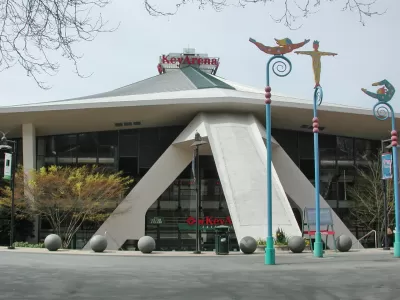
Geoff Baker reports on the latest developments for a proposal to build a new NBA arena in Seattle's SoDo district. "A Seattle City Council transportation subcommittee [last week] decided 4-1 to forward the issue to a full-council vote May 2," reports Baker.
Baker reports more on the debate at the committee meeting, noting that the "at-times-spirited debate" of the hearing could indicate a close vote when the issue comes before the full council. The entire proposal hinges on a Memorandum of Understanding (MOU) between developer Chris Hansen, the city, and King County, which "requires the acquisition of an NBA team to trigger up to $200 million in public bond funding for arena construction costs." Under the terms of a deal struck in 2012, if Hansen can't land a team by November 2017, the MOU expires. Seattle was one of the losers in a deal that allowed Milwaukee to jeep their NBA franchise.
In a separate article, Josh Feit reports on a related angle in the story—the opposition of the Port of Seattle, which is concerned about traffic impacts in the SoDo district. According to Feit, the port's "longstanding, adamant stance against transforming the industrial lands in SoDo into commercial space" didn't stop it from putting out a memo last summer considering the idea of "moving its two offices, one at Pier 69 and one in SeaTac that house nearly 800 employees," to a location in SoDo. Feit notes that the port has since dropped the idea, and takes the port to task for the contradictions of its approach to SoDo.
Read the full story: Seattle City Council showdown ahead over vacating street for Sodo arena
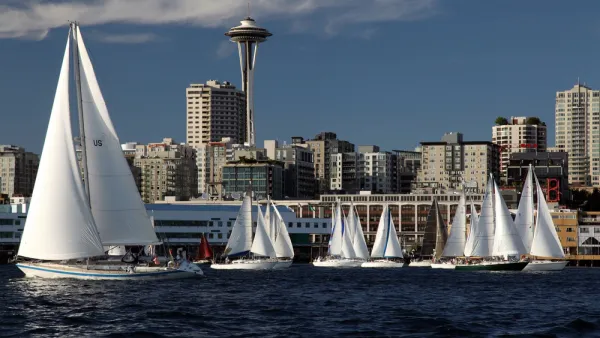
Friday Funny: A Scathing Comeback to Seattle's NBA Arena Trolls
Samantha Bee has seen the misogynistic conduct of NBA fans in Seattle after the City Council decided not approve a plan to build a new NBA arena in the city's SoDo neighborhood.
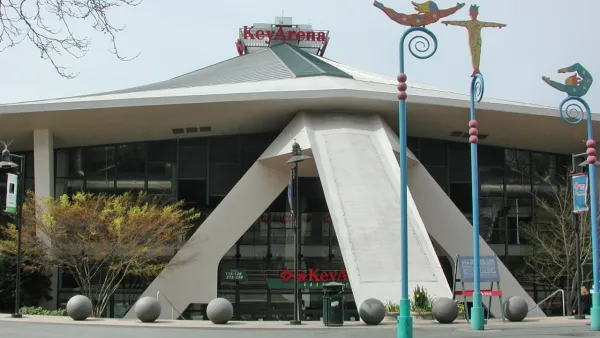
Seattle Rejects NBA-Seeking Development Proposal
A development proposal for a new NBA arena, in the works since 2012, was dead on arrival to the Seattle City Council. The decision surprised even project opponents.
Seattle NBA Arena Proposal Back From the Dead—But This Time it's Privately Funded
The mastermind behind a failed plan to build a new NBA arena in the Seattle neighborhood of Sodo has tweaked the plan and come back to the negotiating table. A big question still waiting for an answer: Will the NBA will expand to return to the city?

Planetizen Federal Action Tracker
A weekly monitor of how Trump’s orders and actions are impacting planners and planning in America.

California plans to bury El Niño’s downpour
If the state plays its cards right, it may be able to store a billion acre-feet of El Niño’s water in aquifers.

Desperate measures: Advocates weigh draining Lake Powell to fill Colorado River
Draining the reservoir could reduce evaporation losses by a couple hundred thousand acre-feet.

Housing is the top priority of Seattle’s sole new councilmember
Jenks campaigned on building 1,000 new units of affordable housing.

New tax cuts may slash $1.5 billion in funding for Miami transit, public parks
Amendment 3 will save Miami-Dade homeowners $2,700 in 2028.

Arizona, Wisconsin, Pennsylvania hope to finally advance climate goals post-midterms
The three states have spent years under Republican or divided control.

FREE Course: Walkable City 1: Why Walkability?
After describing his path towards focusing on walkability as the essence of good planning, Jeff Speck marches through his five principal reasons for making more walkable places.
Reinventing Malls: Planning Alchemy—Turning Gray Fields Into Gold
The course focuses on the opportunities and imperatives that shape reinvention of mall sites.

City of Rosemead
Rutgers University, Edward J. Bloustein School of Planning and Public Policy
One Hundred Miles
University of Michigan School for Environment and Sustainability (SEAS)
Hunter College, City University of New York (CUNY)
The Architects Foundation
City of Cambridge
Montrose County
The Pocatello Development Authority