What does a successfully multi-modal and livable street look like? There are examples all over the world, if you're paying attention.


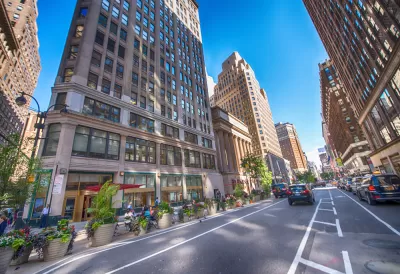
Jeff Speck writes for CityLab about the next front in the ongoing contest to control the design of streets. On one side are cars and traffic engineers, but the latter of those two have ceded ground in recent years to pedestrians and placemaking.
Noting recent successes, Speck asks the questions: "What is the next urgent battle to be fought in the name of more walkable, livable streets and communities?" And, "what if there were one category that managed to include all the others?"
Speck answers these inquiries affirmatively, noting the importance of models, otherwise known as paying attention to precedent. Speck even has a case study with which to make his point, with the example of Lowell, Massachusetts' plan to transform a below-grade highway, with an elevated traffic circle, into a boulevard. Grant Welker reported on the details of the proposed redesign for the Lowell Sun. Speck critiques the current plan by appealing to precedents.
While there exist a growing number of locations in America with street configurations like this one, it is impossible to name one with street life. Swoopy configurations like this design are found mostly in suburban drive-only locations out by the mall, not in cities. If no attractive place can be found with a similar configuration, then a design should not pass the street-planning smell test.
To counter the current proposal, Speck chooses his own precedent—as set by The Boulevard Book by Alan Jacobs, which laid out the fundamental ingredients for a boulevard that both moves cars and provides a walkable urban setting.
Read the full story: The Simplest Way to Avoid Bad Street Design: Copy the Ones That Work

Support Builds For Highway Removal in Saint Louis
St. Louis Post-Dispatch editorial board formally endorses the removal of elevated and depressed lanes of current I-70 ROW to reconnect city and arch grounds.
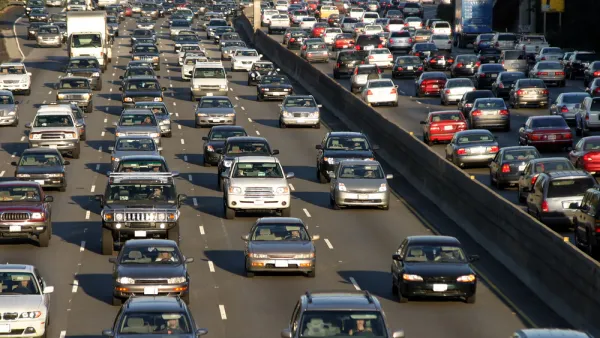
The Los Angeles Mystery
A blog post exploring why Los Angeles is more car-dependent than some less dense cities.
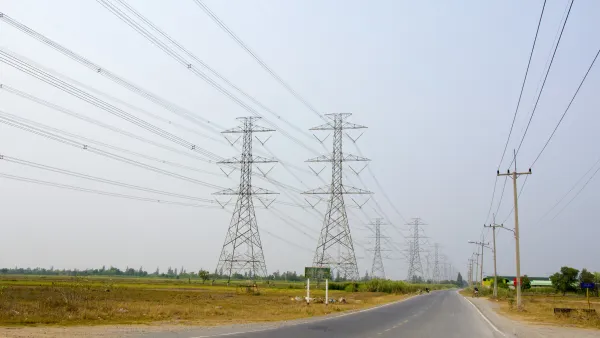
Trump to allow infrastructure along highways, railways in bid to bypass reviews
By building lines close to existing infrastructure, Trump aims to lower costs and bypass environmental oversight and opposition from local communities.

Planetizen Federal Action Tracker
A weekly monitor of how Trump’s orders and actions are impacting planners and planning in America.

Amtrak, CN end decades-long dispute with eight-year agreement
The new operating agreement establishes an updated framework for the companies to work together, including processes to resolve disputes.

Judges permit Denver to divert 77,000 acre feet from the Colorado River for reservoir expansion
Overuse and climate change have caused the Colorado River’s water levels to plummet.

Philadelphia to invest $2 billion into upgrading city airports as PHL places last in customer satisfaction
Modernizations to Philadelphia's airports will include baggage system upgrades and a new automated parking garage guidance system.

The LA housing policies making developers turn away from the city
Despite LA’s housing shortage, developers say the city’s "mansion-tax" and pandemic-era policies make it an unappealing place to build housing.

New density bill would require 7 California cities to establish regional transit hubs
The bill would also require major cities in California to permit high-rise residential buildings.

FREE Course: Walkable City 1: Why Walkability?
After describing his path towards focusing on walkability as the essence of good planning, Jeff Speck marches through his five principal reasons for making more walkable places.
Reinventing Malls: Planning Alchemy—Turning Gray Fields Into Gold
The course focuses on the opportunities and imperatives that shape reinvention of mall sites.


City of Wisconsin Rapids
Harvard University Graduate School of Design
KFH Group Inc.
The Architects Foundation
University of Cincinnati Online
The Pocatello Development Authority
The Urban Renewal Agency of the City of Pocatello